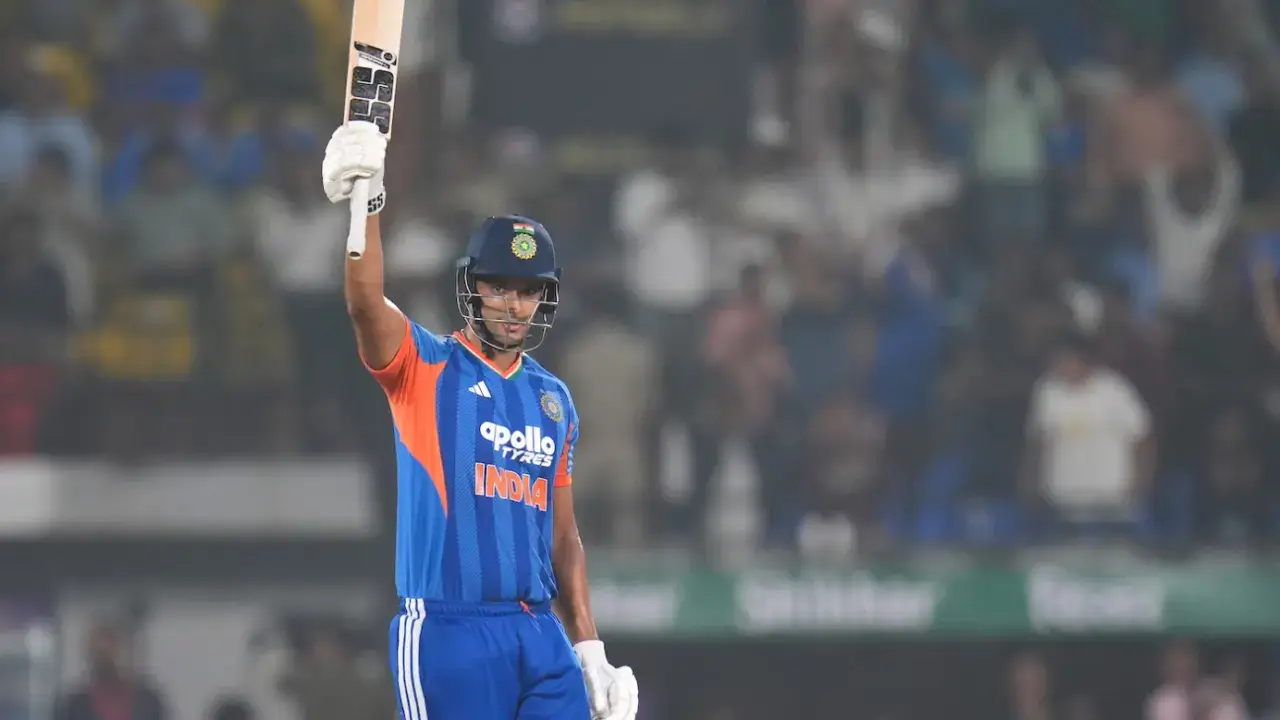
India enter the T20 World Cup not merely as holders of form, but as a team that has quietly redefined how dominance looks in the format. Their recent results are emphatic, but the deeper story lies beneath the win-loss record. India no longer rely on occasional batting explosions. They produce sustained, repeatable power across conditions, line-ups, and match situations.
What separates this Indian side is not just the number of sixes they hit. It is how and when those sixes arrive. Power is no longer concentrated at the death or dependent on one or two specialists. Instead, it is distributed throughout the batting order. That distribution changes bowling behaviour, field placements, and risk tolerance from the very first over.
Opposition teams are not just defending totals against India. They are defending psychology. Every bowler knows that one miscalculation can disappear into the stands, regardless of the phase. That constant threat reshapes entire innings.
Abhishek Sharma and the Rise of Fearless Opening Power
At the front of this transformation stands Abhishek Sharma. His role goes beyond aggressive starts. He compresses time. When Abhishek bats, six overs feel like four. Bowling plans unravel faster than captains can adjust.
What makes Abhishek different is efficiency. His six-hitting is not reckless. It is targeted. Length errors vanish. Fielding restrictions are exploited instantly. Bowlers lose the luxury of settling into rhythm.
Crucially, Abhishek does not operate in isolation. His aggression does not force the rest of the line-up into survival mode. Instead, it unlocks freedom. When he succeeds, the middle order plays without scoreboard anxiety. When he fails, India still retain depth and power. That safety net is what turns aggression from gamble into strategy.

A Middle Order Built to Punish Every Phase
India’s power does not dip after the powerplay. That is where their advantage becomes suffocating. Batters like Suryakumar Yadav, Tilak Varma, and Ishan Kishan attack different lengths, different speeds, and different fields.
This variety matters. Bowlers cannot rely on matchup comfort. A plan that works against one Indian batter often fails against the next. That constant recalibration drains bowlers mentally.
India’s middle overs are no longer about consolidation. They are about pressure maintenance. Singles remain valuable. But boundaries are always within reach. That balance keeps run rates high without inflating risk.
Traditionally, teams treat finishers as specialists who enter late to accelerate. India’s finishers extend existing momentum instead of restarting it. Hardik Pandya, Shivam Dube, and Rinku Singh do not need warm-up time.
This matters because death overs punish hesitation. India’s lower-middle order arrives already in rhythm. Bowlers face immediate pressure. Yorkers must be perfect. Slower balls must be disguised. Any miss is terminal. Most teams defend the last five overs. Against India, they survive them.
Why India’s Power Is Harder to Contain Than Australia’s or the West Indies?
Other teams have big hitters. Australia have Glenn Maxwell and Tim David. West Indies always carry brute force. The difference lies in sequencing.
India’s six-hitters are spread across the innings. There is no safe phase. Bowlers cannot “wait out” danger. That is why India’s run rates remain high without spikes of collapse. Power becomes sustainable when it is shared. India have mastered that distribution.
The Psychological Effect on Bowlers and Captains
Facing India forces captains into defensive thinking early. Fields spread sooner. Attacking options disappear. Bowlers start protecting boundaries instead of hunting wickets.
That shift is gold for batters. Once bowlers go defensive, errors increase. Lengths drift. Pace varies. India feast on those micro-mistakes. This is how dominance becomes self-reinforcing.
This Indian side reflects a deeper change in batting culture. Fear of failure has been replaced by clarity of intent. Players know their roles. They are selected to play them.
That clarity reduces panic. It allows aggression without chaos. That is the hardest balance in T20 cricket — and India have found it.
Why This Team Feels Like an Upgrade, Not a Repeat?
This is not a continuation of past champions. It is an evolution. Previous Indian sides relied on peaks. This one relies on pressure saturation. They do not overwhelm opponents with one innings. They overwhelm them with inevitability.
Containing India is no longer about limiting one batter. It requires perfect execution for 20 overs. Few teams can manage that. Miss once, and the punishment is immediate. That is why India enter this World Cup not just as favourites — but as the benchmark everyone else must chase.