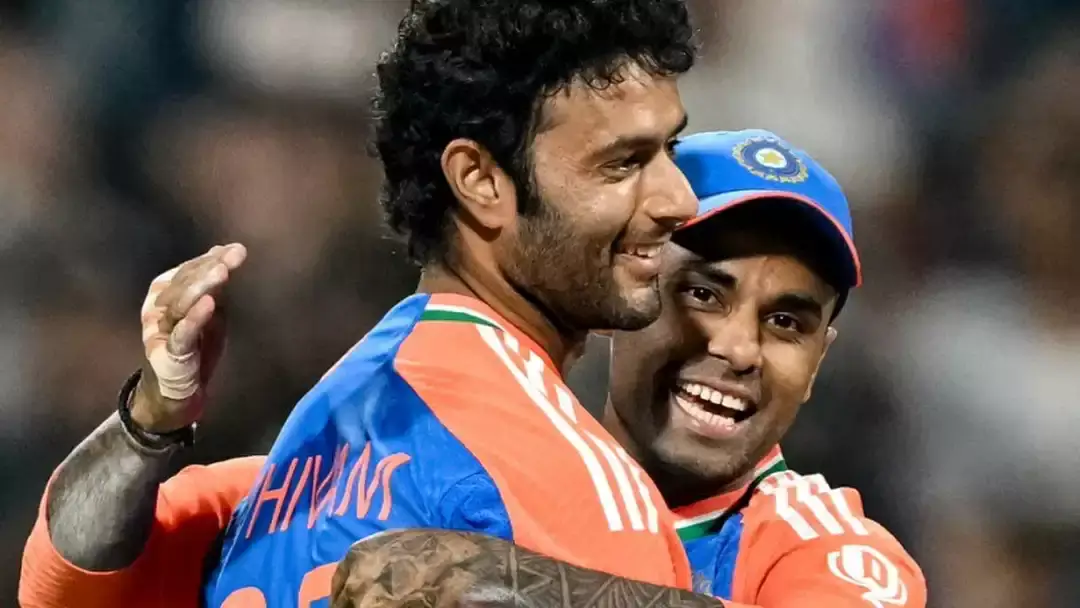
India’s experimental T20I night was never about the result. The series was already settled. Selection flexibility mattered more than scorelines. Yet one performance quietly answered a larger question. It revealed how far Shivam Dube has moved beyond labels.
This was not a rescue cameo built on comfort. It was an innings played without safety nets. India shortened their batting intentionally. Roles were reshuffled. Conditions misbehaved. Dew never arrived. The pitch slowed. Pressure arrived early.
In that chaos, Dube did not wait for matchups to come easy. He walked into a collapsing structure. He absorbed responsibility without announcement. The chase never recovered, but the resistance had one clear source.
Oppositions responded differently, too. The usual pace-heavy plan never arrived. Spin persisted. Adjustments were visible. That alone told a story.
This article breaks that night through role clarity, matchup respect, and decision pressure. It explains why this innings mattered more than its runs. And why India learned something valuable, even in defeat.
Why This Night Was Designed to Stress Roles, Not Win Matches?
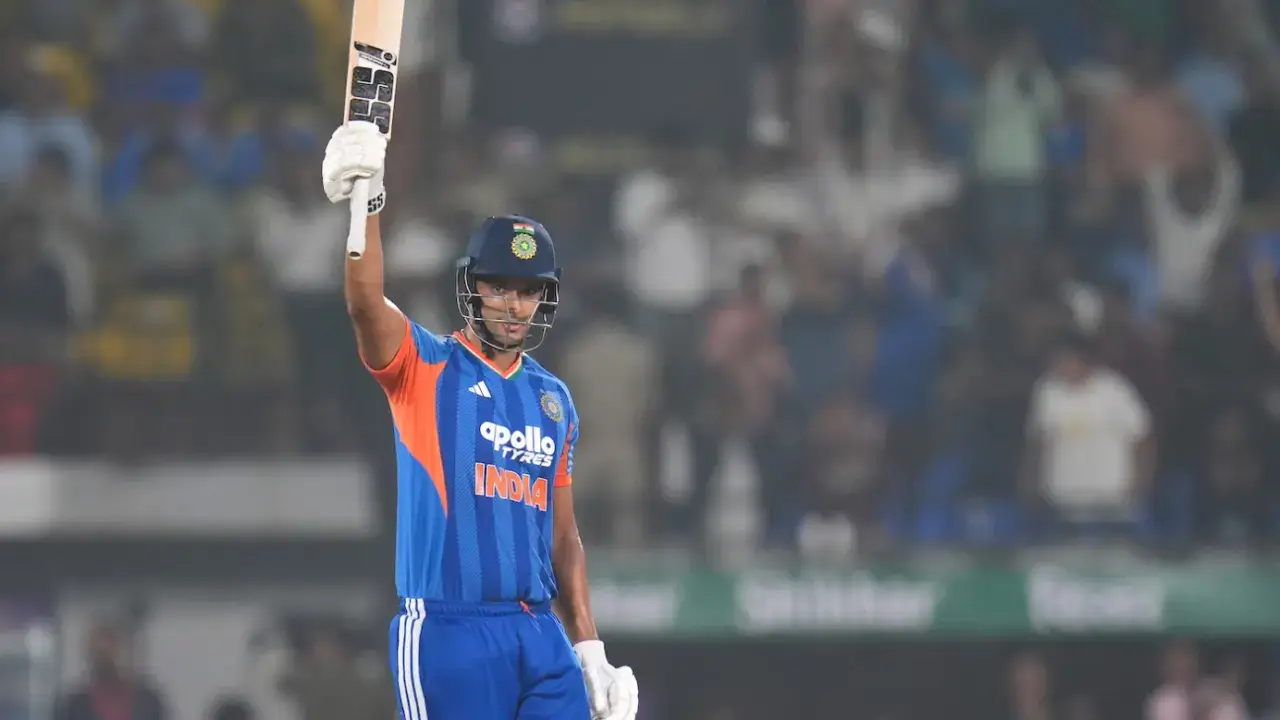
India’s approach that night was intentional discomfort like in dominating timeline. Batting depth was sacrificed on purpose. Only six specialist batters were selected. Bowling was locked to five frontline options. All-rounder safety was removed.
This was a stress test. The idea was simple. What happens when plans fail early? What happens when familiarity disappears?
Early wickets answered that quickly. The top order fell unevenly. Momentum never formed. The chase demanded clarity, not flair.
In such setups, players either freeze or simplify. Dube chose simplification. He did not expand his range recklessly. He chose clear targets. He respected conditions.
This environment revealed value beyond statistics. It showed who understands role pressure. It showed who can function without protection.
For India, that matters before tournaments. They were not testing skills. They were testing behaviour under constraint. Dube passed that test quietly.
The Glenn Phillips Overexplained Everything
One decision captured the night. After Dube launched spin immediately, the obvious response was pace. Instead, New Zealand doubled down on spin. Glenn Phillips was handed the ball. That choice mattered. It showed opposition thinking had shifted. Dube was no longer treated as pace-vulnerable first. He was treated as a matchup problem.
Oppositions usually attack weaknesses instinctively. Here, hesitation appeared. That hesitation reflects respect. On a surface offering grip, bowling away from Dube’s hitting arc seemed logical. But logic itself revealed fear. Teams were planning around him, not reacting to him.
That is evolution. When opponents plan to limit damage rather than force errors, the batter has already crossed a threshold. This moment mattered more than boundaries.
Why This Was Not a “Spin-Bullying” Innings?
Yes, Dube dominated spin. That was expected. What mattered was everything else. He did not hunt spin recklessly. He waited for zones. He rotated when needed. He controlled tempo. Against pace, he refused silence. That mattered more. Quiet overs allow bowling sides to reset. Dube denied that reset.
Those runs against pace were not flashy. They were disruptive. They forced field changes. They denied rhythm. This balance prevented New Zealand from boxing him into a single plan. That is what elite T20 batters do. The innings was complete, not selective.
India’s win probability barely moved. That is misleading. This innings was never about takeover. It was about survival credibility. When Dube arrived, collapse was imminent. The chase needed belief more than acceleration. He provided that alone.
The scoreboard stayed distant. But the match stayed alive. That difference matters psychologically. Teams do not always need miracles. They need resistance. Dube gave India resistance without support. That is pressure value. It does not always convert results. But it reshapes perception. India noticed. Opponents noticed.
How Past Finals Prepared Him for This Moment?
This night did not create Dube. It confirmed a trajectory. Pressure innings in finals had already tested him. Short cameos under tournament tension had shaped his clarity. This was a quieter examination. Here, no crowd roar carried him. No trophy waited. Only responsibility remained. That makes it harder. He did not force leadership. He accepted accountability. That difference separates maturity from confidence. India needed that version more than fireworks.
Ironically, Dube did not bowl that night. Yet his bowling growth mattered. Understanding bowling sharpens batting instincts. Reading fields improves when you know angles. Dube showed that awareness. He anticipated lines. He waited for length. He punished predictability. That comes from seeing the game from both sides. Even unused skills influence performance.
Why This Innings Changed Oppositional Planning?
Oppositions plan months ahead. One innings does not rewrite playbooks. But it edits footnotes. Dube now demands layered plans. Not just pace. Not just spin. Not just early overs. That complexity creates errors. When bowlers hesitate, batters win. This night introduced hesitation.
India did not lose answers. They gained one. They learned Dube can hold a chase without scaffolding. They learned he does not need protection. They learned he understands his role. That is tournament value. Results fade. Behaviour remains.
This was not his biggest score. It may never feature in highlight reels. But it reshaped how he is viewed. From matchup hitter to pressure holder. From role player to reference point. Those transitions matter. India’s experimental night revealed certainty where uncertainty once existed. That is progress.