

India’s T20 blueprint is quietly taking shape. Amid form fluctuations at the top, two players have offered clarity from very different roles. Tilak Varma has climbed to No. 4 in the ICC T20I batting rankings, while Varun Chakravarthy has further cemented his position as the world’s top-ranked T20I bowler.
These movements come after the first three matches of the South Africa T20I series, where India’s results have masked subtle but important shifts in responsibility. Abhishek Sharma remains No. 1 in the batting charts despite modest returns, but it is Tilak’s composure and Chakravarthy’s control that have truly shaped India’s on-field balance.
Tilak Varma’s Knock That Changed Perception
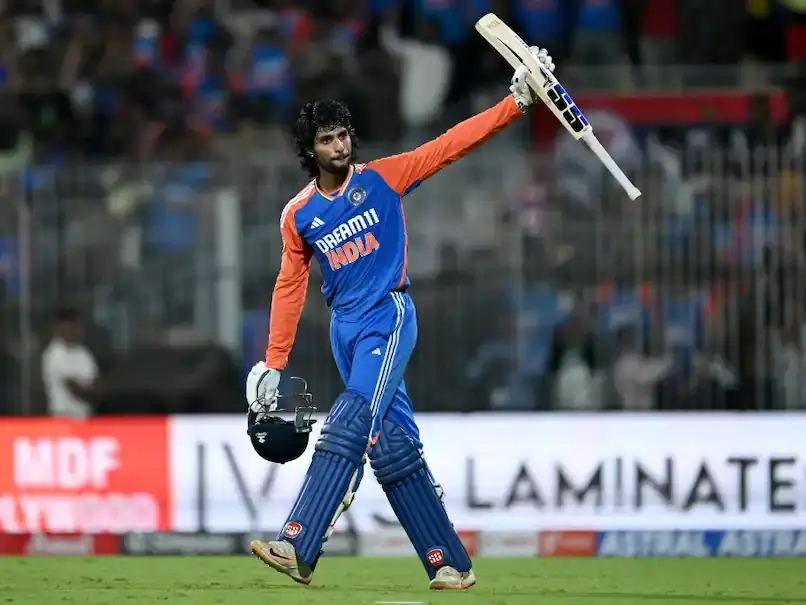
Tilak’s rise is built on substance, not noise. His 62 off 34 balls in the second T20I came on a surface where no other batter crossed 30. It was an innings of judgment rather than impulse, blending rotation with calculated aggression.
In the following match, his unbeaten 26 off 34 may not have caught headlines, but it guided India through a tricky chase. That innings underlined something selectors value deeply: clarity under pressure. Tilak has shown he can adapt tempo to match the situation, a trait that separates contributors from anchors.
This combination of flexibility and assurance explains his steady climb up the rankings and, more importantly, his growing importance within the XI.
What Tilak Varma Brings to India and the Mumbai Indians?
Tilak’s growth cannot be separated from his time with the Mumbai Indians. At the franchise level, he has been trusted in high-pressure roles, often batting when collapses threatened or acceleration was required.
That trust has shaped his temperament. Tilak does not panic when early wickets fall, nor does he force strokes when conditions demand patience. For India, this translates into reliability at a time when volatility has crept into the top order. The Mumbai Indians gave him responsibility early, and India is now reaping the benefits.
The Stability Tilak Varma Provides to India’s T20 Setup
India’s recent T20 concerns have revolved around instability. Lean patches for senior batters have created stop-start momentum. Tilak offers a counterweight to that chaos.
Batting in the middle order, he absorbs pressure rather than amplifying it. He rotates strike, protects partners, and picks moments to accelerate. This stabilising influence has been evident in tight chases and difficult batting conditions.
For a team preparing for a World Cup, such reliability is invaluable. Tilak allows India to breathe through the middle overs.
How Mumbai Indians’ Experience Prepares Tilak for Big Stages?
IPL pressure is unforgiving, and the Mumbai Indians demand results under constant scrutiny. Tilak has learned to perform without guarantees, often batting alongside or after star names.
That exposure has sharpened his decision-making. He understands fields, reads bowlers quickly, and rarely repeats mistakes. These are qualities that transfer seamlessly to international cricket, especially in tournament settings. Big stages do not intimidate him because he has already lived them.
Why Tilak Varma Is Emerging as India’s Most Reliable T20 Batter?
Tilak may not yet have the explosive reputation of others, but reliability is becoming his calling card. He scores runs at the pace the situation demands, not at the pace of expectation.
His ranking rise reflects consistency rather than spikes. In a side where form swings dramatically, Tilak’s steady output stands out. He may not dominate highlights, but he increasingly dominates trust. India needs players who reduce uncertainty. Tilak is doing exactly that.
Tilak Varma’s Growth at No. 3 and No. 4
Batting at No. 3 and No. 4 demands adaptability, and Tilak has shown marked improvement in reading innings from these positions. He no longer commits too early, allowing the game to reveal itself before responding.
Against South Africa, his ability to reset the tempo after power plays stood out. Whether rebuilding or accelerating, he has shown awareness of match context rather than personal milestones. This growth suggests Tilak is not just filling a slot, but owning it.
Conclusion
India’s T20 future is quietly organising itself. Varun Chakravarthy offers bowling certainty, while Tilak Varma brings batting stability and maturity beyond his years.
Rankings confirm form, but performances confirm roles. Tilak’s rise to No. 4 is not a spike; it is a reflection of trust earned through adaptability and calm. As the World Cup approaches, India appear to have found something rare in T20 cricket. Not just talent, but assurance.