

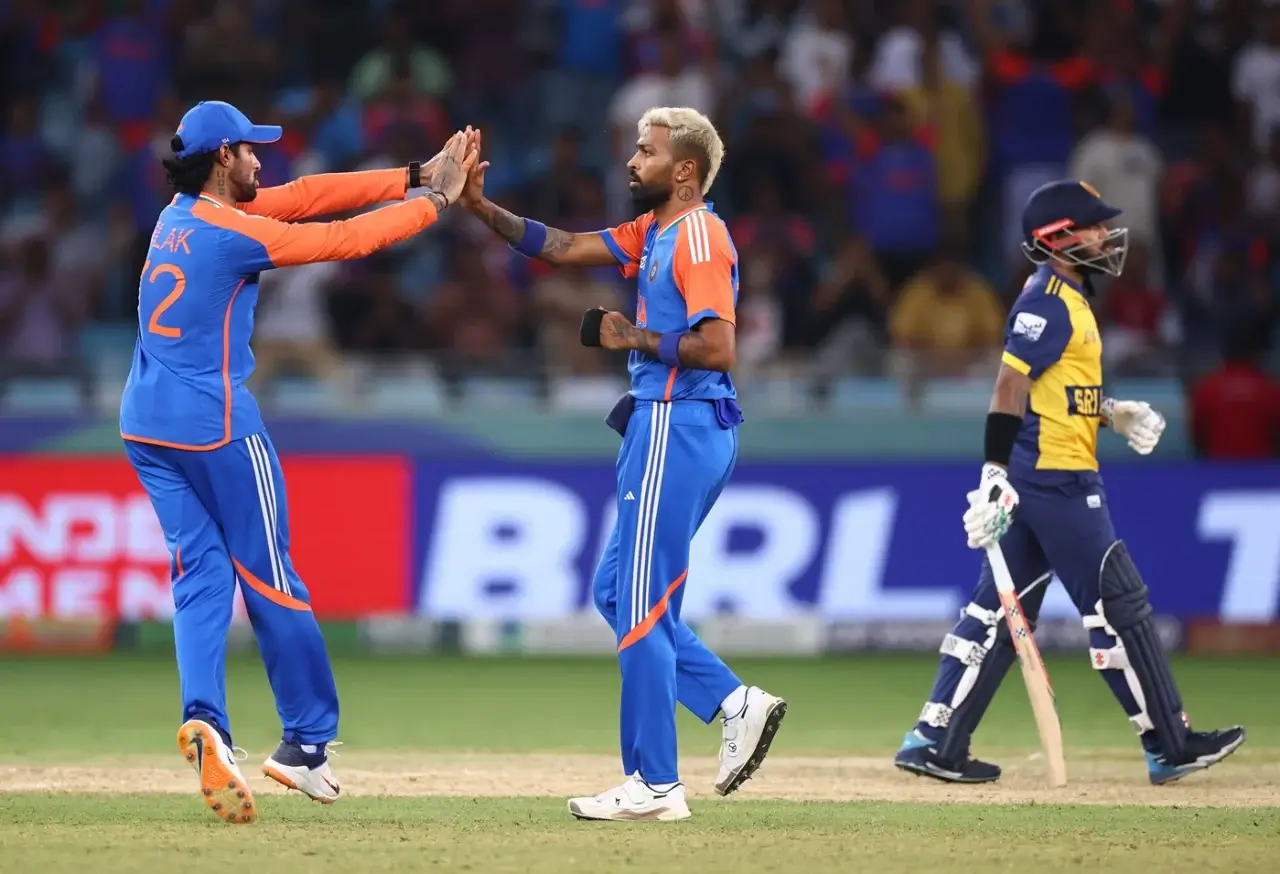
India’s second T20I against South Africa in Mullanpur exposed an unusual vulnerability in their otherwise reliable pace attack. Jasprit Bumrah and Arshdeep Singh — two bowlers who rarely fail together — endured one of their toughest outings as South Africa dominated both the new ball and the death overs. Meanwhile, Hardik Pandya took on an experimental middle-overs role that raised fresh questions about India’s evolving World Cup blueprint, as he has done for Mumbai Indians.
The match provided more than just a defeat; it offered a window into India’s changing bowling strategy, their willingness to test unconventional combinations, and the risks involved in sidelining established elements like Kuldeep Yadav to create a three-pacer framework. With experimentation guiding India’s approach under Suryakumar Yadav, this series has become a crucial testing ground ahead of next year’s T20 World Cup.
Hardik Pandya’s Reworked Bowling Role in the Middle Overs
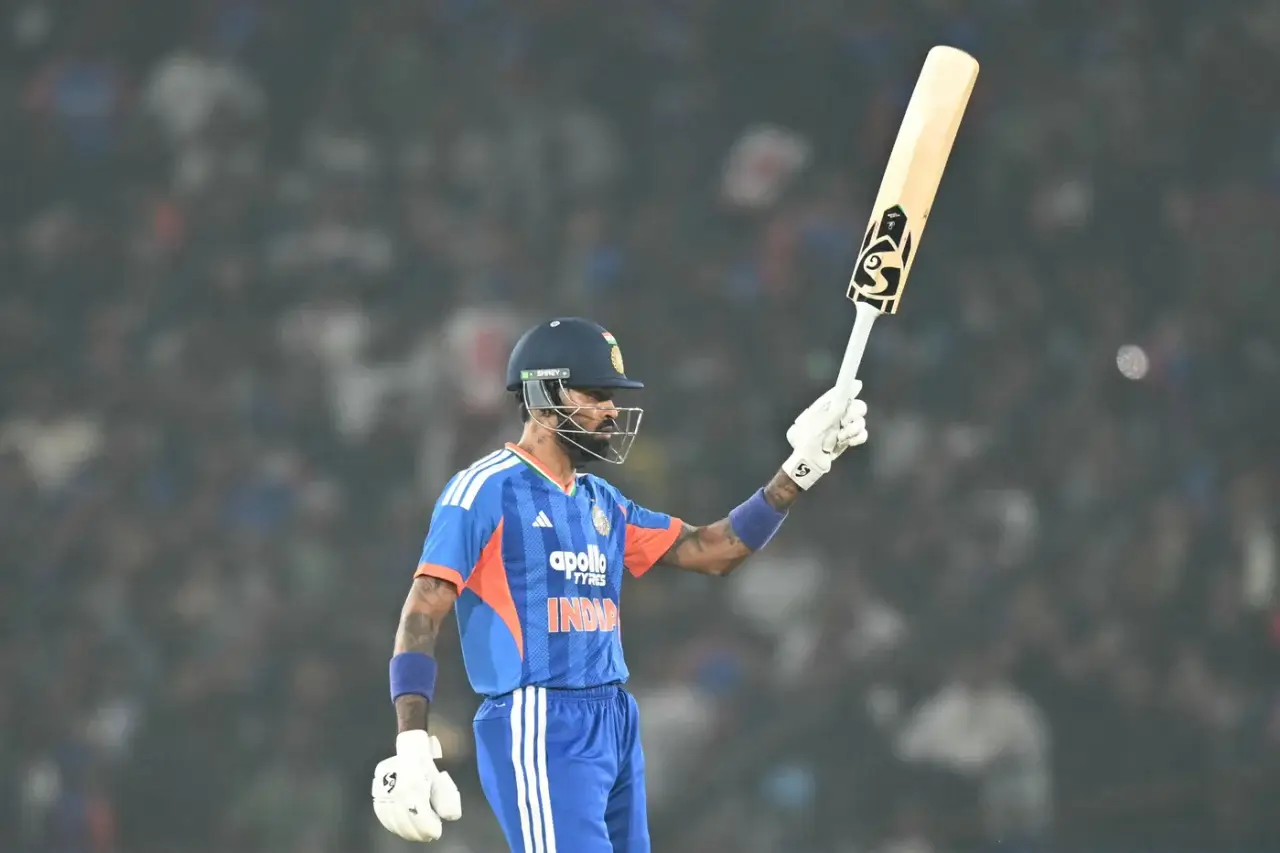
India’s most notable tactical shift in this game was Hardik Pandya bowling all three of his overs in the middle phase, despite historically operating in the powerplay or late overs. Pandya leaned heavily on variations — slower balls into the pitch, cutters from wide angles, and back-of-length hold-ups — even though the surface didn’t necessarily assist that style.
He crossed 134 kmph only three times, showing that the plan wasn’t about pace but about deception. He even managed to trouble Quinton de Kock before conceding boundaries later. Though expensive, his approach reflected the team’s desire to see whether Pandya could act as a phase-specific middle-overs enforcer.
This shift is significant because:
-
It reduces the early workload on Bumrah and Arshdeep.
-
It allows India to hold back Bumrah for the death overs.
-
It provides a fourth bowling option who can float across phases if needed.
But it also comes with a trade-off: Kuldeep Yadav sits out, leaving India with fewer spin overs if conditions demand more turn.
Bumrah and Arshdeep’s Off Day Highlights India’s Dependence on Their Rhythm
The sight of Bumrah being launched for four sixes — something never before seen in a T20I innings — was symbolic of India’s struggles. Donovan Ferreira’s fearless counterattack, including a clean jump-out-and-swat for six, forced even Suryakumar Yadav into a resigned nod.
Arshdeep’s struggles were equally alarming. His nine wides, combined with inconsistent lengths, cost India momentum and control, especially once dew arrived. The 54 runs he conceded were the second-most in his T20I career, showing how drastically a good pitch and a bit of dew can expose minor execution errors.
This rare off-day reinforced an uncomfortable truth:
India’s system is built around Bumrah-Arshdeep rhythm. When both misfire, the entire structure wobbles.
Why India Are Testing a Three-Seamer Template Before the World Cup
India’s experimentation isn’t random. The coaching staff — especially Ryan ten Doeschate — has emphasized the need to maximize the new-ball strengths of Bumrah and Arshdeep while using Varun Chakaravarthy as a hybrid option who can bowl late powerplay overs.
The logic behind the new template:
-
Two frontline pacers take the new ball.
-
Varun closes the powerplay based on match-ups.
-
Hardik becomes a situational middle-overs operator.
This gives India four potential powerplay overs from seamers without burning Bumrah early, and opens room for tactical spin usage.
But it comes at a cost:
Kuldeep Yadav, one of India’s most destructive white-ball bowlers, is benched to maintain balance.
Axar Patel’s Promotion to No. 3 Signals India’s Tactical Agility
One of the boldest moves of the evening had nothing to do with bowling — India pushing Axar Patel to No. 3. This decision highlights the team’s desire to:
-
Counter specific match-ups
-
Strengthen left-right batting combinations
-
Increase intent during the powerplay
The move was also part of a broader “exploration” theme Suryakumar Yadav referenced earlier: India are using this series to test unorthodox ideas before the World Cup. Whether Axar will be a regular floater remains to be seen, but his promotion signals flexibility — something India lacked in previous ICC tournaments.
Varun Chakaravarthy’s Expanded Role Could Redefine India’s Middle Overs
While much attention falls on the seamers, Varun Chakaravarthy’s evolving role is equally important. Ten Doeschate highlighted that Varun has been excellent in the back end of the powerplay, a rare skill for spinners in T20Is.
If Varun can reliably deliver the 5th or 6th over:
-
India saves Bumrah for high-value moments
-
They can field a pace-heavy XI without losing spin control
-
Match-up flexibility increases dramatically
This makes Varun a silent pillar of India’s experimental structure.
The Kuldeep Dilemma — Can India Afford to Bench Their In-Form Spinner?
The biggest tension created by India’s new bowling plan is the exclusion of Kuldeep Yadav, who has been in superb T20 rhythm for nearly two years.
Benchmark questions arise:
-
Can India go into a World Cup without their strongest wicket-taking spinner?
-
Are they sacrificing middle-overs strike potential for seam flexibility?
-
Is this a temporary trial or a long-term structural shift?
Leaving Kuldeep out may work on batting-friendly surfaces, but on slower pitches — Melbourne, Hobart, or Caribbean venues — India will need his attacking spin.
The longer India delay integrating him, the more incomplete their blueprint remains.
Should India Persist With This Combination or Revert to Familiar Patterns?
India’s defeat has created just enough uncertainty to force reflection. The question isn’t whether Bumrah, Arshdeep, or Hardik are capable — they undoubtedly are — but whether this three-seamer template is optimal across conditions.
If results don’t improve by the end of the series, India may revert to:
-
Two seamers + Hardik + two specialist spinners
-
A more traditional powerplay structure
-
A balanced XI that includes Kuldeep Yadav
The coaching staff insists the current model is condition-specific, but World Cup tournaments rarely allow such luxury. India must decide their identity sooner rather than later.
Conclusion
India’s experimentation against South Africa signals ambition but also uncertainty. The team is clearly trying to build a flexible, multi-phase bowling unit — one that doesn’t over-rely on Bumrah’s brilliance or Arshdeep’s rhythm. Hardik Pandya’s new middle-overs role, Varun’s tactical powerplay usage, and Axar’s batting elevation all point toward a team seeking depth, adaptability, and match-up mastery.
But the risks are evident too – A proven wicket-taker like Kuldeep sits outside the XI, the pacers are juggling new responsibilities, and India’s combinations remain fluid rather than settled.
As the World Cup approaches, India must answer a central question: Do they prioritize versatility or proven reliability? The answer will determine whether this experimental phase becomes a breakthrough — or an avoidable detour.