Sometimes victory does not arrive with joy. It arrives with relief. South Africa’s double Super Over triumph over Afghanistan in the 2026 T20 World Cup was not a celebration of dominance. It was an escape from collapse. A narrow walk across a psychological tightrope that threatened to snap at any moment.
The match unfolded like controlled chaos. Momentum shifted so often that control itself felt imaginary. One moment South Africa looked comfortable. The next they looked vulnerable. Afghanistan, too, oscillated between belief and despair.
Ryan Rickelton’s blunt post-match remark captured it perfectly. Even the winners felt battered. This was not simply cricket at its most competitive. It was cricket stripped of comfort. Cricket reduced to nerves, instinct, and raw survival. One Super Over could not decide it. A second was required. Even then, certainty remained fragile until the final ball settled safely into South African hands.
In the end, South Africa did not conquer Afghanistan. They endured them. And sometimes, endurance is the greater achievement.
A Foundation Built on Authority — And False Comfort
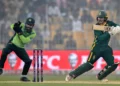
For much of the first innings, South Africa appeared in command. Ryan Rickelton and Quinton de Kock assembled a commanding 114-run partnership that temporarily muted Afghanistan’s attack. The rhythm felt assured. Rickelton drove confidently through the covers. De Kock manipulated spin with measured calm.
Afghanistan struggled to disrupt their tempo. The pitch rewarded clean hitting against pace. The South African pair exploited that window expertly. Shot selection was disciplined. Running between wickets was sharp. Pressure shifted decisively.
At 114 for 1, South Africa seemed positioned for something beyond par. But T20 cricket rarely allows comfort to linger. Rashid Khan returned and dismantled that illusion. Two wickets in quick succession fractured the platform. South Africa’s middle order stalled briefly. The acceleration they sought became inconsistent.
187 for 6 was competitive. It was strong. But it was not definitive.
In hindsight, that total embodied the match itself — balanced on the edge of sufficient and insufficient. Enough to defend, but not enough to relax. Momentum had already begun slipping through their fingers.
Gurbaz: A Lone Resistance Against Gravity
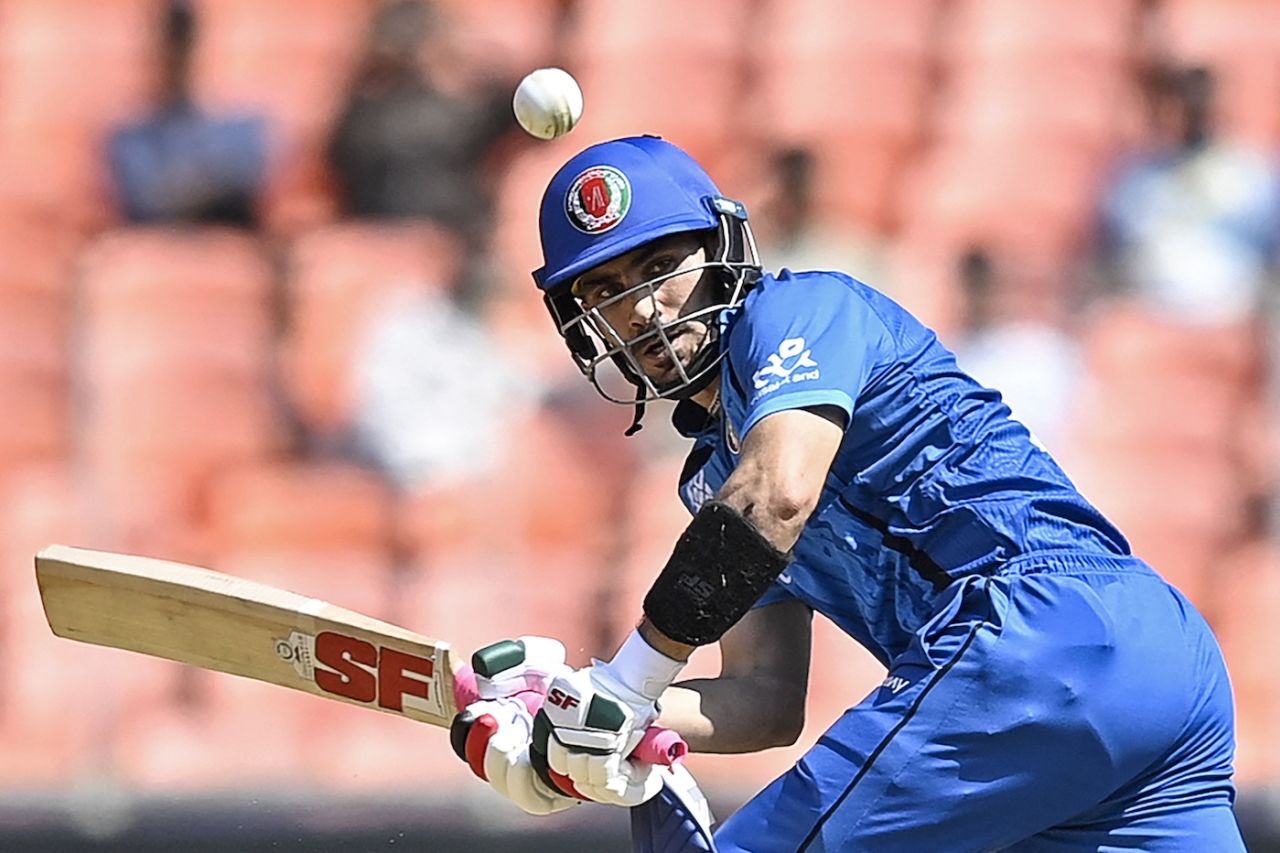
Afghanistan’s chase began unevenly. Early wickets reinforced South Africa’s belief. Lungi Ngidi struck twice, and at 52 for 3, the chase seemed tilting toward collapse.
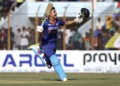
But Rahmanullah Gurbaz refused to comply with that narrative. He batted as though conditions were irrelevant. As though the match demanded audacity rather than caution. Against pace, he attacked length balls fearlessly. Against spin, he hit from the crease rather than charging, disrupting bowlers’ rhythm.
His innings was not reckless bravado. It was structured aggression. He understood that Afghanistan required acceleration before scoreboard pressure suffocated them.
Even as wickets tumbled around him, he did not retreat into survival mode. He expanded. He pierced gaps others could not locate. His 80-plus score felt heavier than the numbers suggested because of context.
South Africa sensed the danger. Fielders tightened angles. Bowlers altered pace. Yet Gurbaz kept Afghanistan breathing.
When he fell, caught sharply by George Linde, the contest did not end — but the heartbeat of Afghanistan’s chase changed. He had dragged them to the brink. Sometimes, one player keeps chaos alive.
Fielding as Resistance: South Africa’s Hidden Backbone
Amid fluctuating batting fortunes, South Africa’s fielding provided resistance. Quinton de Kock’s quick thinking at the non-striker’s end to dismiss Darwish Rasooli showed awareness beyond reflex. Tristan Stubbs’ boundary relay catch to remove Azmatullah Omarzai was athletic improvisation under pressure. Marco Jansen’s direct-hit run-out added precision to urgency.
These were moments that prevented Afghanistan from seizing full control. Fielding is often overlooked in thrillers. Yet in tight contests, saved runs matter as much as scored ones. South Africa’s athleticism compensated for periods where bowling faltered.
It demonstrated something critical: even when pressure distorted clarity, discipline in the field held firm. Until the final over tested that discipline brutally.
Rabada’s Final Over: The Anatomy of Pressure
With 13 required from six balls, South Africa sensed closure. Noor Ahmad’s mistimed hit to cover seemed to seal the contest. Then came the no-ball. A marginal overstep that reopened the door. Rabada overstepped again. A wide followed. Structure dissolved. The over transformed into a psychological examination.
Noor had opportunities to finish the chase. Instead, he gambled on a risky second run. Aiden Markram’s throw pierced the chaos. Rabada completed the run-out. Tie. The silence inside the stadium was almost violent. South Africa, long burdened by narratives of faltering under pressure, had been granted reprieve. But reprieve does not calm the heart. It amplifies fear of another mistake.
The First Super Over: Survival in Six Balls
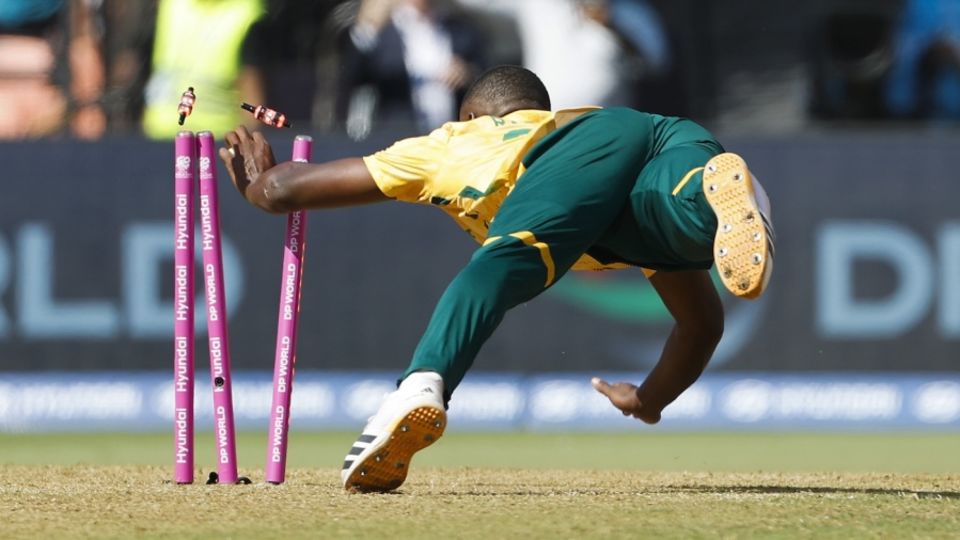
Super Overs condense chaos. Afghanistan posted 18. Omarzai struck firmly. South Africa’s margin shrank to minimal. David Miller began cautiously. Dewald Brevis injected urgency with a bold six. Farooqi’s slower ball disrupted rhythm again.
Then Tristan Stubbs delivered a last-ball six. Another tie. Emotion reset instantly. Players who had just lived through panic were forced to relive it again. This was no longer about tactics alone. It was about stamina of nerve.
Tactical Gambles and Consequences
The second Super Over shifted focus to strategy. Afghanistan chose seam through Omarzai instead of Rashid Khan’s spin. South Africa capitalized immediately. Stubbs punished length. Miller, still carrying scars from past ICC heartbreaks, struck decisively. Chasing 24, Afghanistan sent Mohammad Nabi ahead of Gurbaz to counter Keshav Maharaj’s spin.
The logic was clear. The timing questionable. Nabi fell early. Gurbaz later struck three towering sixes. But the required fourth proved unreachable. In contests defined by inches, sequencing becomes destiny.
Keshav Maharaj’s composure under fire was defining. He resisted panic. Varied width. Altered pace subtly. Forced elevation on the final delivery. Gurbaz’s last attempt lacked height. The catch completed the saga. South Africa finally exhaled. Composure, not aggression, closed the door.
Emotional Aftermath: Victory Without Euphoria
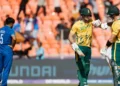
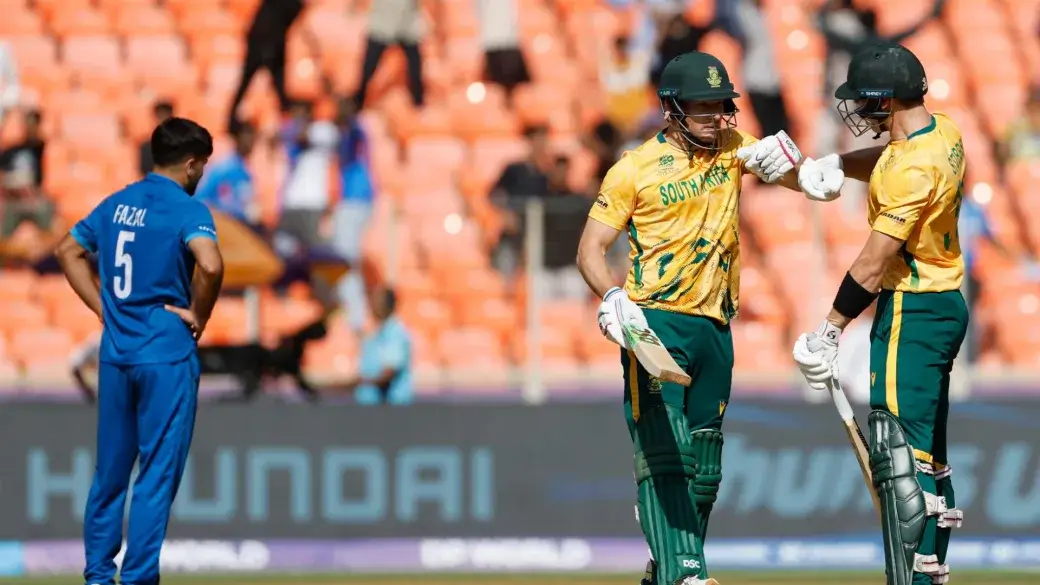
Celebrations erupted, but relief overshadowed joy. South African players embraced, yet faces revealed exhaustion. Afghanistan stood motionless, absorbing heartbreak. Double Super Overs extract psychological reserves rarely demanded in group stages. This was not just physical fatigue. It was emotional depletion. Rickelton’s words — blunt, almost weary — reflected truth. Even winning felt punishing.
Afghanistan will replay this match repeatedly. The no-ball reprieve. The risky second run. The bowling decision in the second Super Over. The batting order shuffle. Each choice was defensible. Each carried consequence.
But beneath the regret lies growth. Afghanistan matched South Africa ball for ball. They proved they belong in these moments. Experience at this intensity accelerates maturity.
South Africa’s Redemption Arc
South Africa’s ICC history carries weight. This victory does not erase past heartbreaks. But it reinforces belief that tight games can end differently. They did not collapse. They endured. Sometimes that shift in narrative matters more than aesthetic dominance.
This match likely shapes the Super Eights race. Afghanistan’s margin for error shrinks dramatically. South Africa gains breathing room.
In groups this competitive, one thriller can redefine pathways. This felt less like a group game and more like an early elimination battle.
This match reminded everyone that T20 cricket can compress emotion into unbearable fragments. Victory is not always about superiority.
Sometimes, it is about standing firm while chaos tries to pull you under. South Africa stood. Barely. And in doing so, they escaped one of the most nerve-shredding nights in World Cup history.