Ryan Rickelton’s path to the T20 World Cup has not followed the usual arc of form, selection, and confirmation. Instead, it arrived quietly, unexpectedly, and emotionally unresolved. One moment, he was planning domestic cricket and settling into life at home. The next, he was recalled from holiday and thrust back into the global spotlight. That abrupt shift says as much about modern squad dynamics as it does about Rickelton himself.
For much of the past year, Rickelton appeared to be drifting out of South Africa’s white-ball plans. Limited international returns, competition from established names, and a crowded top order pushed him to the fringes. Even a strong SA20 campaign felt unlikely to change that reality. He had made peace with it. That peace, however, was short-lived.
Injuries reopened doors. Opportunity returned without warning. Now, Rickelton enters the World Cup picture not as a guaranteed starter, but as a player armed with something many South African batters lack — recent, high-pressure experience in Indian conditions. His IPL stint, once a footnote, suddenly carries strategic weight.
This article explores how Rickelton’s mindset, IPL exposure, positional flexibility, and SA20 form combine to make him more than just an injury replacement. In the subcontinent, where margins are thin and adaptability defines success, Rickelton’s journey may yet prove timely.
From Non-Selection Peace to Sudden Recall — The Mental Whiplash of Modern Cricket
Ryan Rickelton’s World Cup call-up did not arrive with celebration first. It arrived with confusion. That reaction is important to understand because it reveals the psychological reality faced by players on the margins of elite squads. Rickelton had already processed rejection. He had already adjusted expectations. When the call finally came, it disrupted a mental equilibrium he had carefully built.
In modern international cricket, selection is rarely linear. Rickelton knew this. He had seen strong performances ignored before. After South Africa’s previous tours and his omission from key series, he assumed his SA20 runs were a personal win rather than a selection lever. That assumption shaped how he played — freer, calmer, detached from outcome. Ironically, that mindset may have produced the very form that forced selectors to reconsider.
The sudden recall following Tony de Zorzi’s injury placed Rickelton in a strange emotional space. Gratitude mixed with uncertainty. Excitement competed with doubt. He was joining a squad he did not believe he was part of. That matters because players perform best when clarity exists — either full belief or full freedom. Rickelton now has to rebuild belief quickly.
What works in his favour is maturity. At this stage of his career, Rickelton understands that opportunity does not always arrive cleanly. It arrives through circumstance. The key is not how it comes, but how it is used. Accepting that reality allows him to shift focus from selection politics to performance preparation.
World Cups reward players who can absorb chaos and simplify tasks. Rickelton’s ability to mentally reset — from overlooked to essential backup — may prove just as important as his cover drives or pull shots in India.
Why IPL Experience in India Changes Rickelton’s World Cup Value?
Ryan Rickelton’s international record in the subcontinent does not inspire immediate confidence. Two ducks in India. Minimal ODI returns. On paper, those numbers look alarming. But numbers without context mislead — and context is where Rickelton’s IPL experience becomes critical.
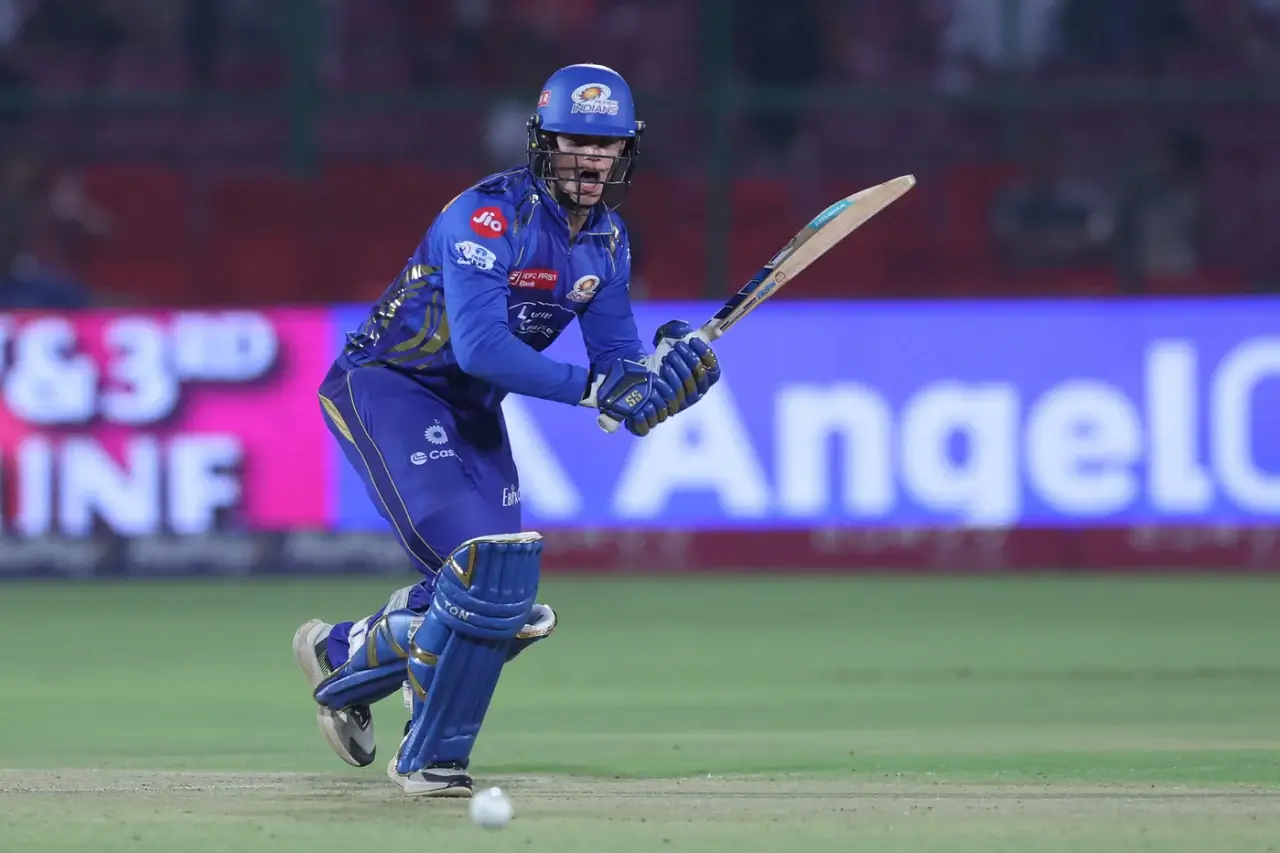
Playing the IPL in India is not just about runs. It is about exposure to pressure ecosystems unlike any other. Crowds, scrutiny, expectation, and relentless competition compress decision-making time. Rickelton’s 2025 IPL season with Mumbai Indians gave him exactly that environment. Fourteen innings. Multiple venues. Different pitch types. Different bowling attacks. That is real education.
In the IPL, Rickelton learned how Indian pitches evolve across phases. He experienced how bowlers adjust pace rather than swing. He faced high-quality spin in the powerplay and at the death. Most importantly, he learned that timing — not power — travels best in India. Those lessons cannot be simulated in nets or short bilateral tours.
His SA20 success shows what happens when that learning is applied without fear. The question now is whether he can transfer that confidence to international cricket. Rickelton believes he can, and that belief is rooted in familiarity.
At a World Cup in India, teams crave players who do not panic when the game speeds up. Rickelton may not yet be proven internationally in these conditions, but he is no longer inexperienced. That alone elevates his selection value significantly.
Positional Flexibility and the No.3 Question for South Africa
Ryan Rickelton’s likely role at the World Cup will differ sharply from his IPL usage. With Quinton de Kock and Aiden Markram preferred at the top, Rickelton is preparing for life at No.3 — a position that demands adaptability rather than dominance.
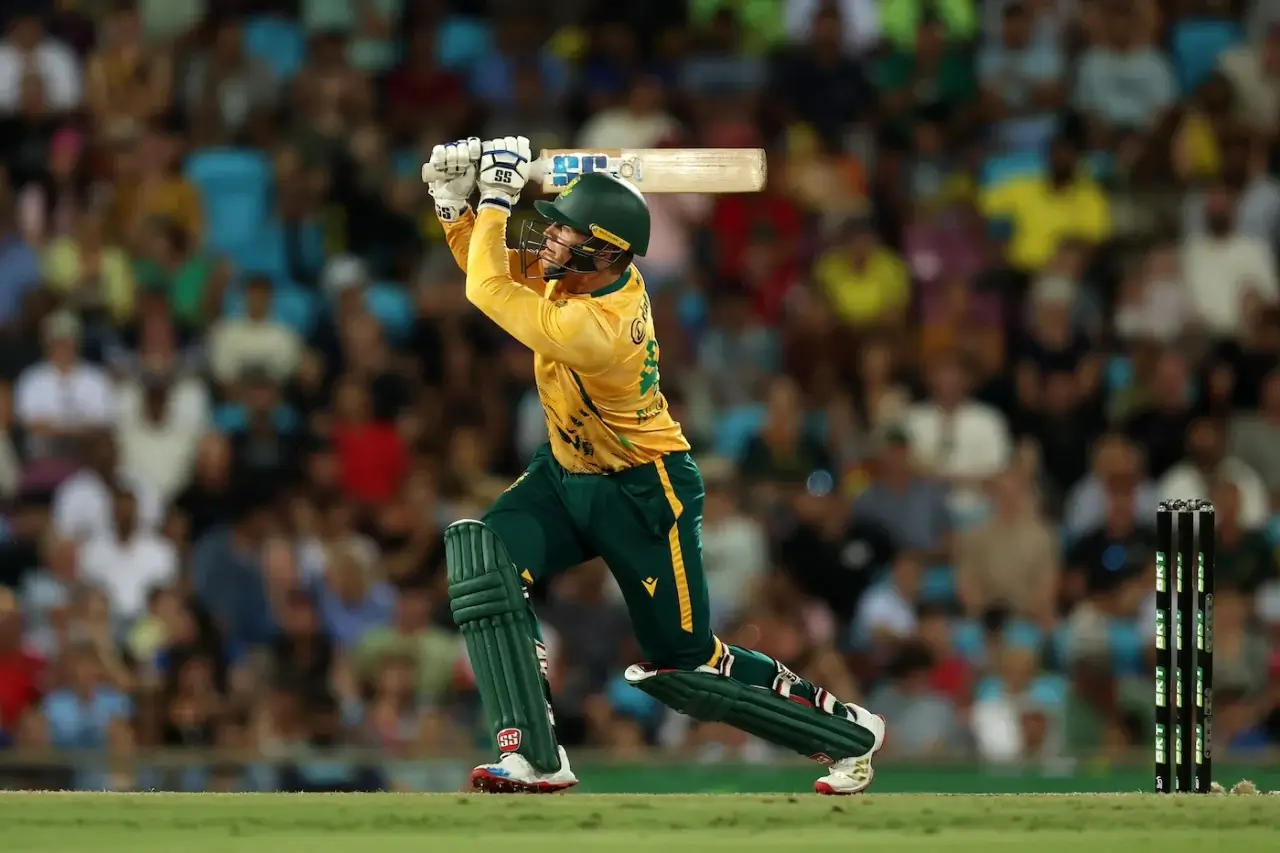
Batting at No.3 in T20s is a tactical role. Sometimes it means consolidating after early wickets. Sometimes it means attacking spin immediately. Other times, it means absorbing pressure so others can explode later. Rickelton’s SA20 season demonstrated he can do all three when clear in intent.
What works in his favour is his left-handedness. In a right-hand-heavy South African top six, Rickelton offers matchup disruption. That alone can force bowling changes and field adjustments. In Indian conditions, where spin overs are often planned two or three overs in advance, a left-hander at No.3 complicates strategy.
The challenge for Rickelton will be tempo. At No.3, the luxury of settling disappears. Decision-making must be immediate. His IPL experience helps here. He has already faced that demand under brighter lights and louder crowds.
If South Africa want batting depth without sacrificing balance, Rickelton fits. Not as a superstar. As a stabiliser who can accelerate when conditions allow. That role often decides knockout matches.
A Different South Africa, A Better Shot at Going One Step Further
Rickelton’s optimism about South Africa’s chances is not blind faith. It is informed by form across the squad. SA20 performances showed a top order firing in unison. De Kock, Markram, Rickelton, and Dewald Brevis all entered rare purple patches simultaneously. That matters.
South Africa’s 2024 World Cup run ended in heartbreak. Talent was not the issue. Execution under pressure was. Rickelton believes this group is better equipped emotionally. Experience has hardened them. Failures have clarified roles.
For Rickelton personally, this World Cup represents something else — legitimacy. He was part of the previous squad without playing a game. This time, he wants involvement. Contribution. Impact. That hunger often separates passengers from performers.
In a tournament where every game carries consequence, players who embrace pressure rather than fear it become assets. Rickelton’s journey — from peace with omission to sudden recall — has already tested his resilience. If he channels that correctly, South Africa gain more than just a replacement batter. They gain a player ready to seize the moment.
Conclusion
Ryan Rickelton’s World Cup call-up is not a fairytale. It is a reality shaped by timing, injuries, and preparation meeting unexpectedly. What he does with it will define his international future.
His IPL experience has armed him, and his SA20 form has announced him. His mindset now must sustain him. In Indian conditions, familiarity breeds calm — and calm wins tournaments. Rickelton may not have been part of the original plan. But World Cups are rarely won by original plans alone.