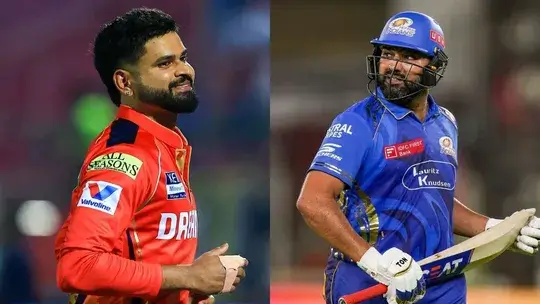
Mumbai Indians vs Punjab Kings is a matchup shaped more by batting intent than by bowling spells. Over multiple IPL seasons, this fixture has repeatedly highlighted how different teams interpret risk, tempo, and control. At the center of that contrast stand Rohit Sharma and Shreyas Iyer, two batters who influence games in very different ways without changing their basic identity.
Rohit Sharma’s batting represents disruption. He prefers to bend the game early, even if it means flirting with failure. Shreyas Iyer’s batting represents structure. He believes games are won by protecting the innings first and accelerating later. These ideas shape everything from powerplay plans to middle-over matchups. Understanding this contrast explains why MI and PBKS often arrive at similar scores despite taking completely different paths. Their methods are not accidental; they reflect how MI and PBKS want to play cricket.
Rohit Sharma and Mumbai Indians’ High-Risk Batting Model
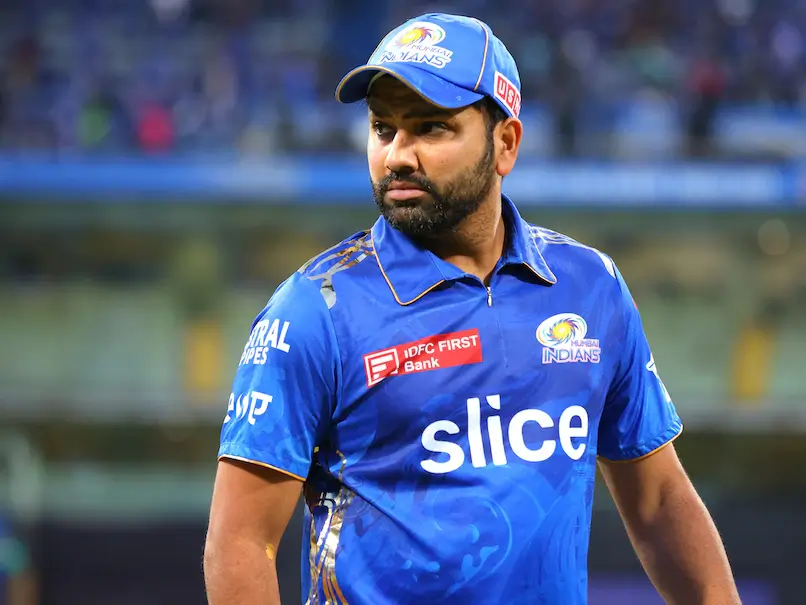
Rohit Sharma’s batting philosophy is rooted in early control through aggression. He does not wait for bowlers to settle or conditions to reveal themselves. From the first few overs, Rohit looks to impose pressure using timing rather than brute force, forcing captains to alter fields and bowling plans prematurely. Mumbai Indians have historically accepted the risk that comes with this approach because early momentum often compensates for later instability.
This model makes MI dangerous but volatile. When Rohit succeeds, the opposition spends the rest of the innings chasing control. When he fails early, MI’s middle order is forced into recovery mode earlier than ideal. Yet MI continues to back this approach because the upside is match-defining. Rohit’s role is not to bat long; it is to tilt the game decisively in MI’s favor within the first six overs.
Shreyas Iyer and Punjab Kings’ Structured Batting Identity
Shreyas Iyer operates from a completely different batting framework. His primary objective is innings continuity rather than instant damage. Punjab Kings rely on him to stabilize momentum, especially after early wickets or quiet powerplays. Shreyas focuses on reading bowlers, protecting his scoring zones, and ensuring the innings remains functional deep into the middle overs.
This structure gives PBKS resilience. Collapses are less frequent when Shreyas bats deep, and partnerships develop more organically. However, the trade-off is reduced early pressure on bowlers. PBKS often enters death overs needing acceleration rather than consolidating dominance. Shreyas’ value lies in control, but that same control can sometimes limit explosive finishes.
Powerplay Impact — Immediate Pressure vs Controlled Entry
The powerplay phase exposes the clearest difference between Rohit and Shreyas. Rohit treats the first six overs as a decisive window where bowlers must be attacked before they adjust. Boundaries matter more than strike rotation, and psychological pressure is as important as runs. MI’s intent is to win the match narrative early, even if wickets fall.
Shreyas, by contrast, uses the powerplay as an assessment phase. His priority is survival and clarity rather than dominance. PBKS is comfortable exiting the powerplay at moderate scores, trusting their middle overs to compensate. This difference often decides which team controls the tempo early, especially in matches where conditions favor batting.
Middle-Overs Control — Where Shreyas Gains Ground
Middle overs are where Shreyas Iyer’s batting becomes most influential. His ability to handle spin through footwork, balance, and shot placement allows PBKS to maintain scoring without panic. Rather than forcing boundaries, he builds pressure through constant rotation and selective aggression. This keeps bowlers from settling while preserving wickets.
Rohit’s influence is comparatively reduced during this phase, largely because his primary job is already done or unfinished. MI depends on other batters to sustain momentum here. If Rohit has failed early, MI often struggles to replicate Shreyas-like control. This is where PBKS frequently pulls matches back into balance.
Pressure Handling in High-Stakes Matches
Pressure magnifies personality, and Rohit Sharma has historically embraced high-stakes environments. His comfort in finals and knockout games comes from trusting instinct over calculation. Under pressure, Rohit often doubles down on intent rather than retreating. MI draws confidence from this fearlessness, even when it backfires.
Shreyas handles pressure by slowing the game. His response is composure rather than confrontation. While this prevents panic, it can also allow bowlers to regain control. In tight finishes, PBKS sometimes lacks the sudden burst that MI generates through Rohit. Pressure, therefore, sharpens their philosophical differences rather than narrowing them.
Team Dependency and Tactical Consequences
Mumbai Indians are heavily dependent on Rohit for early leverage. Their batting order is designed to capitalize on fast starts rather than recover from slow ones. This makes MI explosive but fragile. Punjab Kings are dependent on Shreyas for structural integrity. Their batting order functions better with him anchoring the middle overs.
Neither dependency is inherently flawed. They simply reflect different risk appetites. MI prefers volatility with upside. PBKS prefers stability with controlled progression. These choices influence not only results but also how matches unfold visually.
Matchups That Decide MI vs PBKS Outcomes
Rohit’s success against swing and hard-length bowling in the first six overs often decides MI’s ceiling. If bowlers fail to move the ball early, MI gains control quickly. Shreyas’ success against spin and defensive fields determines PBKS’s floor. If he rotates freely, PBKS remains competitive regardless of early losses.
These matchups repeat season after season. Results depend less on innovation and more on execution within these familiar patterns.
Conclusion
Rohit Sharma and Shreyas Iyer should not be judged through the same lens. They solve different problems for their teams. Rohit is tasked with bending matches early through aggression and belief. Shreyas is tasked with holding matches together through clarity and control. MI and PBKS are extensions of these philosophies, not deviations from them.
MI vs PBKS is therefore not just a contest of players but of ideas. Chaos versus control. Disruption versus structure. Understanding this contrast offers deeper insight than raw numbers ever can.