


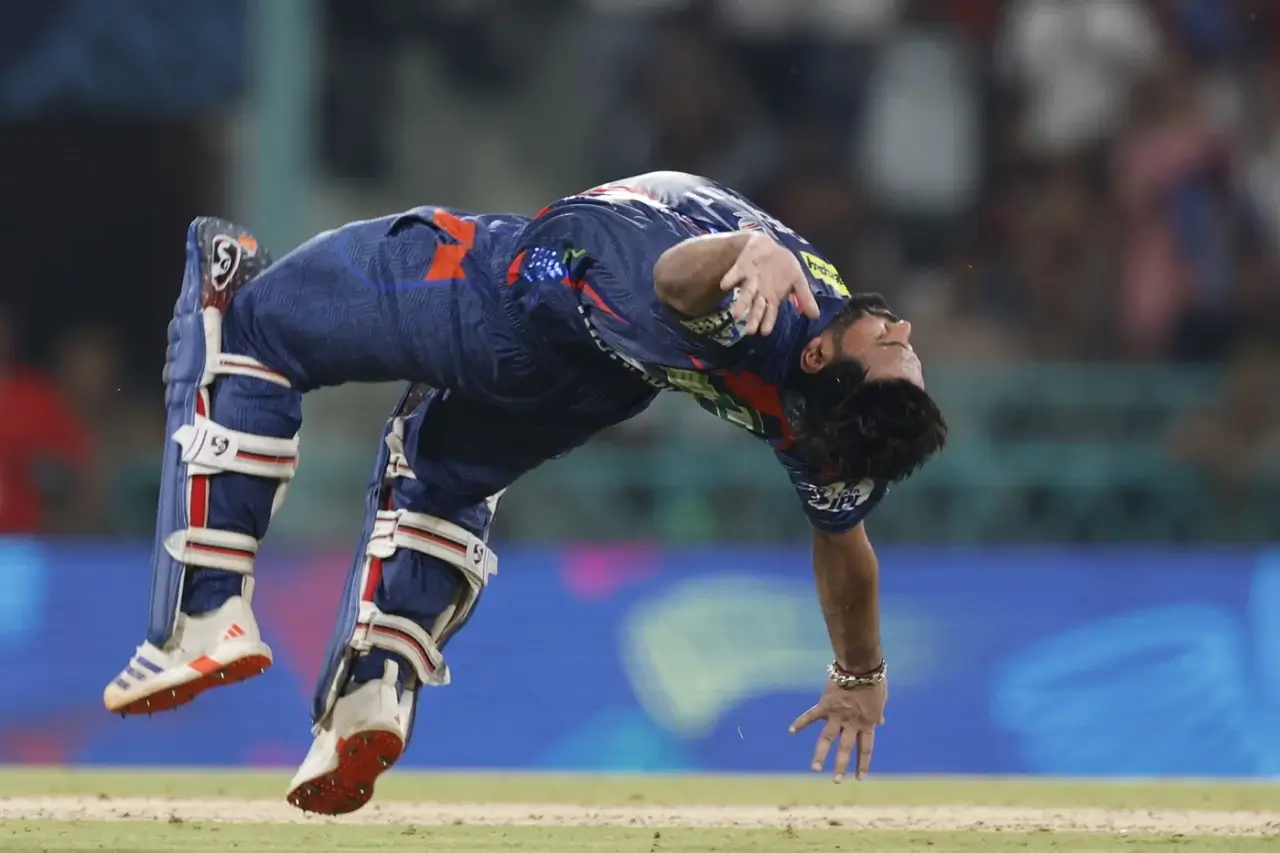
For years, Rishabh Pant has been defined by audacity. One-handed sixes. Falling scoops. Impossible angles. On this quiet December afternoon, he chose something else. Control.
Walking in at 98 for 3, Delhi were drifting. The pitch had bounce. Gujarat had momentum. The easy option would have been counterattack. Pant resisted that instinct. He stayed grounded, both literally and mentally, crafting a measured 70 off 79 balls.
The setting suited the mood. No roaring crowd. No noise beyond bat taps and appeals. From the BCCI Centre of Excellence, planes rose silently in the distance. Pant, usually airborne in strokeplay, stayed on the runway.
This innings was not about dominance. It was about recalibration. For a batter searching for white-ball clarity, it felt intentional. Almost necessary.
Context First: Why Delhi Needed Stability
Delhi’s innings had begun brightly. Virat Kohli raced away, scoring freely before falling for 77. His dismissal exposed a fragile middle order. The field spread quickly. Gujarat sensed control.
The pitch offered zip. Seamers extracted bounce. Left-arm spinner Vishal Jayswal used drift cleverly. Run-scoring was no longer simple.
Pant recognised the danger early. With wickets thin behind him, survival became strategy. Instead of forcing gaps, he nudged singles. Instead of lifting, he rolled his wrists. The scoreboard moved slowly, but it moved.
This phase mattered more than the runs themselves. Delhi needed occupation. Pant gave them time.
A Conscious Shift in Shot Selection
Pant’s early approach was uncharacteristically conservative. No aerial risks. No exaggerated backlift. He trusted placement over power.
Most runs came behind square. Soft hands beat the infield. He moved from 20 to 30 without drama. His stillness stood out. The tapping of his bat hinted at stored energy, not immediate release.
At 49, the release finally came. Ravi Bishnoi bowled a wrong’un outside his hitting arc. Pant waited. Then swung. The ball disappeared beyond long-on. It wasn’t reckless. It was selective. That distinction mattered.
Acceleration Without Abandoning Control
After reaching his fifty in 62 balls, Pant shifted gears. Footwork became livelier. Between balls, he looked more animated. The spring finally unwound.
He swept from his knees. He swivelled awkward bounce through cover. One shot, rising sharply outside off, was muscled with a helicopter-like follow-through. The power never left him. Only the timing of its use changed. He added 20 runs in 16 balls. The tempo rose, but the structure remained.
What the Numbers Say About Pant’s ODI Struggle
Pant’s white-ball challenge is well documented. One century in 31 ODIs. Average of 33.50. List A returns mirror the same inconsistency.
The issue has never been skill. It has been pacing. In Tests, freedom works. In ODIs, it often traps him between caution and chaos.
This innings suggested awareness. Not reinvention. Awareness.
He still fell before the crescendo. Dismissed for 70, just as Delhi began losing wickets in clusters. The familiar problem returned. The platform existed. The finish didn’t. Delhi closed at 254 for 9. Competitive, but below potential.
Comparison Point: The Ishan Kishan Template
There is a recent example Pant can borrow from. Ishan Kishan used the Syed Mushtaq Ali Trophy to rebuild rhythm. He simplified. He trusted accumulation. The aggression followed later.
Pant now has a similar window. Domestic cricket offers space. No immediate pressure. No spotlight glare. This 70 was not a statement innings. It was a working note. A draft.
Conclusion: Not Take-Off Yet, But Taxiing Forward
Pant did not soar in Bengaluru. He didn’t need to. He showed restraint, awareness, and intent to adapt. For a player often accused of stubborn flamboyance, that itself was progress.
The white-ball comeback will not arrive through one knock. But it may begin with innings like this. Where discipline leads. And flair follows. For once, Rishabh Pant chose to stay grounded. That might be exactly what lifts him back up.