India’s long-held home dominance now feels fragile. Recent months have exposed cracks across formats, starting with South Africa’s near-miss ODI challenge and a drawn-out T20I contest. The biggest shock arrived in Tests, where India were swept 2–0 at home. That backdrop has framed this ODI series against New Zealand as more than routine cricket. Even with a second-string squad, the visitors have pushed India into unfamiliar territory. The series is level at 1–1, but the balance of play has leaned New Zealand’s way.
They have looked sharper in planning, braver in execution, and calmer under pressure. India’s aura still exists, but it no longer intimidates by default. Sunday’s decider is therefore not just a match. It is a referendum on whether India can still close out high-stakes home games when challenged by smart, fearless opposition.
How has New Zealand controlled the Key Phases?
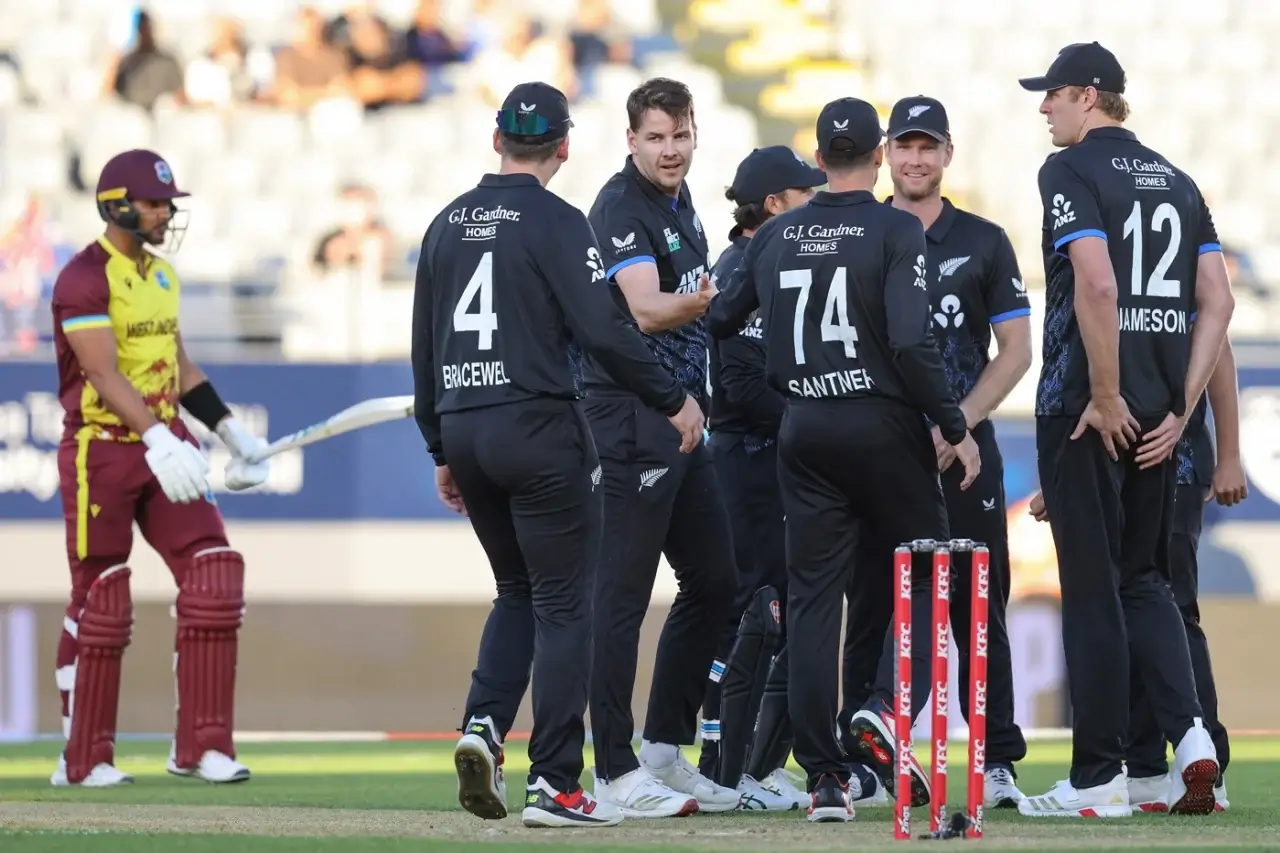
New Zealand’s success has not relied solely on star power. Instead, it has been built on winning the quieter phases. Their batters have dominated the middle overs, especially against spin, rotating strike with discipline and refusing risky shots. Their bowlers have attacked India’s scoring options rather than defending totals. The biggest edge, though, has been tactical clarity.
From bowling changes to field placements, New Zealand has repeatedly stayed one step ahead. Even when India won the first ODI, it felt more like an escape than control. In Rajkot, the visitors completed their dominance with a composed chase. This series narrative shows that New Zealanders are no longer visitors reacting to conditions. They are dictating them.
Spin Battle Has Tilted the Series
The most striking subplot has been spun. New Zealand’s less-celebrated options have outperformed India’s established names. Michael Bracewell and Glenn Phillips have controlled the pace and angles smartly. Debutant Jayden Lennox stunned India with accuracy and calm. In contrast, India’s spinners leaked runs at key moments and struggled to create sustained pressure.
The raw numbers underline the gap, but the bigger issue has been intent. New Zealand bowled to plans. India bowled to reputation. On flat Indian pitches, that difference matters. If the spinners again decide the middle overs, New Zealand will fancy their chances even in Indore.
Why Indore Still Favors India?
Despite recent worries, Indore remains India’s comfort zone. Holkar Stadium has been a run-fest venue, with short boundaries and true bounce. India has won every ODI here, often posting intimidating totals. Big scores reduce tactical complexity and allow India’s bowlers to attack with freedom. The pitch traditionally rewards positive strokeplay, which suits India’s top order. History, crowd energy, and conditions all lean towards the hosts. If India bats first and crosses 330, the pressure will shift sharply. Indore gives India the perfect stage to reassert dominance, but only if execution matches intent.
Selection and roles will matter more than sentiment. India is likely to bring in Arshdeep Singh to add left-arm variation. The bigger scrutiny remains on the overall balance. Ravindra Jadeja needs impact overs, not control alone, with Axar Patel waiting in reserve. Nitish Kumar Reddy faces a defining game after limited returns. Above all, India needs cleaner fielding. Dropped chances have repeatedly extended New Zealand’s innings. In a decider, such margins can decide history.
New Zealand’s Underdog Opportunity
This New Zealand squad is missing several first-choice names, yet that has freed them from expectation. Daryl Mitchell has anchored innings with authority, while Kyle Jamieson has unsettled India’s top order with bounce. Leadership from Bracewell has been calm and decisive. A win on Sunday would be unprecedented: New Zealand has never won an ODI bilateral series in India. That rarity adds hunger rather than fear. For this group, the chance to create history outweighs the pressure of the venue.
Ultimately, this decision may rest on India’s senior batters. Rohit Sharma thrives on true surfaces, while Virat Kohli has reinvented his ODI starts with early intent. If one of them bats deep, India regains control. If both fall early, New Zealand’s confidence will surge. Sunday’s match is more than a series finale. It is a snapshot of shifting power, evolving tactics, and a reminder that even the strongest fortresses need constant renewal. Indore will decide whether India restores order or New Zealand rewrites history.
Selection Calls That Could Shape the Decider
India are expected to make minor but meaningful tweaks for the series decider. The possible inclusion of Arshdeep Singh adds a crucial left-arm angle, especially useful during death overs where control has slipped. His ability to swing the new ball and vary the pace late could better balance the attack. The bigger question surrounds Ravindra Jadeja, whose bowling returns have been underwhelming by his standards.
With Axar Patel waiting on the bench, Jadeja’s role becomes central to India’s balance. Batting depth also matters, making Nitish Kumar Reddy a key figure. After a limited impact so far, this match could define his immediate ODI future. Beyond personnel, India’s biggest concern remains fielding standards.
Dropped catches and slow ground work have repeatedly extended New Zealand’s innings. In a high-pressure decider, those errors magnify quickly. Selection alone will not win this game. India needs sharper intent, cleaner execution, and better awareness in the field to tilt the contest back in their favor.
New Zealand’s Chance to Create a Defining Moment
For New Zealand, Sunday represents a once-in-a-generation opportunity. They have never won an ODI bilateral series in India, making this decider historically significant. What stands out is how this squad has embraced its underdog status. Missing several senior players has reduced pressure and encouraged bold decision-making. Daryl Mitchell has been central to that calm approach, absorbing pressure and punishing loose bowling.
His composure has unsettled Indian plans repeatedly. With the ball, Kyle Jamieson has extracted bounce and movement even on batter-friendly surfaces. His spells have prevented India from fully controlling the powerplay. Leadership from Michael Bracewell has tied everything together. He has trusted his players and stuck to plans under stress. A win in Indore would be more than a series victory. It would reinforce New Zealand’s reputation as a team that thrives in difficult conditions and delivers when expectations are lowest.
Rohit and Kohli Hold the Final Answer
When stakes rise, India’s hopes still rest heavily on experience. Rohit Sharma remains one of the most destructive batters on true surfaces like Indore. His ability to dominate pace early can flip momentum within minutes. Alongside him, Virat Kohli has reshaped his ODI approach. Faster starts and early boundary options have made him harder to contain. Together, they set the tone for India’s innings. If either bats deep, India gain control not just on the scoreboard but mentally.
New Zealand’s plans rely heavily on early breakthroughs. Should both fall cheaply, belief will surge through the visitors’ camp. Pressure then shifts sharply onto India’s middle order. This decider is not merely about runs scored or wickets taken. It is about who handles expectation better. For India, it is about protecting home dominance. For New Zealand, it is about challenging cricketing history itself.