

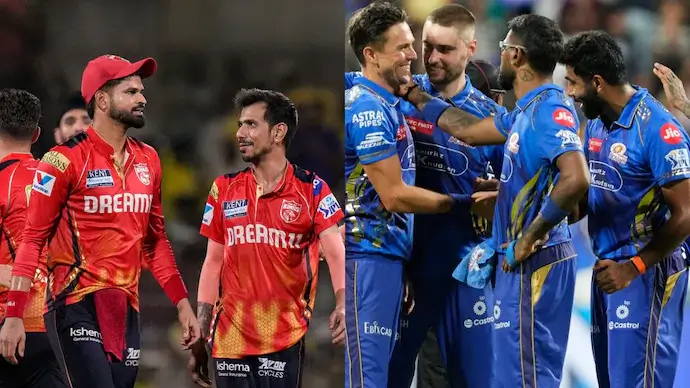
Matches between Mumbai Indians and Punjab Kings rarely lack drama. Big hits arrive early. Momentum swings quickly. For long stretches, Punjab Kings often look right in the contest. And yet, when the dust settles, Mumbai Indians usually walk away with the result.
This pattern is not coincidence. It is not about talent disparity. Punjab Kings possess power, pace, and match-winners. Mumbai Indians possess something more decisive — control over phases. T20 cricket at the highest level is no longer won by aggression alone. It is won by managing chaos better than the opposition.
This article breaks down the MI vs PBKS rivalry through nine critical lenses. Each explains why games feel close but finish unevenly, and why Mumbai’s methods repeatedly succeed against Punjab’s intent-driven approach.
Powerplay Aggression vs Powerplay Information Gathering
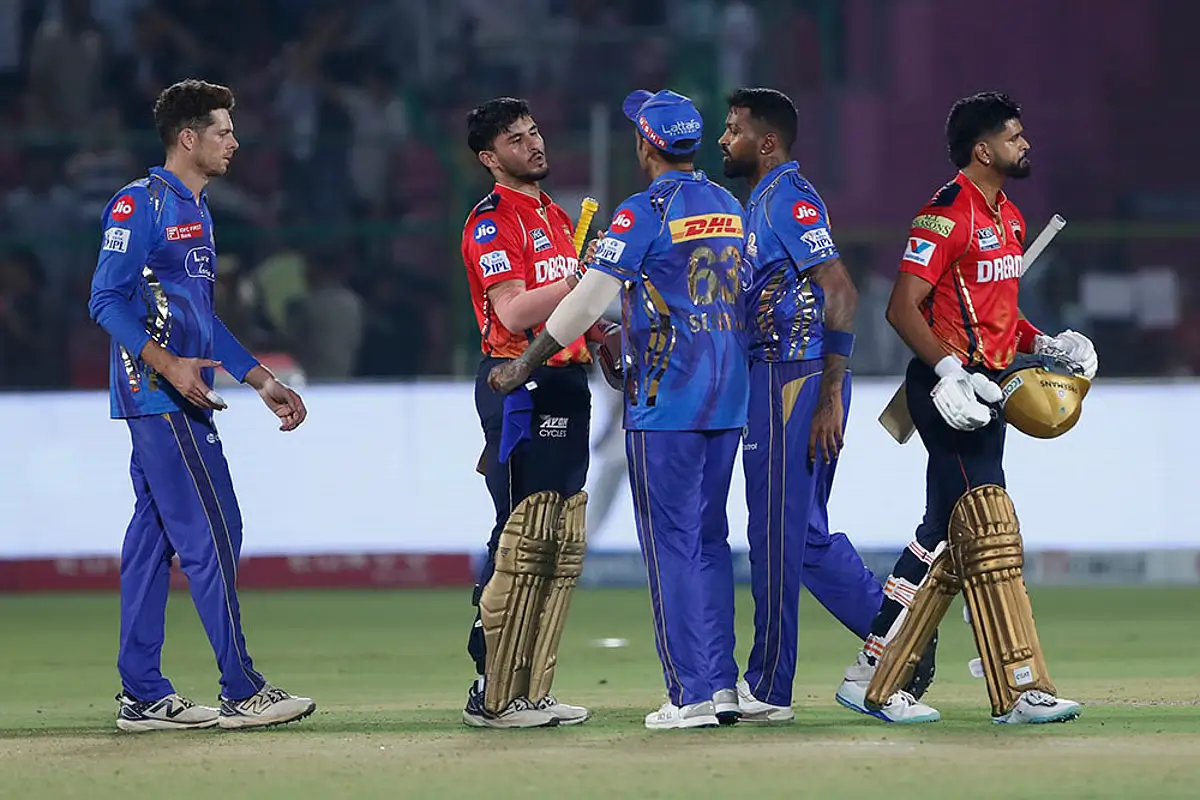
Punjab Kings usually enter the powerplay with clear attacking intent. Their openers look to dominate early, unsettle bowlers, and force defensive fields. This strategy creates fast starts and energises the innings. Against most teams, it works. Against Mumbai Indians, it often creates hidden problems.
Mumbai treat the powerplay differently. They do not chase wickets recklessly. They use the first six overs to collect information. Bowlers stick to hard lengths and wide lines, allowing singles while protecting boundaries. This denies PBKS the early surge they rely on.
The result is subtle. PBKS may score 45–50 in the powerplay, but without full control. Shot selection tightens earlier than intended. Risk creeps in by the eighth or ninth over instead of the twelfth.
Mumbai’s own powerplay batting reflects the same philosophy. They rotate strike heavily, identify bowlers, and delay aggression. That patience ensures wickets in hand later. This contrast shapes the entire match. Punjab play to dominate the start. Mumbai play to dominate the finish.
Middle Overs Are Where Mumbai Quietly Take Control
The middle overs rarely produce highlights, but they decide MI vs PBKS matches more than any other phase. Mumbai Indians use overs 7–15 to suffocate momentum. Pace is taken off the ball. Boundaries are protected aggressively. Singles are allowed only in safe directions.
Punjab Kings struggle most in this window. Their batting thrives on rhythm and flow. Mumbai break that rhythm deliberately. Even without wickets, pressure builds through dot balls and forced risk.
When Punjab bowl in the same phase, control often slips. They search for wickets instead of restricting runs. One loose over releases all the pressure created earlier. This difference explains why MI often enter the death overs with clarity, while PBKS arrive carrying uncertainty.
Death Overs Reveal the Execution Gap
Death overs expose teams brutally. Mumbai Indians arrive with detailed plans. Yorkers are trusted. Slower balls are disguised. Fields are set in advance.
Punjab Kings often depend heavily on one death specialist. If execution falters, alternatives are limited. Once confidence drops, batters sense hesitation instantly.
Mumbai batters thrive in this environment. They wait for errors. One missed yorker turns into two boundaries. Momentum shifts sharply.
This execution gap explains why PBKS struggle to defend even competitive totals against MI. The difference is not courage. It is repetition under pressure.
Batting Depth Changes Decision-Making
Mumbai Indians bat deep. That depth reshapes mindset. Batters attack knowing cover exists. Risk feels calculated, not desperate.
Punjab Kings bat with power, but depth confidence varies. When early wickets fall, caution replaces aggression. Required rates rise silently.
Depth is not just personnel. It is trust. Mumbai trust their lower order. Punjab manage theirs. In close chases, that trust decides outcomes.
Mumbai’s leadership intervenes early. Bowling changes arrive before damage spreads. Fields anticipate shots instead of reacting.
Punjab’s leadership often adjusts one over late. In T20 cricket, that delay is decisive. One extra over from the wrong bowler can swing the match. This timing advantage repeatedly favours Mumbai.
Why PBKS vs MI Matches Feel Close for 15 Overs?
Most PBKS vs MI games remain competitive deep into the innings. Punjab often match Mumbai run for run early. The illusion of parity holds until the final phase.
The reason games tilt late is simple. Mumbai plan backwards. Punjab plan forwards. Mumbai prepare for endings. Punjab focus on starts.
Modern T20 cricket rewards teams that peak late. Mumbai understand this better than anyone.
Pressure Handling Under Lights
Mumbai Indians treat pressure as routine. Their players have lived these moments repeatedly across seasons and venues.
Punjab Kings play pressure as an event. Shot selection changes abruptly. Bowling plans shift mid-over. Against elite teams, emotional control matters as much as skill. Mumbai regulate emotion. Punjab ride it.
Mumbai’s fielding creates pressure without noise. Singles are cut off. Boundaries are saved. Mis-hits turn into wickets.
Punjab’s fielding has improved but lapses still appear in key moments. Against Mumbai, those lapses multiply consequences. In T20s, ten saved runs often equal one wicket. Mumbai consistently win that battle.
What PBKS Must Fix to Flip This Rivalry?
Punjab Kings do not need a reinvention. They need refinement. Death-over depth. Middle-over control. Clearer batting roles. Faster tactical responses.
The gap is bridgeable. But it requires patience and structure, not just intent. Until then, MI vs PBKS will continue to feel competitive — and finish predictably.
MI vs PBKS is not a rivalry defined by dominance. It is defined by decision-making under pressure. Punjab Kings bring intent and energy. Mumbai Indians bring control and clarity.
In modern T20 cricket, clarity wins more often.
That is why Mumbai Indians keep winning the moments that matter most.

