

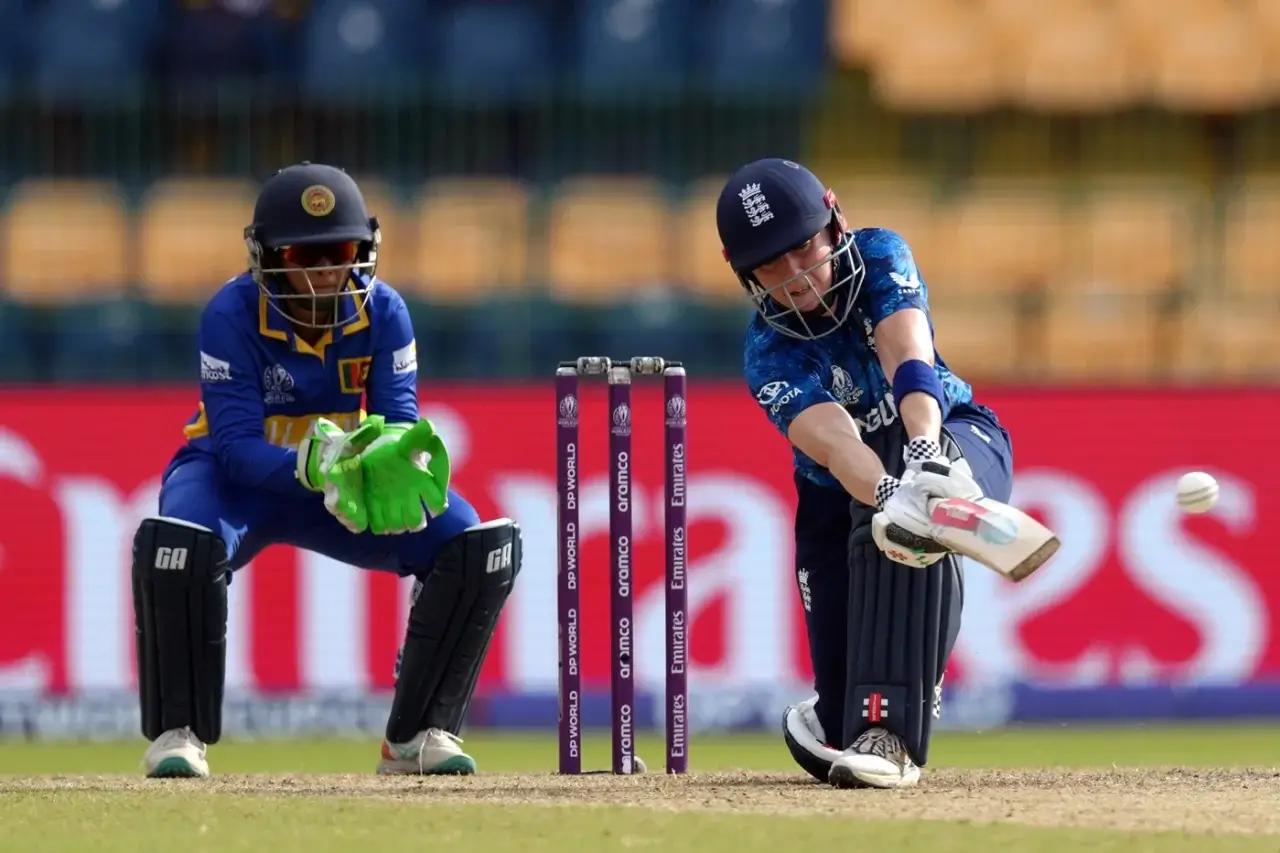
Women’s cricket is no longer in a phase of promise. It has entered a phase of proof. For years, progress was discussed in terms of potential and intent. Now, it is measured through output and impact. The fourth Women’s T20I between India and Sri Lanka in Thiruvananthapuram delivered numbers that demand attention rather than sympathy. Big totals, sustained aggression, historic partnerships, and career-defining milestones arrived together in one evening.
When a single match reshapes multiple record books, it stops being a coincidence. It becomes evidence of structural evolution. This was not a one-sided run-fest created by an imbalance. Both teams stretched the format.
India’s dominance and Sri Lanka’s fearless response combined to produce a contest that felt modern, bold, and commercially viable. The statistics from this match do not just describe a game. They explain where women’s cricket now stands.
India’s 221 Shows a Shift From Competitive to Dominant

India’s score of 221 is now their highest total in women’s T20Is. That figure matters because it was not built on panic or late acceleration. The innings unfolded with clarity from the opening over to the final delivery.
This was the fourth time India crossed 200 in women’s T20Is, and all four instances have come in recent seasons. That pattern signals planning, not spontaneity. Batters now operate with clearly defined roles across phases. The power play establishes tempo. The middle overs sustain momentum. The death overs finish decisively.
The boundary distribution reinforced that balance. India struck 28 fours and eight sixes, showing that placement and power are now complementary tools. High totals are no longer dependent on one extraordinary innings. They are collective outcomes produced by structure.
Sri Lanka’s 191 Confirms Growing Competitive Depth
Sri Lanka’s 191 was equally significant. It became their highest-ever women’s T20I total, achieved against one of the strongest sides in the world. The context elevates the number.
The chase began at full throttle. Sri Lanka reached their fastest-ever fifty against India in just 3.3 overs. That early intent disrupted India’s bowling plans and forced defensive adjustments. The contest never felt like damage control. It felt like a pursuit.
Competitive chases are essential for the sport’s growth. They ensure big totals do not feel hollow or rehearsed. Matches like this validate the women’s game as a genuine contest rather than a highlight reel.
Smriti Mandhana’s Career Numbers Reflect an Era, Not a Phase
Smriti Mandhana crossed 10,000 international runs during this match. Only three women reached this milestone before her. Among Indians, only Mithali Raj belongs to this elite group.
Mandhana achieved the landmark in just 280 innings. That efficiency separates longevity from dominance. She also became India’s leading six-hitter in women’s T20Is, overtaking Harmanpreet Kaur.
These records challenge outdated assumptions about women’s batting. Power, consistency, and durability now coexist at the top level. Mandhana’s career trajectory mirrors the sport’s upward curve, where technical excellence meets modern aggression.
Mandhana and Shafali: The Opening Pair That Redefined Powerplays
The opening partnership of 162 is now India’s highest stand for any wicket in women’s T20Is. Shafali Verma and Mandhana already dominated partnership records. This stand extended their authority.
They are now the first pair in women’s T20Is to cross 3000 partnership runs. They also hold the most 50-plus stands in the format. These numbers are not built on occasional brilliance. They are sustained outputs across seasons.
Their contrasting styles unsettle bowling attacks early. Mandhana manipulates gaps with timing. Shafali overwhelms fields with raw power. Together, they accelerate tempo before opposition plans can settle. Strong opening pairs define eras, and this one is actively shaping one.
The unbeaten 53-run stand between Richa Ghosh and Harmanpreet Kaur came at a run rate of 13.82. That is elite finishing by any T20 benchmark.
Ghosh’s strike rate of 250 highlighted how India’s lower order has evolved. Finishing is no longer improvised under pressure. It is rehearsed and intentional. Strong starts are now converted into match-defining totals rather than merely defended. Batting depth is the clearest indicator of elite teams. India now possesses it consistently across formats.
A 400-Run Match Signals a Format-Level Transformation
The combined 412 runs made this the third-highest aggregate in women’s T20I history. Only two other matches globally crossed the 400 mark before this encounter.
Such aggregates reshape perception. They attract neutral audiences and they encourage deeper tactical analysis. They justify increased broadcast investment and commercial interest. High-scoring matches expand the sport’s reach beyond its core audience.
Crucially, these totals were earned on merit. There were no shortened boundaries or experimental bowling attacks. The credibility of these numbers strengthens their long-term impact.
Why are these numbers appearing More Frequently Now?
Women’s cricket has undergone foundational change. Fitness standards are higher. Strength training is embedded. Technical coaching is specialised and data-driven. Young batters now learn power-hitting mechanics early in development pathways.
Franchise leagues have accelerated confidence. Players arrive in international cricket battle-hardened rather than tentative. Fearlessness is no longer instinctive, but is coached and reinforced. Statistics rise when standards rise. The correlation is direct and undeniable.
What This Match Says About the Future of Women’s Cricket?
This game was not an exception. It was confirmation. Women’s cricket is entering a phase where high-scoring matches, global stars, and competitive depth coexist on a regular basis.
Young audiences now associate the women’s game with sixes, records, and momentum rather than caution. That shift reshapes aspiration and builds fandom organically.
The rise is no longer theoretical. It is statistical, visible, and accelerating. Yes, women’s cricket is on the rise. And this match explained why. When records fall across teams, partnerships, and eras in a single night, the sport announces its arrival. What unfolded in Thiruvananthapuram was not just history and it was a direction.

