

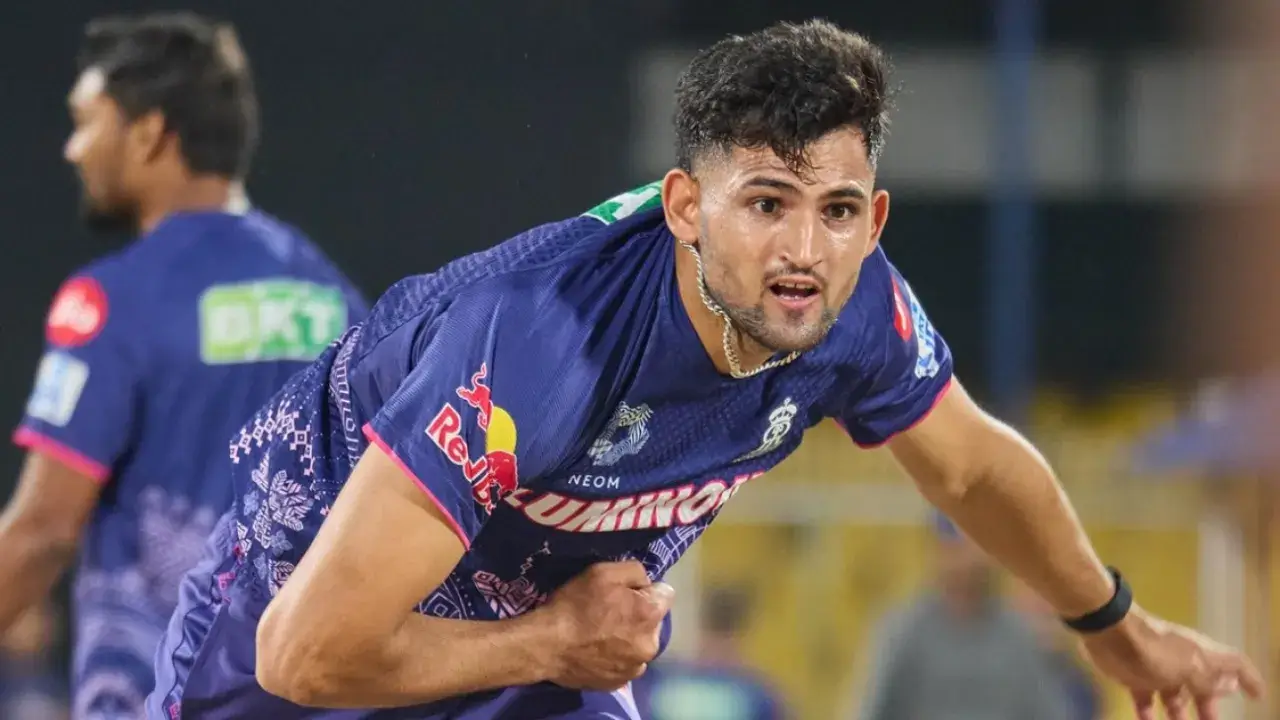
The IPL 2026 auction marked a decisive shift in how franchises value Indian domestic talent. For the first time, uncapped players did not just attract interest, they dominated the headline numbers. Chennai Super Kings emerged as the central force behind this change, investing aggressively in youth and long-term potential.
Two teenagers, Prashant Veer and Kartik Sharma, became the symbols of this transformation. Each fetched INR 14.2 crore, making them the joint-most-expensive uncapped Indian players in IPL history. Their rise reflects how deeply franchises now scout domestic tournaments across the country.
This auction was not about reputation alone. It was about skill projection, role clarity, and future readiness.
Prashant Veer: CSK’s Long-Term Allround Bet
Prashant Veer’s journey from a INR 30 lakh base price to a INR 14.2 crore signing was one of the auction’s most dramatic moments. The 20-year-old left-arm spin allrounder from Uttar Pradesh attracted sustained bidding from Mumbai Indians, Lucknow Super Giants, Rajasthan Royals, Sunrisers Hyderabad, and eventually CSK.
Veer has limited T20 exposure, with just nine domestic matches. However, his performances in the UPT20 League, Syed Mushtaq Ali Trophy, and Under-23 competitions consistently caught scouting attention. CSK identified him as a strategic replacement profile following the trade involving Ravindra Jadeja.
His skill set fits modern IPL needs. He offers control with the ball, flexibility with the bat, and adaptability across conditions.
Kartik Sharma: The Finisher CSK Were Willing to Pay For
Soon after securing Veer, CSK doubled down on their vision by matching the same price for Kartik Sharma. The 19-year-old wicketkeeper-batter from Rajasthan has built a reputation as a fearless lower-order finisher.
Kartik’s numbers underline his value. In 12 T20 matches, he has scored 334 runs at a strike rate of 164, including 28 sixes. His ability to clear boundaries late in the innings triggered fierce bidding involving MI, LSG, KKR, SRH, and CSK.
CSK’s persistence paid off again at INR 14.2 crore. Kartik’s signing reflects the premium placed on finishing power and composure under pressure.
Most Expensive Uncapped Indian Players in IPL History
| Rank | Player Name | IPL Season | Team | Auction Price (INR) | Player Role |
|---|---|---|---|---|---|
| 1 | Prashant Veer | IPL 2026 | CSK | 14.2 crore | Left-arm spin allrounder |
| 1 | Kartik Sharma | IPL 2026 | CSK | 14.2 crore | Wicketkeeper-batter |
| 3 | Avesh Khan | IPL 2022 | LSG | 10 crore | Fast bowler |
| 4 | Auqib Nabi | IPL 2026 | DC | 8.4 crore | Fast bowler |
| 5 | Mangesh Yadav | IPL 2026 | RCB | 5.2 crore | Pace allrounder |
Insight:
IPL 2026 alone occupies three spots in the top five. This shows a clear valuation reset for uncapped Indian talent.
Prashant Veer vs Kartik Sharma – Skillset Comparison
| Category | Prashant Veer | Kartik Sharma |
|---|---|---|
| Age | 20 years | 19 years |
| State Team | Uttar Pradesh | Rajasthan |
| Primary Role | Spin allrounder | Wicketkeeper-finisher |
| Batting Style | Left-handed | Right-handed |
| Bowling | Left-arm orthodox | Part-time / None |
| T20 Matches | 9 | 12 |
| Strike Rate | Limited data | 164 |
| Sixes Hit | NA | 28 |
| Auction Price | INR 14.2 crore | INR 14.2 crore |
Why this matters:
CSK paid the same amount for two completely different roles, showing role-based pricing instead of reputation-based pricing.
CSK Auction Strategy – Then vs Now
| Aspect | Old CSK Philosophy | IPL 2026 Shift |
|---|---|---|
| Player Age | Experienced veterans | Young domestic talent |
| Spending Pattern | Conservative | Aggressive |
| Indian Core | Limited refresh | Heavy investment |
| Scouting Focus | IPL performance | Multi-league tracking |
| Risk Appetite | Low | High but calculated |
Other High-Value Uncapped Indians at IPL 2026 Auction
| Player | Team | Price (INR) | Role | Key Strength |
|---|---|---|---|---|
| Auqib Nabi | DC | 8.4 crore | Fast bowler | New-ball control |
| Mangesh Yadav | RCB | 5.2 crore | Pace allrounder | Death overs |
| Tejasvi Dahiya | KKR | 3 crore | Wicketkeeper | Middle-order stability |
| Mukul Choudhary | LSG | 2.6 crore | Wicketkeeper | Finishing |
| Akshat Raghuwanshi | LSG | 2.2 crore | Batter | Top-order intent |
IPL 2026 vs Previous Auctions
| Metric | Pre-2026 Average | IPL 2026 |
|---|---|---|
| Highest uncapped bid | 10 crore | 14.2 crore |
| Teams bidding aggressively | 2–3 | 6–7 |
| Focus on teenagers | Rare | Common |
| Domestic leagues tracked | 2–3 | 6+ |
Clear takeaway:
IPL franchises now treat domestic tournaments as primary talent pipelines, not secondary options.
Why CSK Changed Their Auction Philosophy?
CSK head coach Stephen Fleming openly acknowledged a strategic evolution within the franchise. He admitted that past success may have delayed adaptation, but IPL 2025 forced a reassessment of squad balance and skill requirements.
The focus has now shifted to building a strong Indian core. Scouting has expanded across multiple domestic leagues, with decisions driven by long-term roles rather than immediate returns alone.
For CSK, these signings are not impulse buys. They are calculated investments backed by months of data, trials, and observation.
Uncapped Indians Cash In Across Franchises
Veer and Kartik were not isolated cases. The auction saw several uncapped Indians command premium prices. Jammu and Kashmir pacer Auqib Nabi went to Delhi Capitals for INR 8.4 crore after consistent domestic performances.
RCB secured pace allrounder Mangesh Yadav for INR 5.2 crore, despite his limited T20 experience. Multiple wicketkeepers and batters crossed the INR 1 crore mark, highlighting growing trust in India’s domestic pipeline.
This trend shows franchises are no longer hesitant to invest heavily in uncapped players if the skill profile fits modern IPL demands.
What does this mean for the Future of IPL Auctions?
The IPL 2026 auction may be remembered as a turning point. Uncapped players are no longer bargain picks or bench options. They are core assets with defined roles and long-term value.
Domestic leagues now carry greater financial and professional weight. Performances there directly influence IPL futures. For young players, the pathway is clearer but the expectations are higher.
For franchises, the message is simple. The next IPL star may already be playing in a local league, waiting to be trusted.