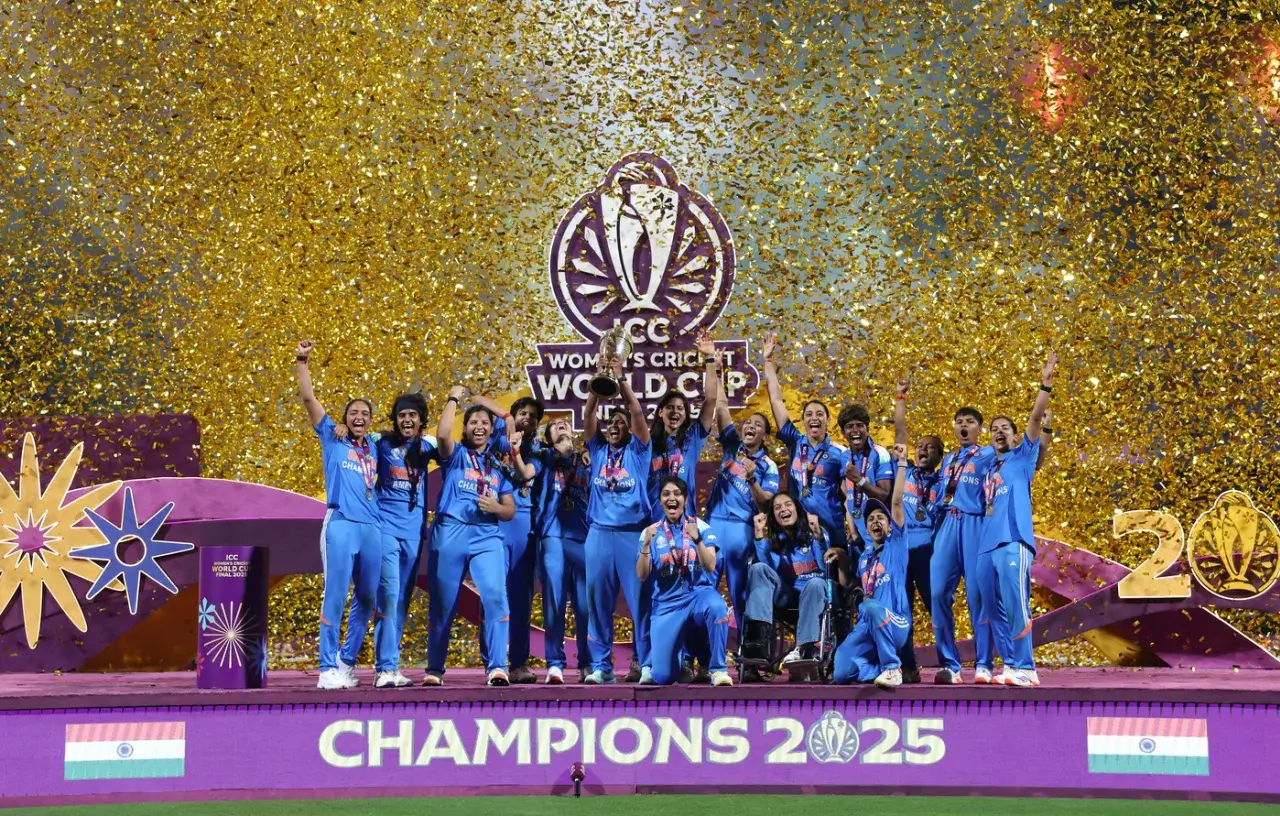
When India Women lifted the World Cup in Navi Mumbai, it wasn’t just a sporting victory. It was a revolution born from decades of silent perseverance. Nearly 40,000 fans filled DY Patil Stadium as golden confetti rained down, celebrating something bigger than cricket. For the first time, the country embraced its women athletes with the same passion usually reserved for the men. The numbers spoke volumes too — 185 million streamed the final, and 92 million watched on TV, matching the viewership of the Men’s T20 final in 2024.
From the cheers to the tears, it was a night when India’s women took their rightful place in the nation’s heart. But this triumph wasn’t sudden. It was built on years of struggle, sacrifice, and unshakable belief.
A Nation Awakens to Women’s Cricket
The ripple effect of that victory spread fast across India. In Chennai, 85-year-old Vijaya Subramanian wept with joy, declaring it “the true beginning” for women’s cricket. In Bengaluru, five-year-old Akshara picked up her first bat, copying Jemimah Rodrigues’ sweeps. Her mother soon began calling cricket academies, inspired by her daughter’s sudden spark.
Across Mumbai, coaches were flooded with calls from parents wanting to enroll their daughters. One academy reported over 200 new inquiries within a week of the final. Some husbands even called asking for women’s training sessions — a symbolic sign that change had begun at home. In Andhra Pradesh, crowds celebrated in the streets, fireworks lighting up Kakinada as India’s women were finally celebrated like national heroes.
Decades in the Shadows, Now in the Spotlight
For years, women’s cricket existed outside the limelight, treated as an afterthought. Many players grew up facing mockery or discouragement. Harmanpreet Kaur once played with a hockey stick because no cricket bat was available. Shafali Verma cut her hair short just to train unnoticed. They had to disguise their dreams to chase them.
The discrimination wasn’t just social but institutional. Players often had to justify every loss more harshly than their male peers. Even during this World Cup, after early defeats, social media mocked them with sexist remarks. The criticism wasn’t about tactics — it was personal and misogynistic. Yet, when Rodrigues and company stunned Australia in the semi-final, the same voices turned to applause.
This win didn’t just silence critics — it redefined resilience.
From Sidelined Spectators to Stadium Heroes
Women’s cricket in India has long fought for visibility in male-dominated spaces. For decades, commentary booths, fan discussions, and living rooms were seen as “men’s cricket zones.” Women fans often felt they had to prove their knowledge just to belong.
But this World Cup flipped that script. The stadiums were filled with women chanting names like Smriti, Harman, and Deepti with pride. Social media timelines that once ignored women’s cricket were now filled with analysis, admiration, and love. Male fans began discussing strike rates, spin matchups, and fielding brilliance — not gender.
The shift was cultural, not just sporting. India’s women were no longer guests in their own game.
A Win That Healed Generations of Struggle
When Harmanpreet lifted the trophy, it was a victory for more than her team. It was also for the pioneers who came before — Diana Edulji, Sudha Shah, and Shubhangi Kulkarni. These women once played without pay, attention, or recognition. Sitting together in the stands during the final, tears in their eyes, they saw their lifelong fight validated.
Sudha Shah shared how a young boy called her after the final, confessing he never believed “girls could play like that.” That one sentence captured the impact of this victory. It wasn’t just a win; it was a rewriting of belief systems that had held back women for decades.
For these veterans, the night symbolized healing — proof that their sacrifices were not forgotten.
Beyond the Field – Changing Perceptions at Home
The impact of this World Cup extended far beyond the boundaries of the field. For parents across India, it was a wake-up call to let daughters dream bigger. In small towns like Chhindwara and Dharamsala, girls began practising under streetlights, inspired by Renuka Singh and Kranti Gaud.
This victory compelled society to confront its deeply rooted biases. Cricket, once a symbol of masculine identity, has begun to represent equality. For the first time, many fathers admitted to feeling pride in their daughters choosing sports over traditional roles. Such shifts may seem small, but they mark the start of cultural transformation.
The trophy became a mirror, reflecting not only sporting excellence but also changing mindsets.
Emotional Honesty Redefines Strength
Another key moment in India’s campaign was emotional openness. Jemimah Rodrigues spoke publicly about her anxiety and how she learned to seek help. Harmanpreet Kaur admitted she often cries in the dressing room after tough games. The team’s hugs to South African players after the final reflected empathy rarely seen in elite sport.
These gestures challenged outdated notions that athletes must hide emotions to appear “strong.” The women’s team showed that mental health, compassion, and vulnerability are strengths too. It sent a message to millions — that courage also means being human.
The Road Ahead – Sustaining the Revolution
The question now is how to keep the momentum alive. Sudha Shah rightly said, “Winning is great, but staying on top is harder.” The BCCI must continue its grassroots programs, expand India A tours, and create equal investment across levels.
This win should not fade as a moment of emotion. The structure must evolve — from school tournaments to professional contracts for domestic players. Media coverage, sponsorships, and stadium access should remain consistent, not seasonal.
If India can build on this success, the next generation will grow up seeing women’s cricket as normal, not exceptional.
The Unstoppable Future of India’s Women
India’s women have broken barriers that once seemed unshakable. They have shown that talent, not gender, defines greatness. Every sweep shot from Rodrigues, every yorker from Renuka, and every calm smile from Harmanpreet has rewritten the story of Indian sport.
The girls who watched this final will grow up with new heroes — not replacements for men’s cricket, but equals standing beside it. The revolution has begun, not in stadiums alone but in classrooms, homes, and playgrounds.
This isn’t the end of a journey. It’s the unstoppable beginning of India’s women — on and beyond the pitch.