

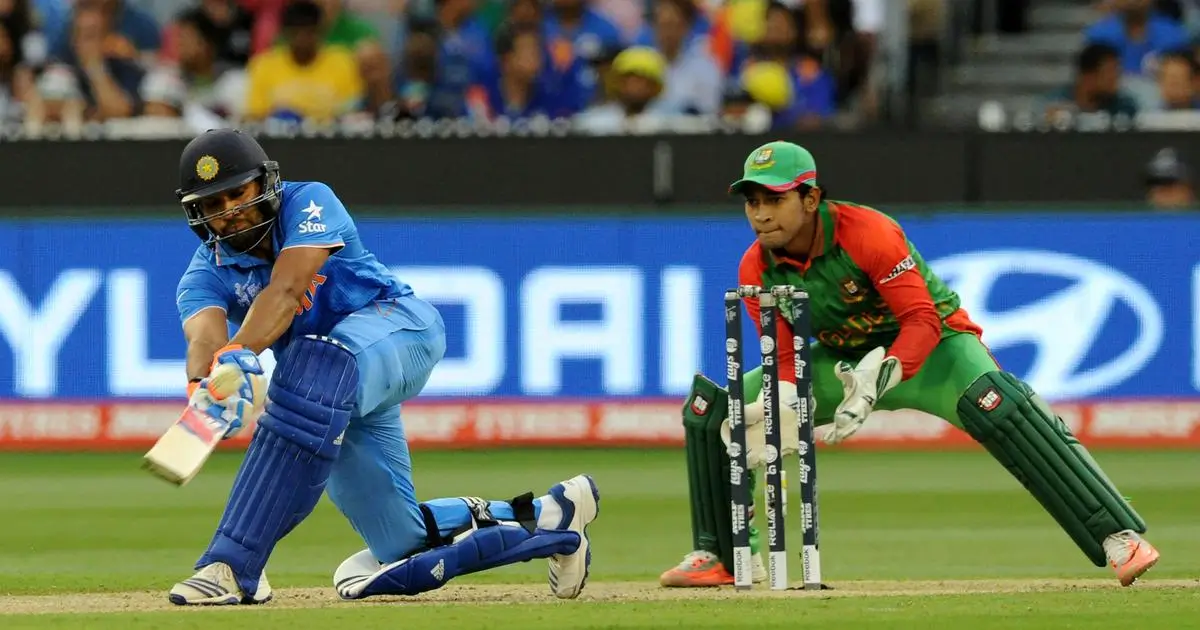
The India vs. Bangladesh rivalry rarely generates noise. It does not dominate headlines. It does not promise spectacle. Yet it consistently delivers examination. On paper, India appears to hold a clear advantage. In reality, these contests probe rhythm, discipline, and adaptability more than most bilateral series.
Bangladesh no longer approaches India as a wide-eyed challenger. They arrive with planning, specialists, and belief. India, meanwhile, treats these matches as checkpoints rather than showcases. Squad rotation, role clarity, and pressure handling often matter more than the final margin.
This rivalry has evolved quietly. It now reveals more about modern international cricket than many higher-profile contests.
Table of Contents
ToggleWhy India vs Bangladesh Games Rarely Follow the Script?
Timelines between India and Bangladesh often flatter India. Match flow rarely does. Bangladesh stretches games deeper than expected across formats. Early overs are controlled. Middle phases tighten. Momentum shifts in short bursts. India is forced to adapt rather than cruise. Comfort never arrives immediately.
These matches demand patience. When India rushes phases, Bangladesh gains confidence. When India stays structured, control returns gradually. That constant push and pull defines this rivalry. It is demanding without being dramatic.
Bangladesh bowls with purpose, not desperation. Their plans focus on disruption rather than wickets alone. Spinners operate on hard lengths. Pace bowlers use cutters into the surface. Fields are set to deny singles before boundaries. The aim is simple. Break India’s scoring rhythm.
Indian batters are often forced into resets. Partnerships rebuild tempo repeatedly. That constant recalibration tests discipline. Bangladesh succeeds when India loses patience. That remains their most reliable opening.
The Middle Overs Decide Control More Than the Powerplay
Powerplays rarely decide India vs Bangladesh matches. The middle overs do. India dominates when the rotation stays fluent. Singles prevent pressure. Boundaries come without forcing shots. Bangladesh struggles when dot-ball pressure disappears.
When India stalls, spinners gain grip. Required rates climb quietly. Risk increases without warning. The middle phase separates routine wins from tense finishes. India’s awareness here often determines match comfort.
Bangladesh no longer collapses at the first sign of resistance. Their batting has learned absorption. Top-order players respect the new ball. Middle-order batters target spin overs selectively. The goal is depth, not dominance.
This patience forces India to remain precise longer. Loose overs are punished instantly. Momentum swings become sharper. Bangladesh’s evolution has shifted this rivalry from mismatch to examination.
India’s Bowling Depth Still Provides the Final Difference
Despite Bangladesh’s improvement, India’s bowling depth remains decisive. Changes arrive quickly. Pace is backed by spin variety. Matchups are enforced without hesitation.
India bowls in clusters. Pressure builds cumulatively. Wickets fall once scoring options disappear. Bangladesh often competes until depth overwhelms discipline. That pattern repeats across formats.
One difference rarely highlighted is fielding. India converts half-chances consistently. Direct hits matter. Boundary riders save crucial runs. Momentum shifts subtly. Bangladesh’s fielding has improved, but it still leaks moments. One misfield becomes two runs. One drop becomes a fifty. At the elite level, those margins decide contests.
Why India Uses the Bangladesh Series as Strategic Rehearsals
The India vs Bangladesh series is rarely about trophies. They are about readiness. New combinations are tested. Young players face pressure without chaos. Senior players recalibrate tempo and roles. Bangladesh provides resistance without an overwhelming threat. That balance makes these games ideal evaluation grounds. India uses these contests to prepare systems, not just XIs.
What This Rivalry Says About Modern International Cricket?
This rivalry reflects how international cricket has compressed. Traditional gaps have narrowed. Planning matters more than pedigree. Discipline challenges dominance effectively. India stays ahead by adapting faster. Bangladesh pushes forward through structure rather than flair. That dynamic keeps the rivalry relevant without hype.
India usually wins. That is not the story. The story lies in how long control takes to establish. How often does momentum shift? How much discipline is required. Bangladesh forces India to earn dominance rather than inherit it.
Those lessons carry forward into bigger tournaments. India vs Bangladesh may not headline global narratives. It quietly shapes them.
India is tested without panic. Bangladesh learn without fear. Each series adds layers to an evolving contest. This rivalry is no longer about proving superiority. It is about sustaining standards. And that is exactly why it still matters.
How does India use the Bangladesh Series for Long-Term Planning?
India rarely approaches the Bangladesh series with a short-term mindset. These matches function as controlled environments for testing structure rather than chasing spectacle. The opposition provides resistance without being overly unpredictable. That balance is ideal for evaluation.
Team management often experiments quietly. Batting positions are shuffled subtly. Bowling combinations are rotated across formats. New players are exposed to pressure without being overwhelmed by hostile conditions. Senior players, meanwhile, are asked to adapt tempo rather than dominate instantly.
Bangladesh forces India to play disciplined cricket. There is little margin for complacency. That makes these series valuable rehearsal spaces for bigger tournaments. Patterns observed here often influence future selection calls, role definitions, and batting orders.
India does not chase perfect scorelines in these contests. They chase clarity. That approach explains why the Bangladesh series continues to hold significant importance within India’s planning cycle.
What This Rivalry Teaches About Modern International Cricket?
The India–Bangladesh rivalry reflects a broader shift in international cricket. Traditional hierarchies no longer guarantee comfort. Preparation and execution now dictate outcomes more than reputation.
Bangladesh competes through planning rather than flair. India responds through adaptability rather than dominance. That interaction mirrors modern cricket’s compressed margins. Games are decided in phases, not by pedigree.
This rivalry illustrates how discipline can temporarily neutralize skill. It also shows how depth and structure eventually restore balance. Neither side relies on intimidation. Both rely on systems.
In that sense, India vs Bangladesh is not an anomaly. It is a preview of cricket’s future, where every opponent arrives prepared, and every advantage must be earned.
Why Scorecards Fail to Capture the True Contest?
Final margins often mislead. A comfortable win may follow hours of tension. A large chase may mask prolonged stagnation. Scorecards flatten context.
Against Bangladesh, India frequently takes time to assert control. Early pressure, slow middle phases, and sudden momentum shifts rarely show in summaries. Only those watching closely notice how long it takes to establish dominance.
Bangladesh thrives in these invisible moments. They build pressure without immediate reward. India is forced to problem-solve repeatedly before control arrives.
That hidden struggle is why these matches feel harder than the results suggest. The real contest lives between overs, not in final numbers.
India vs Bangladesh: A Rivalry Built on Sustained Pressure
This rivalry is defined by accumulation rather than explosions. Pressure builds gradually. Control is contested constantly. Momentum shifts in small increments.
Bangladesh applies sustained discipline. India responds with patience and depth. Neither side overwhelms quickly. That dynamic creates a unique texture to these matches.
For India, the challenge is resisting frustration. For Bangladesh, it is sustaining precision long enough to force mistakes. Often, the side that blinks later decides the game.
This is why the rivalry endures. It does not rely on drama. It relies on tension. And in modern cricket, sustained pressure is the truest test of quality.

