

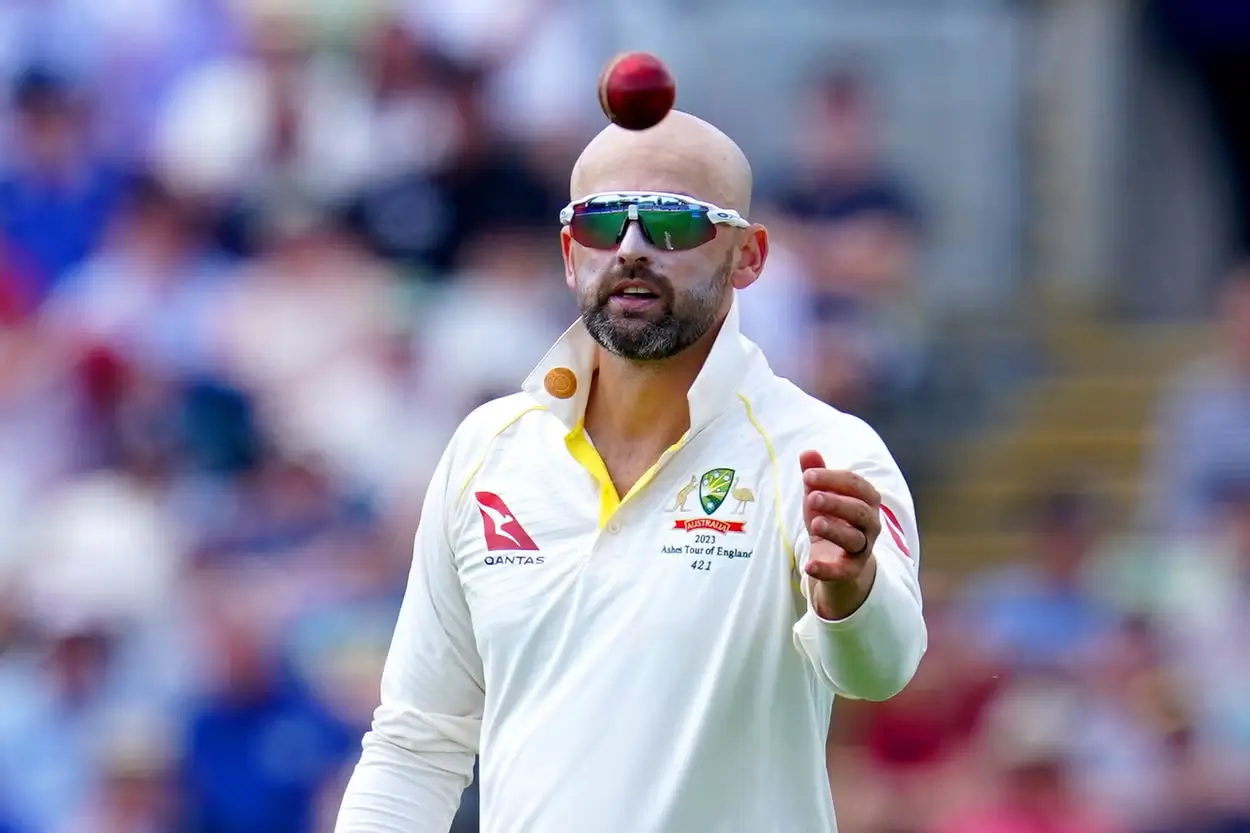
Lyon was informed shortly after arriving at the ground. Steven Smith, Pat Cummins, Andrew McDonald, and George Bailey finalized plans in a brief pitchside discussion. Soon after, Lyon got the news: he would be sitting out.
His reaction — described by him as “absolutely filthy” — is telling. Lyon is not a fringe player fighting for relevance. He is Australia’s most capped offspinner, the team’s spiritual anchor, and someone who has repeatedly delivered in pressure situations.
For such a senior figure to be omitted twice in three Tests speaks volumes. Not about Lyon’s decline — but about Australia’s evolving interpretation of conditions. Lyon respected the decision but admitted he needed time to process it before sitting down with selectors.
This emotional honesty adds depth to the story. It shows that selection calls are not just tactical puzzles; they affect identity, pride, and legacy.
The Rise of All-Pace Thinking in Pink-Ball Tests

The decision to play four quicks — and no spinner — reflects a broader trend: Australia’s increasing reliance on pace whenever the pink ball is in play.
The reasons are clear:
-
The pink ball offers greater evening movement.
-
Harder pitches in Brisbane support seamers deep into the match.
-
Spinners often struggle for bite until late in the innings.
-
Seamers can exploit multiple new-ball phases under lights.
Michael Neser’s inclusion underlines this tactical angle. As a Queensland specialist with intimate knowledge of Gabba conditions, his selection represents a situational upgrade rather than a replacement for Lyon’s skill set.
Even so, the symbolic impact is huge. Australia’s longest-serving bowler is now no longer guaranteed selection in day-night fixtures. That fact alone shifts how fans, analysts, and future bowlers will view Australia’s approach.
What This Means for Lyon’s Future — and the Evolution of Spin in Australia?
For Lyon, the message is bittersweet. Selectors insist he remains central to the next three Tests — all of which are played during the day, where spin is more influential. Adelaide’s surface, followed by the MCG and SCG, will naturally bring him back into Australia’s plans.
But this omission highlights a deeper concern: the diminishing role of spinners in Australia’s Test summers. With fast bowlers dominating most conditions, Lyon fears spin development will stagnate. His comments earlier this year — warning about reduced overs for younger spinners — now feel prophetic.
He still believes he can win games anywhere. And his numbers back that belief. But selection philosophies evolve. Lyon now faces the reality that “automatic selection” may no longer apply in all match types.
The Bigger Question — Is Australia Ready for a Future Without a Guaranteed Spinner?
Lyon’s omission forces Australia to confront a deeper strategic question: can a world-class Test side thrive long-term without a guaranteed frontline spinner?
The short-term logic makes sense. Pink-ball Tests favour seam and reward swing through longer sessions at dusk. But the long-term risks are real.
First, the absence of a spinner removes control in long innings. Pace-heavy attacks can tire quickly, especially on slower surfaces. Lyon has historically balanced workloads by bowling economical overs when others need breaks.
Second, Australia risks losing its spin identity. The country’s most successful teams — from Warne’s era to Lyon’s — have always carried a specialist spinner, even in seamer-friendly conditions.
Third, future talent may suffer. Young spinners learn by bowling volume overs across days three and four. If trendlines continue, Australia could face a post-Lyon generation lacking depth.
Fourth, tactically, not having spin makes a team predictable. Opponents can settle into rhythm without the constant threat of changing pace or trajectory.
This new selection pattern might work in isolated matches, but if it becomes the norm, it may weaken Australia’s adaptability across formats and conditions.
Despite evolving strategies, Lyon remains irreplaceable in several ways. He provides overs that rest quicks. He offers control when pitches flatten. And he brings an unmatched ability to exploit rough patches later in the match.
His skill set isn’t just “spin bowling.” It’s tempo control. When Lyon bowls well, Australia’s quicks bowl with fresher legs and more aggression. That synergy has been key to countless home victories.
Dropping Lyon removes that safety valve. It puts more strain on Cummins, Starc and Boland to sustain pressure. And it risks long spells becoming unsustainable in humid conditions. Even in pink-ball cricket, Lyon’s absence creates tactical blind spots that cannot be ignored.
Could This Spark a Spin Renaissance or Accelerate a Spin Decline?
Australia’s move could have two opposite effects.
Scenario 1: A Spin Renaissance
Feeling the threat of omission, Lyon may return with even more hunger. Young spinners might see opportunity in Lyon’s vulnerability. This could actually lift competition and strengthen the spin pool.
Scenario 2: A Decline
If Australia keeps dropping spinners in day-night matches, younger bowlers may get fewer overs, fewer big moments, and less confidence. The pipeline may dry up. Australia could face an era without frontline Test-quality spinners.
Which path emerges depends entirely on how selectors balance short-term tactics with long-term identity.
Does This Mark a Permanent Shift, or Just a Pink-Ball Experiment?
The big debate now: is this trend permanent or just situational?
Selectors say it’s temporary — just a “one-Test decision.” But it has happened twice in three matches. And both times, Australia favoured a four-seam attack over their premier spinner.
Patterns matter. Trends matter. And this trend suggests deeper strategic rethinking.
If Australia continues winning without spin in pink-ball Tests, this template may become a standard. If they lose control, leak runs or tire out quicks, Lyon’s role becomes essential again. Either way, the debate is far from over.
Nathan Lyon’s omission is more than a tactical wrinkle — it is a window into Australia’s changing cricket identity. In a nation that has long celebrated balanced attacks with world-class spinners, the pink-ball era is rewriting old assumptions.
For Lyon, this is both a challenge and motivation. For Australia, it is a moment to evaluate what kind of team they want to be in the coming decade. And for the cricket world, it is a fascinating shift that could reshape how Test cricket is played in seam-friendly conditions.
Conclusion
Nathan Lyon’s omission is no routine tactical call. It is a moment that forces Australia to evaluate their evolving cricketing identity. As pace becomes more central to day-night strategy, Lyon’s role — once unquestioned — is now determined by conditions rather than reputation.
For the team, it is a calculated risk. For Lyon, it is fuel for motivation. And for Australian cricket, it is a reminder that every era changes — sometimes earlier than expected.