Tournament injuries are rarely just about personnel. They are about timing, balance, and disruption. Harshit Rana’s knee injury, suffered during a warm-up match against South Africa in Navi Mumbai, has forced India into exactly that situation.
Rana was not a headline name. But he was a structural pick. India selected him for flexibility, not flair. A seam-bowling allrounder, capable of bowling hard lengths and contributing late runs, fits perfectly into modern T20 logic.
His exit days before the tournament begins changes how India manage combinations. Mohammed Siraj’s inclusion brings experience and control, but also removes batting depth. That trade-off matters deeply in a World Cup where scores are inflating rapidly.
This article breaks down what India lose with Rana, what they gain with Siraj, and how this one injury subtly reshapes India’s T20 World Cup strategy.
How the Injury Happened and Why It Ended Rana’s Tournament?
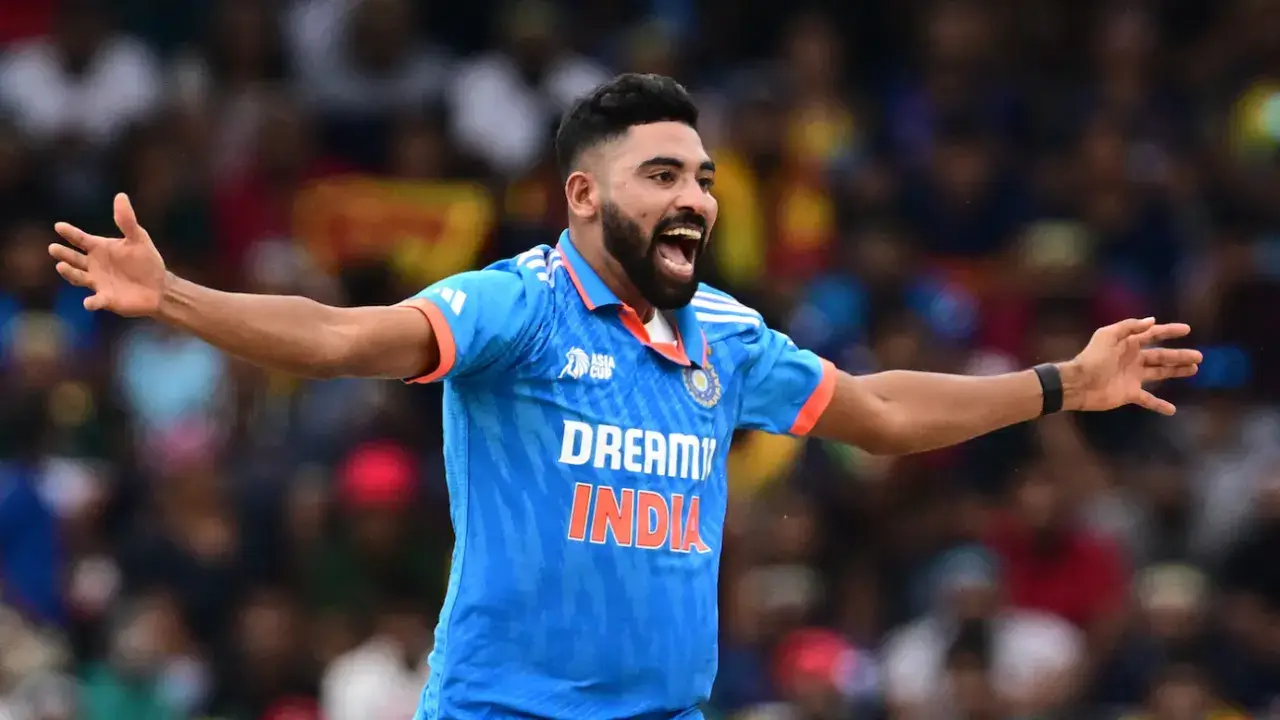
Harshit Rana’s injury occurred in a low-risk environment. A warm-up match. Controlled workload. No competitive pressure. Yet modern T20 demands intensity even in preparation.
Rana bowled just one over against South Africa before discomfort became visible. His movement looked restricted. Shortly after, he left the field with his knee strapped. That moment alone raised alarms inside the Indian camp.
Knee injuries are especially problematic for fast bowlers. Unlike muscle strains, they involve stability, load-bearing, and repetitive impact. For a bowler whose role includes hard lengths and cutters, risk multiplies quickly.
The BCCI medical team consulted specialists and ordered scans. The conclusion was decisive. Rana was ruled unfit for the tournament. No risk. No partial recovery gamble.
This was not about one match. It was about a six-week tournament under dew-heavy conditions. Any compromised knee would worsen rapidly.
India’s decision was conservative but correct. Losing Rana early is painful. Losing him mid-tournament would have been catastrophic.
Why Mohammed Siraj Was the Logical Replacement?
When India needed a replacement, they were not chasing novelty. They were chasing reliability. Mohammed Siraj fits that brief perfectly.
His T20I numbers are modest. Sixteen matches. Fourteen wickets. But international stats hide context. Siraj’s real value lies in IPL seasons spent bowling to elite batters on flat pitches.
India did not replace Rana like-for-like. They replaced him role-for-role within the squad ecosystem. Siraj is not expected to bat. He is expected to execute plans.
In a World Cup where totals may touch extremes, captains need bowlers who do not lose shape. Siraj’s strength is emotional control. That matters more than raw pace.
This selection signals trust in India’s batting depth. They believe they can afford a tailender. That belief shapes the rest of the XI.
What India Lose Without Harshit Rana?
Rana’s absence removes optionality. That is the biggest loss. Not overs. Not wickets. Options.
As an allrounder, Rana allowed India to stretch batting till number eight. That flexibility enabled aggressive top-order intent without fear of collapse.
He also offered a specific bowling profile. Back-of-a-length pace. Hit-the-deck aggression. Useful on Indian surfaces that grip slightly under lights.
Rana’s recent ODI fifty against New Zealand underlined his batting utility. Those runs were not cosmetic. They showed composure and power.
Without him, India lose insurance. They also lose match-up freedom. Siraj must be protected from the bat. Rana did not.
In a tournament trending toward 230-plus totals, depth matters. Rana represented modern T20 logic. His injury pushes India slightly backward in structural terms.
How Siraj Changes India’s Bowling Dynamics?
Siraj alters bowling sequences immediately. He is most effective with a harder ball. That pushes India toward clearer role definitions.
With Jasprit Bumrah and Arshdeep Singh likely locked in, Siraj becomes a rotational option. He may start games where early swing exists. He may sit out on slower surfaces.
Siraj also brings experience managing dew. He understands when yorkers are unrealistic and when length bowling works better.
Unlike Rana, Siraj is not a floating option. He cannot cover for batting collapses. That forces tighter bowling management elsewhere.
India’s spinners may bowl earlier. Allrounders may absorb tougher overs. Siraj’s inclusion reshuffles responsibility chains. This is not negative. It is different. And difference requires planning.
India’s Batting Depth vs Bowling Control Debate
This injury reopens a long-running T20 debate. Batting depth versus bowling quality. India, under current leadership, has leaned heavily toward batting depth. Rana fit that philosophy. Siraj challenges it.
However, India still possess significant allround resources. Hardik Pandya. Axar Patel. Shivam Dube. Together, they provide overs and runs. This allows India to accept one genuine tailender. That calculation likely influenced the decision.
The bigger risk lies in chasing huge totals. Batting depth matters more there. India must trust top-order efficiency even more now. Siraj’s inclusion is a bet on control preventing chaos. Not on depth rescuing chaos.
What Suryakumar Yadav’s Comments Reveal?
Suryakumar Yadav’s press conference tone was revealing. Calm. Light. Almost dismissive of panic. He acknowledged the blow. But he immediately stressed combinations and adaptability. That language matters.
It shows India planned for disruption. They did not name reserves because logistics allow quick movement. That confidence comes from squad depth. Suryakumar also subtly reinforced hierarchy. Top eight batters are expected to deliver. Tailenders are not safety nets.
This clarity simplifies decision-making. It also puts pressure on specialists to justify selection. Leadership tone often reflects dressing-room reality. India appear stable despite the setback.
Tactical Scenarios Where Siraj Becomes Crucial
Siraj may not play every match. But when he does, context will matter. Against teams with aggressive openers, Siraj’s hard lengths and movement become valuable. Against slower attacks, he may sit out. He is particularly useful on truer pitches where swing lasts briefly. Also in matches where India defend totals under dew.
Siraj’s role will be situational, not permanent. That suits tournament cricket. India did not pick him for volume. They picked him for moments.
India’s best XI now becomes more surface-dependent. That was inevitable. On flat pitches, India may prefer batting depth and reduce specialist pacers. On gripping surfaces, Siraj becomes more relevant.
This fluidity requires communication. Players must accept rotation. Ego management matters. Rana’s injury removes one fixed piece. But it does not collapse the puzzle. India still have multiple winning combinations.
Does This Injury Reduce India’s Title Chances?
The short answer is no. But it narrows margins. India lose flexibility. They do not lose strength. That distinction matters. World Cups are won by managing moments. Siraj has lived those moments. Rana was still learning them.
If India handle combinations smartly, this injury becomes a footnote. If not, it becomes a hinge point. At this stage, India remain favourites. Slightly reshaped. Not weakened.
Harshit Rana’s injury is unfortunate timing. It disrupts planning. It removes versatility. But it does not derail India’s campaign. Mohammed Siraj’s inclusion reflects trust in experience over potential. In a pressure-heavy World Cup, that trade-off is understandable.
India’s success will depend on execution, not depth alone. If top players deliver, this change fades into background noise. If they do not, it becomes a lesson. That is tournament cricket. Ruthless. Unforgiving. Always moving.