


Harry Brook’s innings at the SCG was not just a counterattack shaped by instinct. It represented a clear snapshot of how Test batting has evolved over the past two decades. Where earlier generations valued survival as the highest virtue, modern Test cricket increasingly rewards controlled confrontation. Brook’s repeated willingness to hook, even under sustained short-ball pressure, reflected this shift. He was not ignoring danger. He was choosing how to meet it. The presence of the Steve Waugh statue nearby only sharpened the contrast.
Brook’s approach was shaped by match context, pitch behaviour, boundary dimensions, and his defined role within England’s middle order. His innings explained why modern Test cricket no longer treats shot-elimination as the ultimate marker of discipline. Instead, it values momentum control and psychological pressure.
Table of Contents
ToggleFrom Steve Waugh’s Shot Removal to Brook’s Risk Management
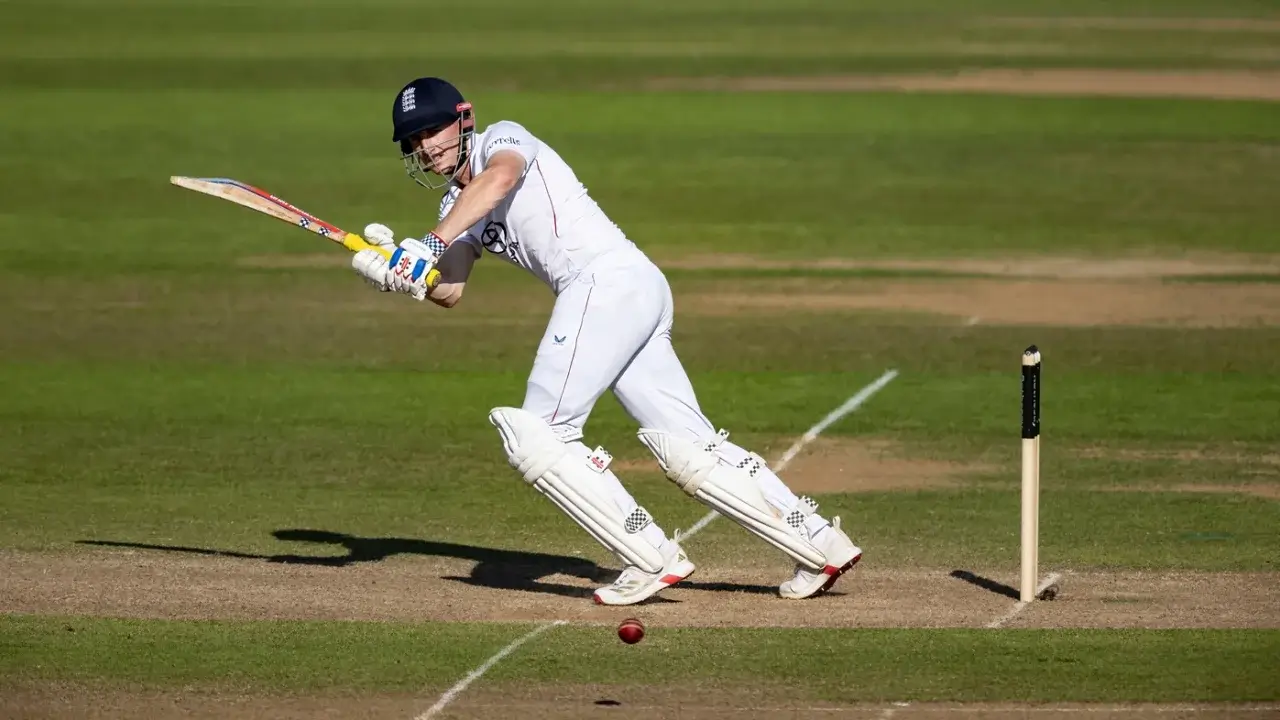
Steve Waugh’s Test career symbolised an era where subtraction defined greatness. By removing the pull shot, Waugh maximised survival against hostile bowling. That approach suited slower scoring rates, heavier bowling workloads, and uncovered psychological warfare. Harry Brook offers a distinct approach to the same problem. Instead of removing risk, he manages it.
Brook does not deny the short ball. He confronts it repeatedly. This shift reflects changes in pitch preparation, bowling rotations, and expectations of run rate. Modern bowlers operate in shorter bursts. Batters face flatter surfaces more often. Under these conditions, retreat can invite pressure rather than relieve it. Brook’s resistance demonstrates how Test cricket now prioritizes pushing bowlers back as a form of defense.
Why the Hook Shot Has Re-Entered Test Cricket’s Core Arsenal?
The hook shot once carried stigma in Test cricket. It symbolised impatience. In the current Ashes, it has become unavoidable. Brook’s persistence with the hook reflects tactical necessity rather than bravado. By attacking short bowling, he forces captains to reconsider sustained bumper plans.
Fields spread quickly. Bowlers hesitate. Even mistimed shots create doubt. Brook’s dismissals risk is real, but so is the psychological tax imposed on the attack. Modern Test cricket accepts that calculated exposure is part of control. A batter who hooks successfully even twice can disrupt an entire bowling session. Brook understands that leverage better than most.
Australia’s Tactical Dilemma Against Brook
Australia’s internal debate over how long to persist with the short-ball strategy revealed Brook’s impact. Assistant coach Daniel Vettori acknowledged the cost of sustained bouncers. They drain energy. They accelerate scoring. With wind assistance and shorter boundaries at the SCG, the margin for error shrank.
Brook’s aggression forced Australia into a holding pattern sooner than planned. This is the modern batter’s power. Even without perfect execution, Brook dictated decision-making. Australia’s retreat into containment mattered more than individual false shots. It shifted control back to the batting side.
The Method Beneath Brook’s Apparent Recklessness
Brook’s own assessment clarified his thinking. When timing felt off, he chose to commit harder rather than withdraw. This was adaptation, not ego. Recognising that bounce could not be neutralised, he opted to ride it. In white-ball cricket, this instinct is common. In Tests, it still provokes debate.
Yet Brook’s series returns underline its value. His aggression does not merely score runs; it also inspires others. It shortens spells. It redistributes pressure. It alters captains’ plans. That systemic impact explains why England accepts the risks he brings.
The partnership with Joe Root illustrated Test cricket’s modern plurality. Root played the pull along the ground, with wrist control and placement. Brook went aerial. Both methods succeeded simultaneously. This coexistence matters. Teams benefit from contrast within the same innings. Brook’s role is not to mirror Root’s restraint. It is to destabilise attacks so Root can accumulate freely. Their partnership demonstrated how varied approaches now complement each other rather than conflict.
Why Brook’s Role Extends Beyond His Batting Slot?
Brook is not merely England’s No.5. He is their momentum disruptor. When bowlers sense control, Brook escalates risk. When pressure builds, he counters instinctively. England’s middle order lacks another batter with his appetite for confrontation. That makes his presence structurally important.
Even when opportunities arise, his aggression reshapes the sessions. Scorecards rarely capture this influence fully. But captains feel it. Bowlers feel it. That is why Brook’s place is secure despite occasional excess.
Why a Waugh-Style Epiphany Is Unlikely in This Era?
Brook may always leave runs uncollected. He acknowledges that reality. But modern Test cricket does not reward total restraint. Schedules are compressed. Bowlers rotate relentlessly. Flat decks dominate. In this environment, proactive risk often yields greater control than passive survival.
A Waugh-style renunciation of shots would blunt Brook’s defining value. His success depends on embracing discomfort, not eliminating it. His “happy hooking” is not rebellion. It is in alignment with Test cricket’s present conditions.
Harry Brook’s SCG knock was imperfect, but instructive. It showed how Test cricket has shifted from elimination to negotiation. Batters now manage danger rather than avoid it. Control comes from pressure, not patience alone. Brook embodies that evolution. He may never resemble Steve Waugh in bronze, but he reflects what Test cricket has become. And that makes his innings more than entertainment. It makes it a marker of the modern game.