


India’s women completed a flawless T20I series against Sri Lanka, but the final match was anything but routine. Reduced to 77 for 5 on a placid Thiruvananthapuram surface, India were forced into unfamiliar territory. For the first time in the series, dominance gave way to decision-making under pressure.
At the centre of that response stood Harmanpreet Kaur. Her 43-ball 68 was not a power-hitting exhibition. It was a lesson in control, pacing, and authority. That innings transformed a fragile situation into a match-winning total of 175 for 7.
Sri Lanka pushed back bravely. Half-centuries from Hasini Perera and Imesha Dulani kept the chase alive until the final overs. Yet India’s clarity at the death ensured a 15-run win, sealing their third-ever 5–0 sweep in women’s T20Is and reaffirming their growing tactical maturity.
Why Harmanpreet Kaur’s Role Has Shifted from Power-Hitter to Game Manager?
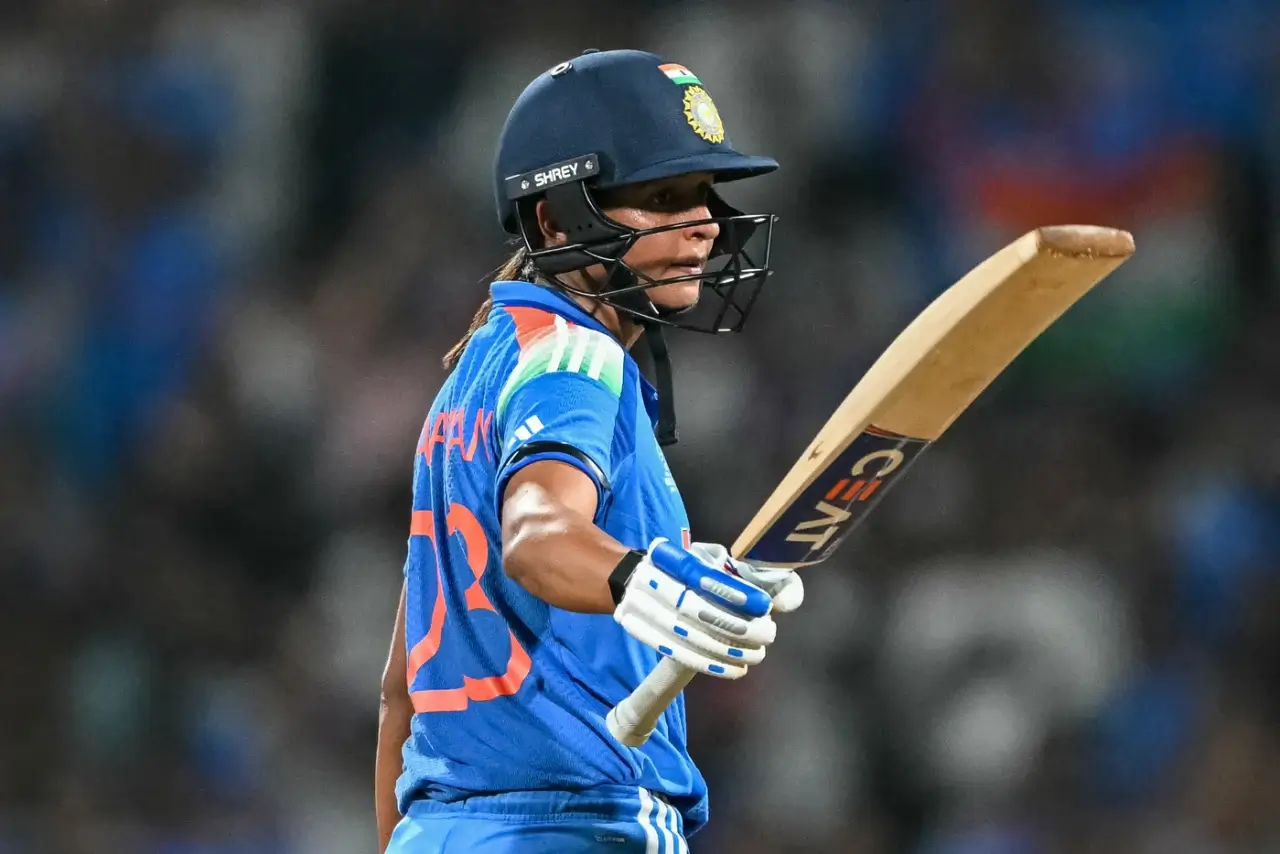
Harmanpreet’s innings symbolised an important evolution. Once defined primarily by explosive hitting, her role has expanded into something more valuable. She now manages tempo, absorbs pressure, and decides when acceleration is necessary rather than instinctive.
Walking in early with wickets falling, she resisted forcing the game. Singles mattered. Strike rotation mattered. Bowlers were allowed to complete spells without release shots. Only after assessing match conditions did she shift gears.
This version of Harmanpreet is not slower. It is smarter. She still hits boundaries at will, but now chooses moments rather than chasing momentum. That shift gives India stability when top-order aggression fails.
What India’s Middle-Order Collapse Reveals About Squad Rotation Strategy?
India’s middle-order wobble exposed both risk and opportunity. With Smriti Mandhana rested and new combinations tested, familiarity briefly disappeared. Harleen Deol, Richa Ghosh, and Deepti Sharma fell in quick succession, reducing India to 77 for 5.
Yet this collapse was not entirely negative. It revealed how rotation affects rhythm, especially under match pressure. India are consciously expanding their bench strength, even at the cost of short-term instability like Bangladesh team.
The response mattered more than the collapse itself. India recovered without panic. That ability to absorb disruption reflects a squad being prepared for global tournaments, not just bilateral dominance.
How Sri Lanka’s Batting Order Changes Improved Their Competitiveness?
Sri Lanka were winless, but not without progress. Their batting order adjustments added intent and balance. Promoting Imesha Dulani to No.3 paid dividends again. Her confidence against spin inside the powerplay allowed Sri Lanka to stay ahead of the asking rate.
Hasini Perera’s innings reflected clarity of role. Rotating strike, targeting gaps, and accelerating only when set, she anchored the chase effectively. Their 79-run partnership gave Sri Lanka belief late into the match. These changes did not win the game. They narrowed the gap. That matters for a side rebuilding under pressure.
Deepti Sharma’s Record and Her Quiet Impact Beyond Wickets
Amid the noise of the series finale, Deepti Sharma reached a historic milestone, becoming the leading wicket-taker in women’s T20Is. The record reflects longevity, discipline, and adaptability.
Yet Deepti’s true value lies beyond numbers. She controls tempo. She breaks partnerships quietly. She allows captains to delay aggressive moves elsewhere. Even when wickets do not fall, pressure builds. Her role anchors India’s bowling plans. Records follow naturally.
India’s Death-Over Bowling Blueprint in Women’s T20Is
India’s closing overs were once again decisive. When Sri Lanka required 55 off 24 balls, India did not chase yorkers blindly. They stuck to hard lengths. They protected straight boundaries. They trusted field placements.
The collapse from 132 for 4 to 140 for 7 was not accidental. It was systematic. India force batters to hit to longer boundaries late. They deny easy singles. They wait for errors rather than manufacture them.
This blueprint has become consistent across series. It is one of the strongest indicators of India’s evolution in the format.
What This Series Tells Us About the Gap in Women’s International T20 Cricket?
The 5–0 scoreline reflects more than skill. It reflects preparation, depth, and adaptability. India won in different ways across the series. Early dominance. Controlled chases. Middle-order recovery. Death-over discipline.
Sri Lanka showed moments of competitiveness but struggled to sustain intensity across phases. That gap is structural, not individual. Stronger domestic pipelines and exposure will matter.
For India, the series confirmed progress. For Sri Lanka, it offered a blueprint for improvement. The final match was the most instructive of the series. India was tested, unsettled, and briefly vulnerable. Their response was calm, organised, and authoritative.
Harmanpreet Kaur’s innings defined the moment. Not through power alone, but through control. India’s depth completed the job. Their bowlers closed it clinically. A clean sweep tells one story. The manner of victory tells a better one.
How India’s Powerplay Philosophy Sets the Tone in Women’s T20Is
India’s powerplay approach has quietly matured. The intent remains aggressive, but the execution is now measured. Openers are encouraged to attack only specific matchups rather than forcing tempo universally. This selective aggression reduces early collapses while still keeping the scoring rate healthy.
Against Sri Lanka, India accepted a slower powerplay in the final match once wickets fell. That restraint mattered. Instead of chasing lost momentum, batters prioritised survival and clarity. This flexibility separates modern India from earlier iterations that chased intent blindly.
The powerplay is no longer about dominance alone. It is about information gathering. Bowlers, bounce, and fielding patterns are assessed early. Acceleration is delayed when conditions demand it. That tactical patience underpins India’s consistency across series.
Why India’s Bench Strength Is Becoming a Competitive Advantage?
India’s willingness to rotate players is not cosmetic. It is strategic. Resting senior players like Smriti Mandhana while maintaining series control sends a clear message. Depth is no longer theoretical. It is operational.
The final T20I exposed temporary instability, but also revealed resilience. Players stepping in understood roles clearly. There was no confusion about batting positions or bowling responsibilities. That clarity only comes from long-term planning.
This depth allows India to absorb injuries, manage workloads, and experiment without sacrificing results. In global tournaments, that flexibility becomes decisive. Few teams currently match that level of readiness in women’s cricket.
Sri Lanka’s Bowling Plans: Discipline Without Sustained Threat
Sri Lanka’s bowlers showed improvement in planning. Early wickets came through repeatable patterns rather than luck. Lines were consistent. Lengths were disciplined. Spinners attacked stumps instead of containing boundaries.
However, the lack of sustained threat remained visible. Once Harmanpreet settled, Sri Lanka struggled to adjust. Field placements lagged behind batter intent. Bowling changes arrived one over late.
The difference was not effort. It was adaptability. Competitive teams disrupt momentum twice. Sri Lanka managed it once. Closing that gap will define their progress going forward.
The Importance of Partnerships in High-Pressure Women’s T20 Matches
The final match reinforced a simple truth. Partnerships win T20 games more reliably than individual bursts. India’s recovery hinged on two stands that absorbed pressure rather than chasing runs immediately.
Harmanpreet and Amanjot’s partnership changed the match’s texture. It slowed Sri Lanka’s momentum. It forced bowling changes. It delayed death-over plans.
Sri Lanka’s second-wicket stand mirrored that value. Their failure came after its dismissal. This pattern repeats often in women’s T20Is. Sustained partnerships matter more than cameo-heavy scoring when pressure peaks.
India’s dominance in this series was not built on one strength. It was layered. Batting adaptability. Bowling structure. Fielding discipline. Leadership calm.
Most importantly, India responded well when things did not go to script. The final match offered that test. They passed it without panic.
Benchmark teams are defined by how they handle discomfort. India showed comfort in uncertainty. That quality, more than the 5–0 scoreline, explains their current position in women’s T20 cricket.

