

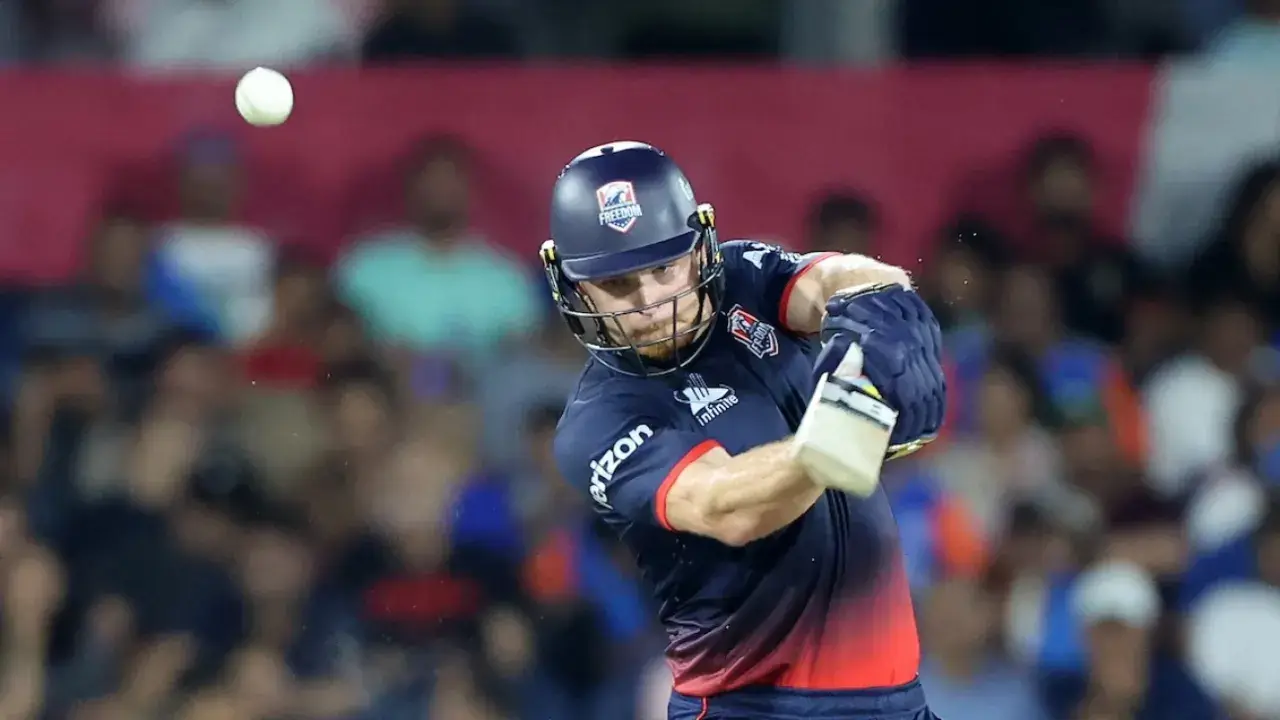
Cricket has always evolved through moments that initially look like gimmicks. A new grip. A new stance. A new idea that feels wrong before it feels inevitable. Glenn Phillips’ switch cover drive belongs firmly in that lineage.
When Phillips switched hands and drove an off-spinner through cover, it did not look like a variation. It looked like a declaration. A statement that modern batting is no longer about adapting within a stance, but about choosing a stance altogether.
This was not a scoop. Not a reverse sweep. It was a classical cricket shot played from an unconventional identity. And that distinction matters.
What Exactly Is a Switch Cover Drive?

The switch-hit is no longer novel. Since Kevin Pietersen brought it into mainstream cricket, batters have used it primarily to access leg-side boundaries after switching hands.
Phillips did the opposite. He switched to a left-handed stance and drove the ball through cover. That is historically sacred territory. Cover drives demand balance, alignment, and timing. They are not improvised strokes.
By playing a full-blooded cover drive while switched, Phillips crossed a conceptual line. He did not use the switch to cheat the field. He used it to play orthodox cricket from the opposite side.
Why This Shot Is Different From Traditional Switch-Hits?
Most switch-hits are reactive. They respond to fields. Phillips’ shot was proactive. It was played before the bowler released the ball, during the run-up, committing fully to the switch.
That commitment changes everything. Once the switch happens early, the batter is no longer improvising. He is batting as a different player. This transforms the switch-hit from a trick into a stance choice. That distinction pushes batting theory forward.
The Moment It Happened: Why the Context Matters
Phillips unveiled the shot in the Super Smash, not a net session or exhibition match. The pressure was real. The overs were closing. The bowlers were attacking.
Against offspinner Dean Foxcroft, Phillips switched late and drilled a boundary. Against left-arm spinner Jayden Lennox, he went further. He took guard left-handed before the delivery and lofted a drive over extra cover for six. This was not experimentation. It was execution.
How Glenn Phillips Thinks About Batting
Phillips later revealed he had been practising this left-handed approach in the nets. That detail matters. This was not instinct alone. It was preparation.
His explanation was simple. He felt more fluent left-handed on certain days. Instead of fighting that feeling, he leaned into it.
That mindset reflects modern batting psychology. Comfort now outweighs convention. Feel overrides textbook alignment. Phillips trusted his instincts over tradition.
When Pietersen introduced the switch-hit, it was controversial. The MCC debated legality. Bowlers protested unfair advantage. The cricket world resisted change.
Today, the switch-hit is normal. What Phillips has done is move the argument forward. This is no longer about fairness. It is about freedom. Batters are no longer constrained by handedness. They are selecting angles, matchups, and comfort zones in real time.
Why Bowlers Are the Real Losers Here?
This shot places bowlers in an impossible position. Fields are set for a right-hander. The batter becomes left-handed mid-run-up. Then plays a textbook shot into a traditionally protected zone.
Even if fields are adjusted, the bowler still loses alignment. Lengths become guesses. Plans dissolve. The advantage is not power. It is certainty. The batter knows who he is before the ball is released. The bowler does not.
The MCC ruled the switch-hit legal in 2008. That debate is settled. The more relevant question is philosophical. If a batter can legally change stance before delivery, is handedness still meaningful? Or is batting now positionless?Phillips’ switch cover drive suggests the latter. Cricket is moving toward skill-based identity rather than fixed orientation.
Why Glenn Phillips Is the Perfect Player for This Evolution?
Phillips is not a traditional stylist. His career has been defined by adaptability. Across formats, he has thrived through athleticism, innovation, and fearlessness.
With experience in Tests, ODIs, and T20Is, he understands risk differently. He also understands when creativity becomes advantage rather than indulgence. This shot fits his cricketing personality perfectly.
Young batters will copy this. Not immediately. But eventually. Net sessions will feature switch drives. Coaches will stop discouraging ambidexterity.
Batting academies already train reverse sweeps early. The switch cover drive may be next. Once children grow up comfortable batting both ways, the game will look very different.
Will This Ever Work in Test Cricket?
That remains the final frontier. Test cricket punishes uncertainty. It exposes the imbalance brutally. But innovation always starts elsewhere. Reverse sweeps were once white-ball novelties. Now they appear in Tests routinely. If Phillips trusts this shot under red-ball pressure, others will follow.
Glenn Phillips did not just play a viral shot. He questioned a foundational assumption of batting. Handedness once defined identity. Now it looks optional. What matters is balance, intent, and clarity.
Cricket has always evolved through brave moments. This may be one of them.The switch cover drive might not become common. But it will never be forgotten.

