Australia’s road to the T20 World Cup has not followed a single, clean narrative. Instead, it has fractured into multiple storylines shaped by the Big Bash League, the Ashes hangover, injuries, and selective workload management. Some players arrive with confidence and rhythm. Others bring reputation but little recent match evidence. A few sit uncomfortably in between, backed by past brilliance but short on current form.
The recently concluded BBL offered valuable insight, but not definitive answers. While domestic conditions differ from those expected in the World Cup, form remains form. Confidence matters. Timing matters. Just as importantly, absence matters too. Several first-choice players have not played competitive T20 cricket for months, leaving selectors to balance sharpness against long-term trust.
This expanded form guide does not judge players in isolation. It evaluates how their recent performances fit into Australia’s broader T20 strategy. Roles, matchups, and tournament conditions are central to this assessment. From the assured leadership of Mitchell Marsh to the concerning struggles of Glenn Maxwell, the picture is complex.
Table of Contents
ToggleMitchell Marsh and the Stability Australia Craves at the Top
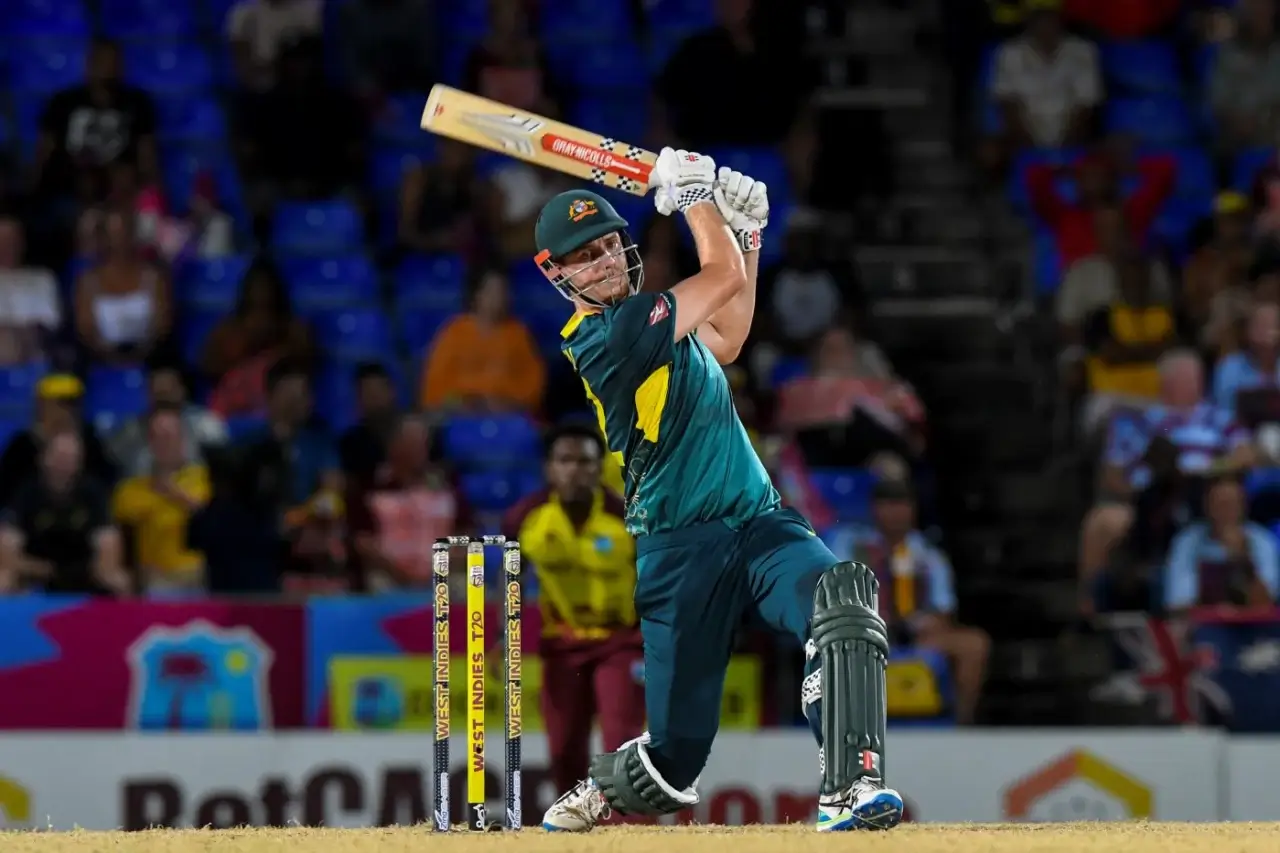
Mitchell Marsh’s BBL season may not leap off the page statistically, but its significance goes far beyond raw numbers. As Australia’s T20 captain, Marsh’s form, fitness, and clarity of role shape the entire batting order. After a slow start to the tournament, his mid-season surge reminded everyone why he remains central to Australia’s plans.
What follows is a deep dive into Australia’s key T20 personnel, grouped by role and relevance, and analysed through the lens of World Cup demands rather than domestic numbers alone.
Marsh’s century against Hobart Hurricanes was not a typical BBL innings built on short boundaries and mismatches. It was controlled, physical, and paced. That ability to absorb early pressure before accelerating mirrors exactly what Australia need at the top in World Cup conditions, where new-ball movement and disciplined powerplay bowling are common.
Equally important is what Marsh no longer offers. His bowling days appear firmly behind him. This simplifies team balance but also places greater responsibility on him as a pure batter. In that sense, his ability to bat deep becomes crucial, especially with Australia likely to field multiple allrounders lower down.
Marsh’s leadership during Perth Scorchers’ title run was understated but effective. He did not dominate every game. He influenced them. That distinction matters in tournament cricket. His partnership potential with Travis Head gives Australia an opening pair capable of both control and explosive starts.
Heading into the World Cup, Marsh does not arrive as the competition’s most destructive batter. He arrives as one of its most reliable anchors. For Australia, that reliability may prove more valuable than fireworks.
Stoinis, Green, and the Allrounder Depth That Sets Australia Apart
Australia’s T20 identity has increasingly revolved around multi-skilled players, and no one embodied that better in the BBL than Marcus Stoinis. His season was outstanding by any measure. Consistency with the bat. Penetration with the ball. Calmness in pressure situations. This was Stoinis at his most complete.
What makes Stoinis’ form particularly encouraging is how transferable it is. He did not rely on flat pitches or power surges. He scored runs against quality bowling and took wickets in difficult overs. His ability to operate in the middle overs with the ball gives Australia flexibility, especially on slower World Cup surfaces.
Cameron Green’s absence from the BBL complicates evaluation but does not diminish his importance. Green has become a structural pillar in Australia’s T20 setup. His height, reach, and clean striking allow Australia to extend batting depth without sacrificing bowling options. Fitness remains the only question.
Together, Stoinis and Green allow Australia to play an extra bowler or batter depending on conditions. That adaptability is priceless in tournament cricket. Few teams can match it.
If Stoinis maintains this form and Green arrives fit, Australia will possess one of the most balanced allrounder groups in the competition. That balance often decides knockout matches.
Glenn Maxwell’s Struggles and the Cost of Poor Rhythm
Glenn Maxwell’s BBL campaign was uncomfortable viewing for anyone invested in Australia’s T20 fortunes. His numbers were poor, but more concerning was how he looked at the crease. Timing was absent. Shot selection felt rushed. Confidence appeared fragile.
Maxwell’s value to Australia has always extended beyond averages. He changes games in minutes. He disrupts bowling plans. He forces captains into defensive fields. However, all of that depends on rhythm. At present, rhythm is missing.
His struggles against pace and inability to dominate spin raise questions heading into conditions where quality slow bowling will be prominent. While Maxwell’s big-game pedigree cannot be dismissed, tournament cricket is unforgiving to players searching for form.
Selectors now face a familiar dilemma. Do they trust Maxwell’s ceiling or respond to his floor? Australia have often backed experience, and history suggests Maxwell will be given opportunities. But the margin for error is thin.
The hope within the camp will be that international conditions and higher intensity spark a response. Without that, Maxwell risks becoming a liability rather than a match-winner.
The Bowling Core – Fitness, Timing, and Tactical Roles
Australia’s bowling group is built on experience, but fitness clouds several key names. Pat Cummins and Josh Hazlewood have barely played T20 cricket recently. Their quality is unquestioned. Their readiness is not.
Adam Zampa’s limited BBL involvement was encouraging when he played. His control and economy reaffirm his importance, particularly on slower World Cup pitches. Zampa remains Australia’s most reliable wicket-taking spinner.
Nathan Ellis’ hamstring injury is a significant concern. His death-over skills are rare, and Australia lack a direct replacement with his specific skill set. His recovery timeline will be watched closely.
Australia’s bowling attack still looks formidable on paper. Whether it functions as smoothly in practice depends on fitness and workload management over the next few weeks.
Emerging Names and the Depth Question
Beyond the established core, Australia’s depth players made strong statements. Xavier Bartlett’s BBL showed growth not just as a bowler, but as a cricketer capable of influencing games in multiple ways. His ability to swing the new ball and contribute late-order runs strengthens his case. With many Bangladesh-India issues, the World Cup is all over the Internet.
Cooper Connolly’s season was quietly impressive with the ball. His left-arm spin offers variety, and his ability to take early wickets could prove valuable against aggressive top orders.
Matt Kuhnemann remains a conditions-based option. His control on flat surfaces and success in Asia keep him firmly in selectors’ thinking.
Australia may not need all of these players. But tournaments are rarely won without depth. These options ensure Australia are not cornered by injury or conditions.
Conclusion
Australia’s T20 World Cup build-up is defined by contrast. Confidence and concern. Form and absence. Certainty and question marks. The BBL provided clues, not conclusions.
Mitchell Marsh and Marcus Stoinis arrive in strong shape. Glenn Maxwell arrives searching. The bowling attack remains elite but fragile physically. The depth is promising, but roles must be clear.
If Australia can align form, fitness, and clarity at the right time, it remains a genuine contender. If not, even talent may not be enough. The margin at the top is that fine.