

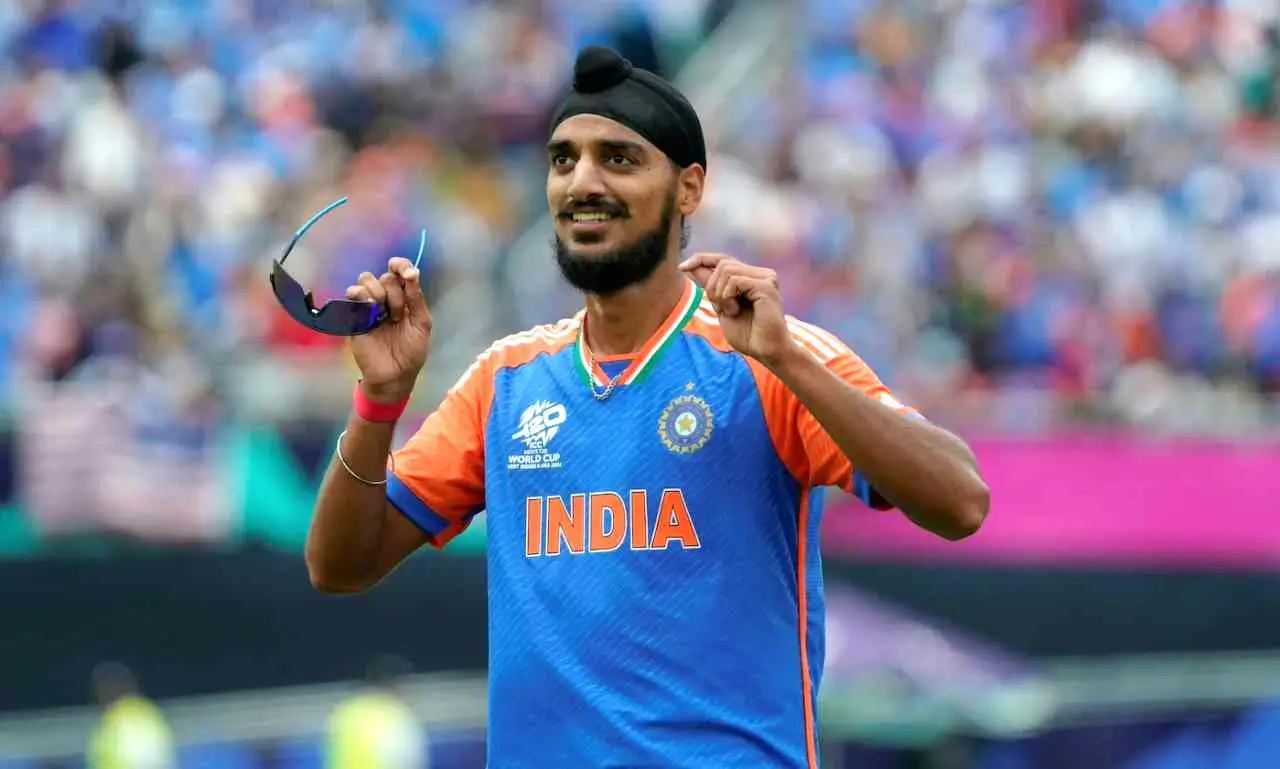
Fast bowling in T20 cricket leaves no space for hesitation. One poor spell can define perception, while one strong response can reset narratives completely. Arshdeep Singh understands this pressure better than most Indian bowlers. The third T20I against South Africa in Dharamsala offered another reminder of his resilience and clarity.
Just days earlier in New Chandigarh, execution had deserted him. Wides piled up, lengths drifted, and control disappeared. The criticism was immediate and loud. Dharamsala, however, became the stage for a composed response rather than a reactive one.
This time, Arshdeep did not shoulder the responsibility alone. With Jasprit Bumrah unavailable, Harshit Rana was handed the new ball. The pairing brought aggression, discipline, and a sense of balance. Together, they dismantled South Africa’s top order early. By the end of the power play, the match direction was decided. What followed merely confirmed India’s control.
Arshdeep Singh’s Career Pattern: Setbacks Followed by Statements

Arshdeep Singh’s journey has repeatedly shown his ability to respond under pressure. In the 2022 Asia Cup, a dropped catch against Pakistan triggered intense criticism. He responded by bowling a calm final over despite the circumstances. A month later, at the T20 World Cup, he removed both Babar Azam and Mohammad Rizwan early.
That pattern resurfaced in this series. In New Chandigarh, his home ground, Arshdeep endured one of his toughest outings. He conceded 54 runs, struggled with wide yorkers, and bowled seven wides in a single over. Rhythm deserted him completely.
Dharamsala showed the correction. He returned to fundamentals. Length came first. Movement followed naturally. The difference was not tactical innovation but a mental reset. The ability to trust preparation mattered more than searching for fixes. This bounce-back was not accidental. It reflected a bowler comfortable with self-assessment.
Dharamsala Conditions Demand Precision Over Pace
Dharamsala offers unique challenges. The altitude helps the ball travel further, but cold air and grass assist swing and seam. On this evening, movement dominated distance. Batters struggled to trust their footwork early.
Dew arrived before the toss, adding difficulty for bowlers. With Bumrah absent, Arshdeep took on leadership responsibilities immediately. India’s decision to field placed pressure on the seamers.
Arshdeep responded with discipline. His opening over displayed control rather than aggression. Two deliveries swung away from Reeza Hendricks. The third curved back sharply, trapping him lbw. It was bowling built on patience.
He finished with figures of 2 for 13 from four overs. Not a single wide appeared in his spell. Control returned completely.
Powerplay Records That Reflect Sustained Excellence
Hendricks’ dismissal carried statistical significance. It marked Arshdeep’s 48th wicket in the first six overs of T20Is. That number pushed him past Bhuvneshwar Kumar as India’s most successful powerplay bowler.
It was also the 20th time Arshdeep dismissed a batter for a duck in T20Is. Another Indian record fell quietly. These milestones underline consistency rather than form spikes.
When questioned about technical changes, Arshdeep dismissed the premise. He spoke of execution rather than adjustment. At the international level, he explained, some days simply do not click. The response lies in returning to basics. Dharamsala became proof of that philosophy.
Harshit Rana’s New-Ball Opportunity Turns Into Authority
While Arshdeep provided stability, Harshit Rana delivered assertiveness. Trusted with the new ball in Bumrah’s absence, Rana showed immediate confidence. There was no hesitation in his approach.
Quinton de Kock, in excellent form entering the match, became his first victim. Bowling from around the wicket, Rana angled the ball in, beat the inside edge, and trapped him lbw. South Africa was suddenly 1 for 2.
Rana mixed tactics intelligently. He tested Dewald Brevis with pace and bounce. A short ball hurried him. A fuller delivery tempted him wide. Brevis eventually chopped on, undone by indecision. India removed three top-order batters inside the power play, and the match tilted decisively.
Why Harshit Rana’s Figures Understated His Influence?
Rana’s final figures read 2 for 34. The numbers do not tell the full story. When he returned for the 18th over, Aiden Markram attacked aggressively. Two sixes and a four inflated the economy.
By then, the damage was complete. Rana’s early overs fractured South Africa’s confidence. His pace forced defensive instincts. His angles restricted scoring options. South Africa never recovered their intent. This was a spell that coaches value deeply. Impact outweighed appearance. Trust was earned.
Arshdeep Singh Closes the Innings With Composure
Arshdeep returned late to close the innings with the same control he showed upfront. His wide yorkers were not perfectly executed, but even the misses were difficult to hit cleanly.
When Markram attempted to force momentum, he edged a full delivery behind. That dismissal ended any remaining resistance. South Africa were bowled out for 117. The contest ended there. Everything that followed merely confirmed it.
Early Dominance Makes the Chase Academic
India’s chase reflected the clarity established earlier. Abhishek Sharma’s early aggression neutralised any threat quickly. Boundaries came without panic.
Once the powerplay passed, the target allowed India breathing space. Minor stutters never threatened the outcome. The result was sealed well before the finish. The opening six overs, with ball and bat, decided everything.
What This Performance Means for India Going Forward?
With the T20 World Cup approaching, this performance carried broader significance. India learned that Arshdeep’s difficult outings remain exceptions rather than trends. More importantly, they confirmed Harshit Rana’s readiness under responsibility.
In Bumrah’s absence, India found leadership with the new ball. They found discipline under pressure. They found control in conditions demanding precision.
Depth matters in tournament cricket. Dharamsala demonstrated that India possess it. This was not merely a bounce-back performance. It was a statement of resilience, trust, and preparation.