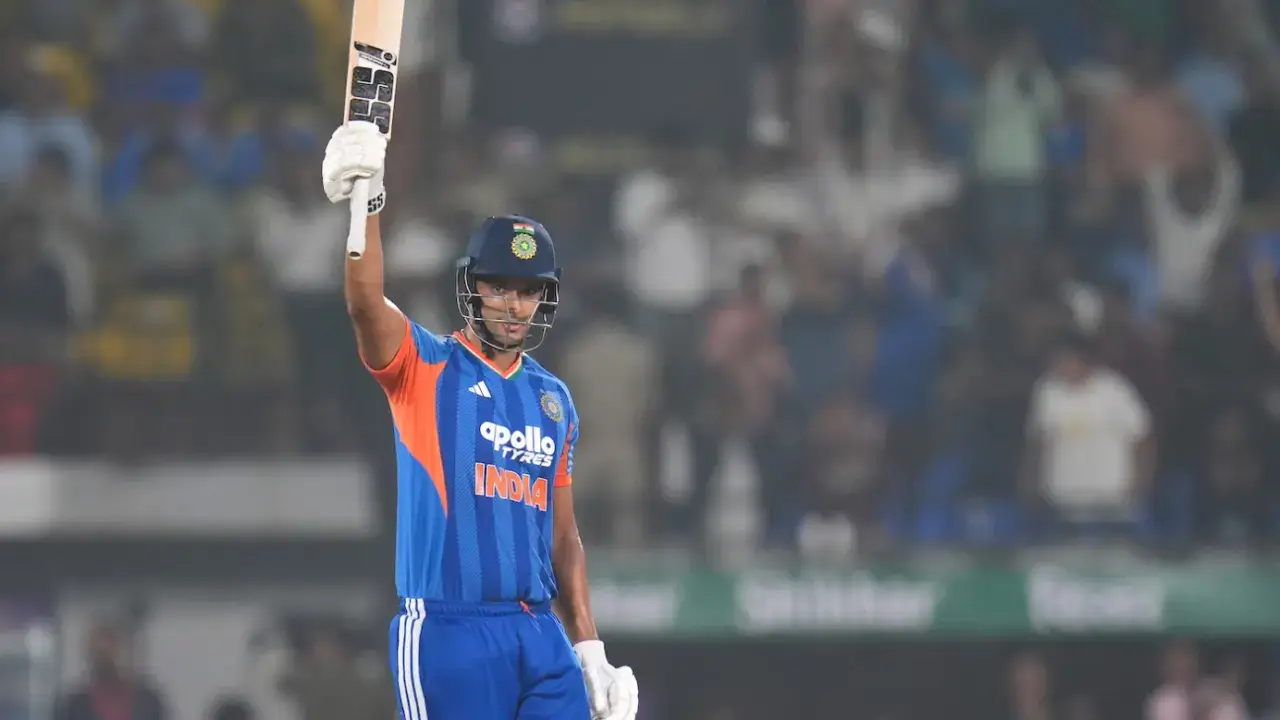
Not long ago, Shivam Dube carried a visible weakness. High pace. Hard lengths. Short balls into the body. Bowlers sensed hesitation. He would hop across. Sometimes duck awkwardly. Sometimes get cramped for room.
That vulnerability became part of scouting reports. Fast bowlers targeted him relentlessly. The narrative grew louder with every uncomfortable dismissal.
Then came self-doubt. And with that, a choice. Accept limitations or rebuild entirely.
Dube chose reinvention. He went back to basics. Practice sessions were redesigned. Coaches hurled length balls from 18 yards. The goal was reaction speed. Muscle memory had to change.
Training happened on bouncy red-soil surfaces. The ball climbed steeply. There was no escape from discomfort. Repetition forced adaptation.
The process was not cosmetic. It was structural. Confidence does not return through talk alone. It returns through preparation.
This phase reshaped Dube’s batting identity. He stopped fearing pace. He began preparing for it. That shift in mindset laid the foundation for what followed. The transformation did not arrive overnight. But once it began, it altered his entire T20 trajectory.
The Spin Breakthrough That Changed Everything
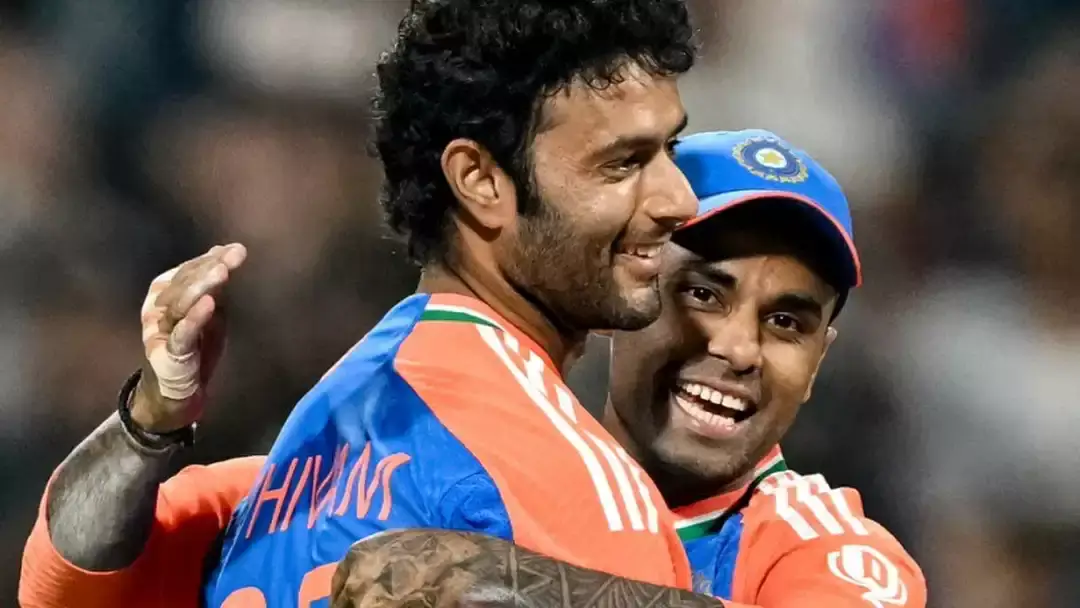
Ironically, the first visible payoff came against spin. In 2023, Dube’s spin-hitting improved noticeably. By 2024, it had become elite. He began dominating offspinners and left-arm orthodox bowlers alike. The footwork sharpened. The bat swing grew cleaner. Most importantly, clarity replaced hesitation.
Against the Netherlands, that clarity surfaced again. Aryan Dutt tested him early. The surface offered skid and uneven bounce. Dube struggled initially.
He was 6 off 11. Pressure mounted. Suryakumar Yadav walked up repeatedly between deliveries. Calm words. Tactical reminders.
Then came release. A 19-run over against Colin Ackermann changed everything. Two powerful leg-side sixes flipped momentum instantly. Dube does not rely on gimmicks. No switch-hits. No elaborate innovation. Just a full swing. Long levers extending through the line.
He converts marginal errors into boundary balls. Even good lengths become hittable inside his arc. Spin no longer restricts him. It fuels him.
Conquering the Short Ball: Hard Work Behind the Scenes
Dube openly acknowledged his struggle with the short ball. When he joined Chennai Super Kings, the issue was glaring.
Fast bowlers attacked him predictably. Bouncers followed by slower short balls. Fielders placed deep on the leg side. Instead of avoiding the problem, he confronted it. Extra hours. Extra balls. Repetitive drills focused solely on short-length responses.
Against Netherlands, Logan van Beek tried to test him with bounce. The response was brutal. The pull shot flew ferociously. When pace was taken off, Dube adjusted. He stayed leg-side of the ball. He accessed long-on cleanly.
Improvement against short bowling unlocked his range. It removed fear. That freedom enhanced his spin game too. Reinvention often begins by addressing weakness directly. Dube’s case is a textbook example.
Game Awareness: The Invisible Upgrade
Physical changes are visible. Mental upgrades are harder to quantify. Yet Dube’s biggest evolution lies in awareness. Preparation has reduced surprise. Against Netherlands, he did not rush despite early dots. He absorbed pressure. He understood conditions were tricky.
The pitch had skid with the new ball. Later, some deliveries kept low. Others held slightly in the surface.
Instead of forcing strokes, Dube waited. When India reached 89 for 3 in 13 overs, he sensed the moment. Acceleration followed with precision. From 6 off 11 to 66 off 31. That is not blind hitting. That is calculated expansion.
He did not change gears dramatically. He simply committed fully when time arrived. Game awareness separates hitters from finishers. Dube now belongs firmly in the latter category.
Mechanics of Power: Why Dube’s Method Works
Dube’s power is not flashy. It is mechanical efficiency. His base remains strong. His bat swing is long but controlled. Contact point stays ahead of the body.
When he hits through the line, there is minimal excess movement. That reduces mistimed lofts. Against spin, he drags length into his hitting zone. Against pace, he maintains balance under bounce.
The pull shot behind square looks controlled. The pick-up flick over fine leg appears effortless. The slash over point feels natural. What changed is alignment. Earlier, he closed himself off. Now he opens angles.
He does not appear rushed. Even high-velocity bowling looks manageable. Mechanics combined with belief create destructive output.
Statistical Proof of Transformation
Numbers confirm the eye test. Before the 2024 T20 World Cup, Dube’s strike rate against pace hovered around 134 in T20Is. Since then, it has jumped to 172. The run volume is similar. The tempo is dramatically different.
That rise reflects preparation rather than randomness. Increased reaction time. Improved decision-making. Enhanced shot range. He has not merely survived pace. He has attacked it.
His strike rate surge aligns with visible confidence growth. He now treats hard lengths as scoring opportunities. Data validates transformation. It proves reinvention was not superficial.
The Netherlands Innings: A Case Study in Control
The innings against Netherlands encapsulated his evolution. Early discomfort. Slower bounce. Tight lines from Dutt. An umpire’s call saved him once. Yet he stayed patient. He understood situation over ego.
When Ackermann erred marginally in length, punishment followed immediately. Two sixes shifted pressure. Later, van Beek’s pace was handled decisively. The finishing stretch showcased both power and poise. It was not flawless. A slower bouncer almost caused dismissal first ball.
But elite players are not defined by perfection. They are defined by recovery. Dube’s innings had pacing. It had timing. It had authority.
Belief as the Final Ingredient
Technique builds foundation. Belief completes structure. Dube repeatedly emphasized confidence. He prepared expecting bowlers to attack short. He entered innings ready.
When he says, “I knew today was my day,” it reflects conviction built through work. He understands team context. Any batter can win matches. On that night, he seized responsibility.
Belief allows patience under pressure. It also fuels aggression at the right moment. Without belief, mechanics crumble. With belief, they flourish.
India’s Finishing Edge Heading Into Super Eight
India enters the Super Eight with momentum. Dube’s rise significantly strengthens their middle order. Opposition teams will continue testing him with short balls. They will vary their pace cleverly. But he no longer appears uncertain. He anticipates those plans. In tournaments, finishers decide outcomes. Middle overs can stall. Final overs accelerate.
Dube offers controlled destruction. He does not rely solely on improvisation. He relies on clarity. From vulnerability to velocity, his journey reflects disciplined reinvention. If this trajectory continues, he will not merely be a contributor. He will be a defining force in India’s title push.