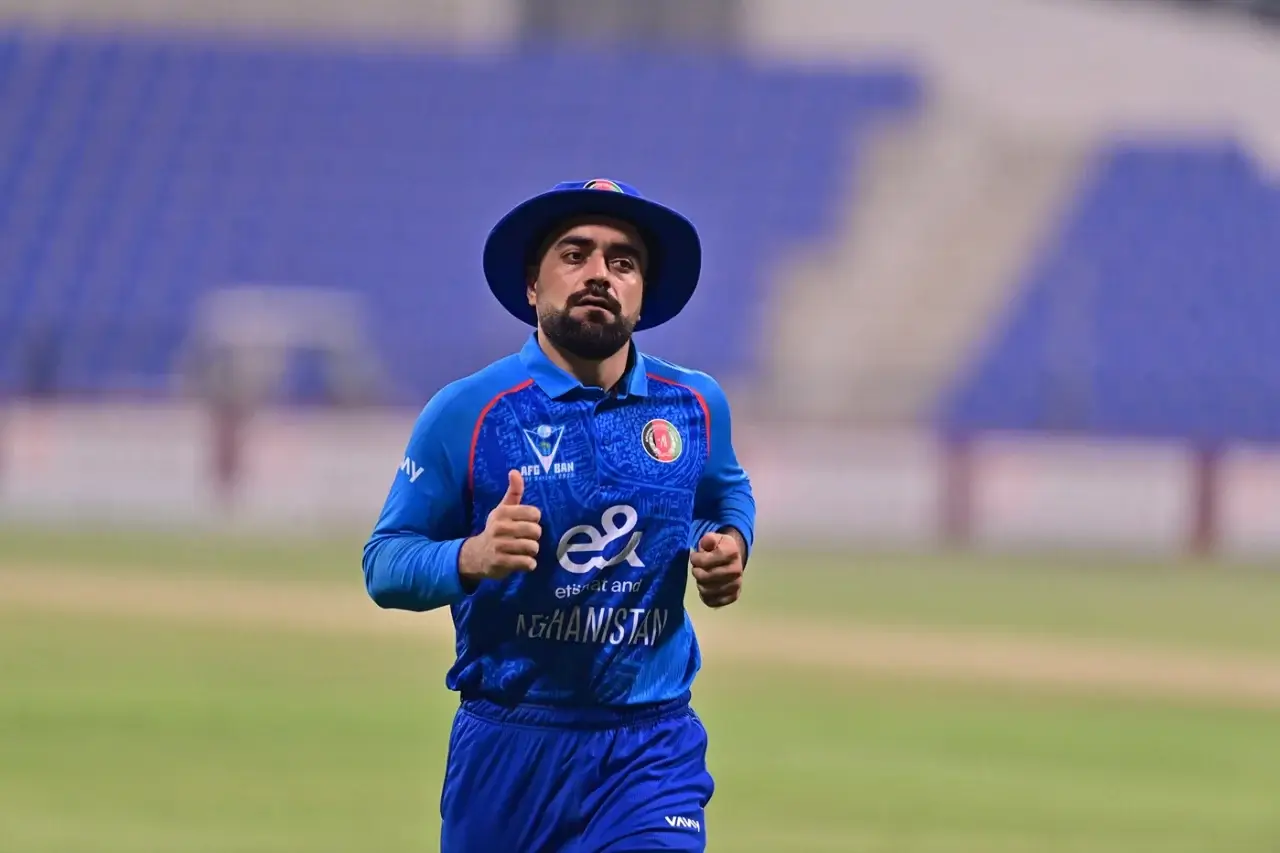
Cricket rarely collides so directly with politics, ethics, and human rights. Rashid Khan’s recent comments on Afghanistan women’s cricket reopened a debate that has been simmering for years, often in silence. As Afghanistan’s most recognisable cricketer, his words carry weight, even when framed carefully.
This article does not ask Rashid to solve governance failures. It asks the harder questions fans, players, and institutions must confront together. Through nine key questions, we explore what support means, where responsibility lies, and why this issue refuses to disappear.
What Exactly Did Rashid Khan Say, and Why Does It Matter Now?

Rashid Khan stated that he would “definitely” like to see an Afghanistan women’s team in the future. On the surface, it appears straightforward. Supportive, cautious, and aligned with cricket’s global values. Yet the timing and wording have drawn intense scrutiny.
This is the first time Rashid has explicitly spoken about a women’s team, not just women’s education. That distinction matters. For years, his public advocacy stopped short of cricketing representation. This statement, therefore, signals a shift, even if modest.
Why now? The T20 World Cup setting amplifies every word. Global attention magnifies intent. Silence becomes louder when broken late. Support feels different when it arrives after years of exclusion.
For supporters, the comment offers hope. For critics, it raises uncomfortable questions about delay, responsibility, and influence. Rashid framed the issue as beyond player control, pointing to administrators and the ICC. That framing is accurate, but incomplete.
Words from global stars shape discourse, even without policy power. Rashid’s statement matters because it reopens space for dialogue. It also invites accountability, not just from institutions, but from cricket’s most visible voices.
Why Is an Afghanistan Women’s Team Central to Full Membership Ethics?
Full Membership in world cricket carries expectations beyond men’s results. It assumes inclusivity, development, and representation across genders. Afghanistan received this status with an understanding, not a completed structure.
At the time, women’s cricket existed in fragile but real form. Contracts were issued. Plans were discussed. Momentum existed. That momentum collapsed under political change, but the obligation did not disappear.
The ethical dilemma is clear. Can a nation retain full privileges while half its population is excluded from the sport? Cricket governance has avoided a decisive answer.
This question matters because it sets precedent. If exceptions become permanent, standards erode globally. Women’s cricket has grown precisely because inclusion became non-negotiable.
Rashid’s comments touch this tension without resolving it. His acknowledgement indirectly reinforces that women’s cricket is not optional. It is structural. The unresolved nature of Afghanistan’s status continues to test cricket’s moral framework.
How Much Influence Do Star Players Actually Have in Such Situations?
Players often argue they lack decision-making power, and structurally, that is true. Governing bodies ratify teams. Boards submit compliance. The ICC enforces rules.
Yet influence is not binary. Public voices shape pressure. Pressure shapes action. Star players influence sponsors, broadcasters, and public sentiment.
Rashid Khan is not an administrator, but he is an ambassador. That role carries soft power. Silence does not equal neutrality when representation is denied.
Critics argue not that Rashid should fix the issue, but that consistent advocacy could accelerate solutions. Support voiced once feels symbolic. Support repeated feels intentional. This distinction defines the current debate.
Why Are Exiled Women Cricketers Reacting With Anger, Not Gratitude?
For exiled Afghan women players, Rashid’s statement arrives late. Many lost careers, homes, and identities tied to cricket. Survival replaced ambition.
Their frustration stems from invisibility. Years passed without sustained advocacy from the men’s team. When support finally comes, it feels incomplete.
From their perspective, recognition delayed is damage done. Their reaction reflects accumulated loss, not hostility. Understanding this emotional context is essential. Advocacy is not measured only by intent, but by timing and persistence.
What Role Do the Afghanistan Cricket Board and International Cricket Council Play?
Formally, the responsibility lies here. Recognition, funding, and participation depend on board compliance and ICC enforcement. The ACB operates under severe constraints. The ICC has chosen engagement over exclusion. Both approaches carry consequences.
Critics argue enforcement has been too soft. Supporters argue isolation would hurt players without helping women. This institutional paralysis fuels frustration. Without clear benchmarks, progress stalls indefinitely. Rashid’s comments highlight this gap without resolving it.
Is Silence From Players Ever Truly Neutral?
Silence protects careers. It also shapes narratives. Injustice unchallenged gains legitimacy over time. This is the argument made by exiled players. They do not expect heroism. They expect visibility. The ethical debate here transcends cricket. It asks whether representation demands vocal defence or quiet hope.
Rashid’s statement breaks silence. Whether it sustains dialogue remains the question. Training camps, exhibitions, and exile programmes keep skills alive. They do not replace national identity.
Cricket is deeply symbolic. Playing without a flag carries emotional weight. External initiatives help individuals, not legitimacy. Until recognition exists, Afghan women remain cricketers without a country. That reality defines the limits of workaround solutions.
Why Are Some Nations Refusing Bilateral Cricket With Afghanistan?
Countries like Australia and England cite women’s rights concerns. They avoid bilateral series but still compete in ICC events. This inconsistency reflects cricket’s fragmented governance. Moral stances clash with tournament obligations.
It sends mixed signals. Pressure without consequence loses force. Participation without protest normalises exclusion. This tension remains unresolved.
Progress begins with clarity. Clear timelines. Clear expectations. Clear public support. It does not require players to become policymakers. It requires sustained advocacy aligned with institutional accountability. Rashid Khan’s words open a door. Walking through it requires more voices, not fewer.
Afghanistan women’s cricket does not need sympathy. It needs structure, recognition, and unwavering visibility. Until then, the question will not disappear.