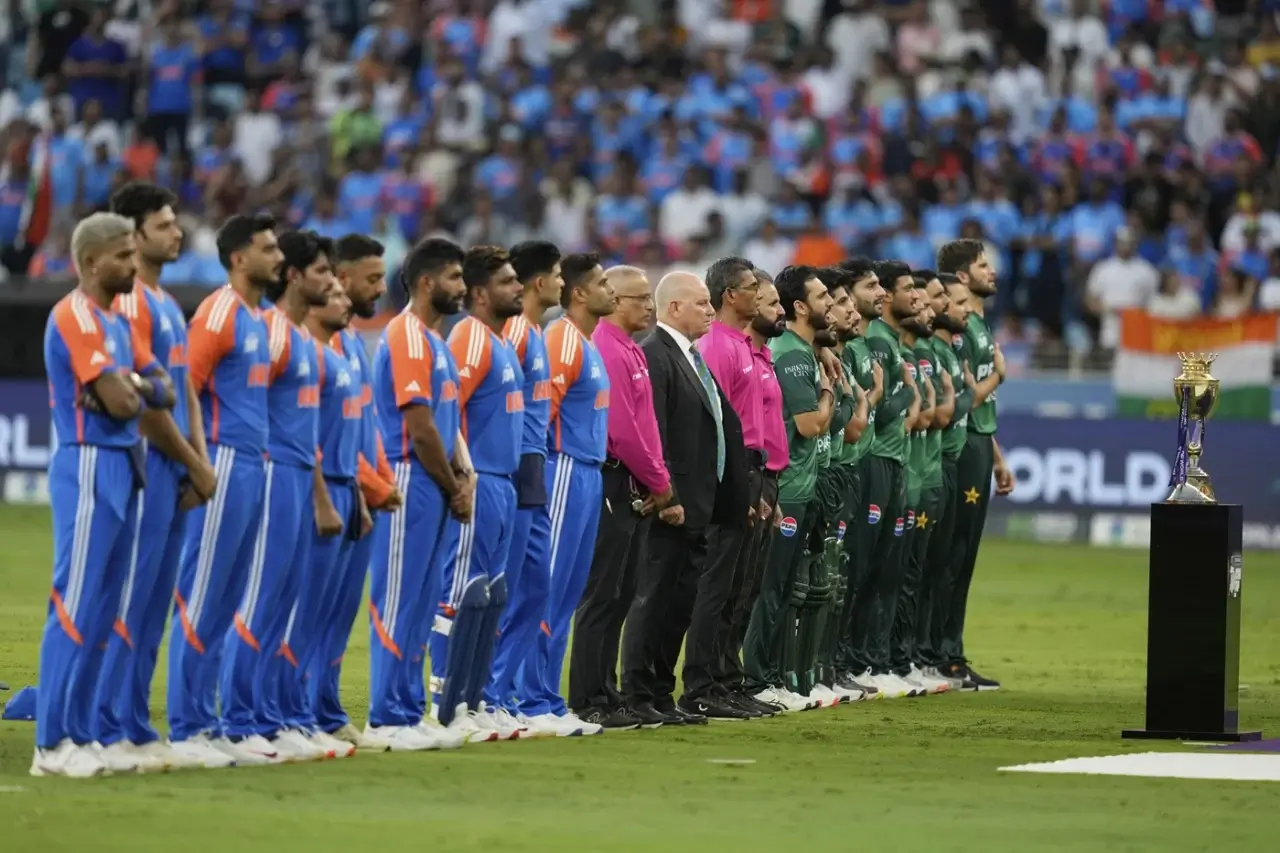
The threat of Pakistan boycotting its group-stage match against India at the 2026 T20 World Cup has pushed cricket into unfamiliar legal territory. While political tension between the two countries is not new, an outright refusal to play a scheduled ICC World Cup match introduces serious contractual, commercial, and governance questions. This issue is no longer only about sport. It sits at the intersection of international law, government authority, and the obligations every ICC member signs up to when entering a global tournament.
The situation is complicated further by Pakistan’s team already being present in Colombo, the ICC publicly warning of “significant and long-term consequences,” and the reliance on a government statement rather than a cricket board announcement. To understand what happens next, it is necessary to step away from emotion and examine the legal framework governing ICC events, the options available to the International Cricket Council, and the defences the Pakistan Cricket Board could realistically rely on.
This article breaks the issue into nine clear questions, explaining what the ICC can do, what it is likely to do, and where Pakistan’s legal position is strong or weak.
Why Participation in ICC Events Is a Binding Legal Obligation?
Participation in ICC tournaments is not voluntary once a team qualifies. Every member board signs a legally binding document known as the Members Participation Agreement (MPA). This agreement governs entry, participation, broadcast obligations, and match fulfilment for ICC events, including World Cups. One of the most critical clauses requires teams to compete in every scheduled match of the tournament they have qualified for, without conditions or exceptions.
From the ICC’s perspective, this clause exists to protect the integrity of the tournament. Broadcasters, sponsors, host boards, and fans invest on the assumption that every scheduled fixture will be played. A unilateral refusal to play one match undermines that entire ecosystem. That is why the agreement does not distinguish between “important” matches and others. A group game carries the same contractual weight as a final.
If Pakistan refuses to play India without a legally accepted excuse, the ICC can formally declare the PCB in breach of contract. This does not automatically mean punishment, but it opens the door to enforcement mechanisms under both the MPA and the ICC constitution. The key point is that this is not a discretionary sporting decision. It is a contractual one, governed by written commitments already signed by the PCB.
What the ICC Can Claim if Pakistan Refuses to Play
If the boycott goes ahead, the ICC’s first legal position is straightforward. It can argue that Pakistan failed to honour a clear contractual obligation. Under standard contract law, this allows the non-breaching party to seek remedies. These can include damages, indemnity claims, or termination of participation rights.
In practical terms, the ICC would begin by asserting that the PCB’s refusal caused financial and reputational harm. An India–Pakistan match is the most valuable fixture in global cricket. Its absence impacts broadcast revenue, sponsor contracts, advertising inventory, and tournament scheduling. The ICC would argue that these losses were foreseeable and directly caused by Pakistan’s non-performance.
Beyond money, the ICC could also argue that allowing selective participation sets a dangerous precedent. If one board can refuse a match for political reasons, others may follow in future tournaments. That argument strengthens the ICC’s position if it chooses to escalate the issue beyond a simple forfeit.
However, escalation is not automatic. The ICC historically prefers negotiated outcomes. Legal rights and legal strategy are not always the same. Understanding what the ICC can do does not always explain what it will do.
Can Pakistan Use Force Majeure as a Legal Defence?
The PCB’s most important legal defence is Force Majeure. This is a standard contractual clause that excuses non-performance when obligations become impossible due to events beyond a party’s control. The MPA explicitly recognises government orders as potential Force Majeure events, which gives Pakistan a viable entry point for this argument.
To rely on this defence, however, several conditions must be met. The PCB must formally notify the ICC in writing. It must provide evidence of a binding government directive preventing participation. It must explain how this directive directly stops compliance with the agreement. Most importantly, it must show that the situation could not reasonably have been avoided or mitigated.
This is where the defence becomes fragile. A general political statement is not the same as a specific legal prohibition. The ICC will closely examine the wording, scope, and enforceability of any government order presented. If the order only discourages participation rather than legally forbidding it, the Force Majeure claim weakens significantly.
Force Majeure protects against impossibility, not inconvenience or preference. That distinction will matter enormously if this dispute moves into formal legal territory.
Is This a Partial or Total Force Majeure Situation?
One of the most complex questions is whether Force Majeure, if accepted, applies only to the India match or to Pakistan’s entire participation in the tournament. The ICC could argue that the participation obligation is indivisible. In simple terms, either a team can fulfil all its obligations or it cannot fulfil any of them.
Under this interpretation, refusing one match could justify termination of Pakistan’s participation in the entire World Cup. This would be an extreme but legally arguable position. It would treat selective participation as incompatible with the tournament’s structure.
The PCB, unsurprisingly, would argue the opposite. It would claim this is a partial Force Majeure event affecting only one fixture. It would point to tournament regulations that already account for forfeited matches through points allocation and net run-rate adjustments. From this perspective, the sporting penalty is already defined and should be the only consequence.
This debate has no easy answer. It depends on contractual interpretation, past practice, and how aggressively the ICC wants to assert its authority. Both sides have arguments, but neither position is unassailable.
Does Government Involvement Weaken Pakistan’s Case?
A complicating factor is the overlap between Pakistan’s cricket administration and its political leadership. International sports law expects national boards to operate independently of government control. While this principle is often violated in practice, it still matters legally.
If the same individuals influence both the government decision and the cricket board’s response, the ICC could argue that the Force Majeure was self-created. In legal terms, a party cannot rely on an excuse it helped engineer. This argument would not be easy to prove, but it would be available to the ICC if it chose to pursue it.
The ICC could also question whether the PCB took reasonable steps to mitigate the impact of the government directive. Mitigation is a core requirement in Force Majeure clauses. The existence of hybrid models and neutral venues in previous India–Pakistan disputes could be used to argue that alternatives existed.
The more politically entangled the decision appears, the harder it becomes to present it as an unavoidable external event.
What Happens If Pakistan Later Plays India in a Knockout Match?
One of the most damaging scenarios for Pakistan’s legal position would be agreeing to play India later in the same tournament. If a knockout match between the two sides occurs and Pakistan participates, it undermines the logic of a match-specific government prohibition.
From a legal standpoint, it becomes difficult to explain why a group match was impossible but a knockout match was acceptable. The ICC would almost certainly use this inconsistency to challenge the credibility of the Force Majeure claim.
The PCB might argue that government directives can change over time or apply to specific circumstances. While technically possible, such arguments are inherently weaker than a clear, consistent prohibition. Selective enforcement raises questions of convenience rather than compulsion.
This is why any decision taken now has long-term implications. Consistency will matter more than rhetoric.
What Sanctions Are Actually Available to the ICC?
The ICC’s enforcement options range from mild to severe. At the lowest level, the match could be treated as a forfeit, with Pakistan receiving zero points. Financial penalties could follow if losses are demonstrable. Compensation claims are possible but would likely be negotiated rather than litigated.
At a higher level, the ICC could initiate proceedings under its constitution for serious breaches of membership obligations. This opens the door to suspension or termination of membership, though such steps are historically rare and politically explosive.
The ICC is aware that extreme sanctions would harm global cricket as much as Pakistan. Therefore, while these powers exist, their use would signal a breakdown in diplomacy rather than a routine enforcement action.
Do Past Boycotts or Visa Disputes Create Precedent?
Historical examples, such as teams refusing to play Zimbabwe in 2003 or visa issues affecting tournaments, are often cited in public debate. Legally, however, these examples carry limited weight. Each case is decided on its own facts, contracts, and circumstances.
Modern ICC agreements are far more detailed and commercial than those of earlier eras. What may have been tolerated in the past is not automatically acceptable today. Moral arguments and legal precedent are not the same thing, and tribunals focus on written obligations, not historical sympathy.
Why This Decision Could Reshape ICC Governance?
Beyond the immediate issue, this situation could reshape how the ICC enforces participation rules in politically sensitive matchups. If Pakistan successfully limits consequences to a forfeit, other boards may attempt similar actions in future tournaments. If the ICC responds harshly, it reinforces central authority but risks alienating a major member.
This is why the ICC’s public language has been cautious but firm. It is signalling seriousness without committing to a specific outcome. The final resolution will likely involve negotiation, compromise, and face-saving on both sides rather than a courtroom confrontation.
What is clear is that this issue goes far beyond one match. It tests the balance between national politics and international sport, and the outcome will influence how global cricket handles similar crises in the years ahead.