
Suryakumar Yadav has always defined modern T20 batting freedom. From 2021 to 2024, he reshaped how middle-order batting was perceived in international cricket. Bowlers had no safe lengths, captains had no comfortable fields, and matchups lost meaning when he was set. His recent statement — “out of runs, not out of form” — sounds familiar, even logical. Batters often rely on rhythm returning with time.
But data does not deal in emotion or confidence. It reflects patterns, repetition, and outcomes. Over the last 15 months, especially since November 2024, the numbers paint a picture far more complex than a temporary lean patch. His returns against pace, dismissal modes, shot control, and scoring zones have all shifted sharply.
This article breaks down that shift in detail. It examines whether Surya’s struggles are circumstantial, opposition-driven, or technical. More importantly, it explains what has changed in his batting behaviour and why international bowling attacks have found sustained success against him.
What follows is not a verdict on his future. It is a clear, structured look at what the data actually shows — and why the “out of runs” argument is becoming harder to defend.
Table of Contents
ToggleThe Collapse of Numbers Against Pace Since Late 2024
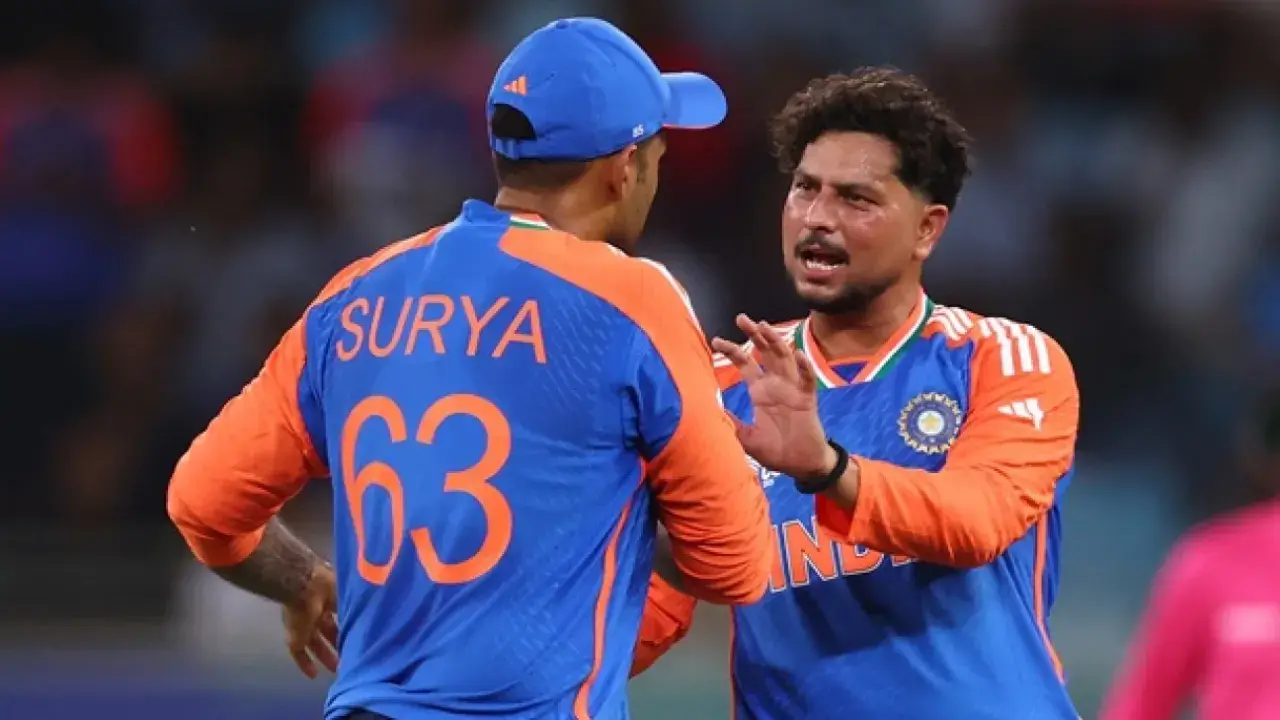
From November 2024 onwards, Suryakumar Yadav’s numbers against pace have dropped alarmingly. In this period, he has been dismissed 19 times in T20 internationals. Eighteen of those dismissals have come against seam bowling. That alone signals a structural issue rather than a coincidence.
His average against pace during this phase stands at just over eight. His strike rate has dipped below 110, a stark contrast to the 150-plus returns that defined his prime years. These are not marginal declines. They represent a complete breakdown in effectiveness against the most common bowling type he faces early.
Even more revealing is the consistency of dismissal patterns. Sixteen of the eighteen dismissals to pace have been catches. These are not defensive errors or unplayable deliveries. They stem from attacking strokes executed without control. That distinction matters.
When a batter is genuinely out of runs, edges, lbws, or soft dismissals dominate. Here, intent remains high but execution has fallen sharply. Bowlers are no longer surviving Surya’s aggression. They are feeding off it.
This shift marks the foundation of his slump. Everything else — shot selection, zones, and tactics — builds from this central collapse against pace bowling.
Early-Innings Vulnerability and the First 10-Ball Trap
One of the clearest danger signs is how early Surya’s dismissals are arriving. Thirteen of his eighteen pace dismissals since November 2024 have occurred within his first ten balls. This phase is crucial in modern T20 cricket, especially for middle-order batters.
Internationally, close to 80% of the balls he faces early are seam deliveries. Oppositions are deliberately front-loading pace against him. They understand that early rhythm denial is key. Surya is being forced to manufacture impact immediately, rather than settling naturally.
The problem is not aggression itself. It is aggression without prior information. Early in an innings, batters are still reading pace, bounce, and grip. Surya’s game historically thrived once he had those cues. Now, he is attempting boundary options before those reads are complete.
This has created a predictable pattern. Bowlers hit hard lengths, offer occasional pace-off deliveries, and trust the deep field. Surya swings into uncertainty rather than authority.
Until this first-ten-ball phase stabilises, his overall returns will continue to suffer, regardless of intent or confidence.
Aerial Shot Increase and the Sharp Drop in Control
Shot data reveals a significant behavioural change. Until October 2024, Surya played aerial shots on roughly 16% of pace deliveries in his first ten balls. Since November 2024, that figure has jumped above 23%.
More alarming is what has happened to control. Earlier, nearly 86% of his aerial shots were classified as controlled strokes. That number has now fallen to around 52%. In simple terms, he is hitting more balls in the air while controlling far fewer of them.
This is the most dangerous combination for a T20 batter. Aerial intent only works when bat speed, timing, and balance align. When control drops, the same shots turn into high-risk dismissals rather than boundary options.
This explains why caught dismissals dominate his recent record. It also explains why bowlers are not backing away. They know the odds now favour the fielding side.
The issue is not stroke selection alone. It is stroke timing under pressure. Without restoring control percentages, Surya’s natural aggression becomes a liability rather than an advantage.
How Pace-Off Deliveries Are Undoing His Rhythm?
Another striking trend is the role of slower deliveries. Five of Surya’s caught dismissals against seamers in this period have come from balls clocked under 80 mph. These are deliberate pace-off deliveries — cutters, cross-seam balls, and disguised slower ones.
Earlier, bowlers avoided taking pace off against Surya. His bat speed punished anything sitting up. That respect has vanished. Oppositions now actively remove pace, knowing it disrupts his rhythm early.
Surya’s batting is built on flow. His backlift, trigger movement, and shot improvisation rely on speed through the ball. When pace is reduced, timing windows shrink and mishits increase.
These dismissals are not accidents. They are planned outcomes. Bowlers are executing slower balls early, not at the death, trusting deep fielders to finish the job.
Unless Surya recalibrates his response to pace-off bowling — either by delaying aggression or playing along the ground — this weakness will continue to be exploited ruthlessly.
The Disappearance of His Dominant Scoring Zones
Perhaps the most symbolic decline lies in his scoring zones. Until October 2024, Surya averaged over 58 scoring behind square on the leg side against pace. That region defined him. Flicks, whips, and pickups made bowlers fear straying anywhere near his pads.
Since November 2024, his average in that same zone has dropped below eight. That is not regression. It is collapse. Bowlers no longer fear that release option. They are holding straighter lines confidently.
This has cascading effects. When leg-side dominance fades, off-side fields become more aggressive. Bowlers can attack the stumps without bleeding runs. Surya is forced into higher-risk off-side strokes earlier.
The erosion of this zone suggests more than form loss. It suggests bowlers have found lengths and speeds that neutralise his wrists before they can work.
Restoring even partial leg-side authority would immediately rebalance matchups in his favour. Without it, his scoring map remains predictable and containable.
Why IPL Success Did Not Translate Internationally?
The contrast with IPL 2025 is critical for context. In that tournament, Surya produced sixteen consecutive scores above 25 and avoided early dismissals entirely. The difference was not role or confidence. It was bowling composition.
In IPL 2025, his first ten balls were split almost evenly between pace and spin. That balance allowed him to settle, read conditions, and choose moments to attack. Over the season, he faced nearly identical volumes of seam and spin.
Internationally, the environment has been harsher. Eighteen of India’s last 25 T20Is have come against SENA opposition. These teams rely heavily on pace, even through the middle overs. Surya has walked into sustained seam pressure repeatedly.
Context explains part of the decline. It does not excuse everything. The same batter adapting successfully in one environment and struggling in another highlights adaptability gaps, not loss of skill.
International success will demand adjustments rather than reliance on familiar IPL rhythms.
What Must Change for a Sustainable Comeback?
The data does not suggest Surya’s talent has disappeared. It suggests his risk-reward balance has tilted too far toward risk, especially early. A sustainable comeback will require tactical restraint, not reduced intent.
Delaying aerial shots in the first ten balls is the most immediate correction. Playing along the ground initially would rebuild control percentages. Forcing bowlers to change plans again is crucial.
Handling pace-off deliveries better is equally important. Waiting deeper in the crease or reducing bat swing on slower balls could neutralise a major dismissal mode.
Finally, reclaiming even part of his leg-side dominance would restore fear. Bowlers react quickly to punishment. One or two successful innings can reset matchups dramatically.
Surya’s best version has always been adaptive, not stubborn. If these adjustments come, the numbers suggest his destructive peak is still within reach — not behind him.
Conclusion
Suryakumar Yadav’s slump is not a mystery. The data is clear, consistent, and unforgiving. This is not simply bad luck or temporary drought. It is a convergence of early pressure, altered bowling strategies, and reduced shot control.
Yet, the same data also offers hope. His IPL success proves his instincts remain intact when conditions allow rhythm. The challenge is adapting those instincts to a harsher international environment dominated by pace and planning.
If Surya recalibrates early aggression, improves control, and counters pace-off tactics, the narrative can shift quickly. In T20 cricket, form can return faster than it disappears.
The line between “out of runs” and “out of form” may currently be blurred. But with the right adjustments, it does not have to remain that way.