

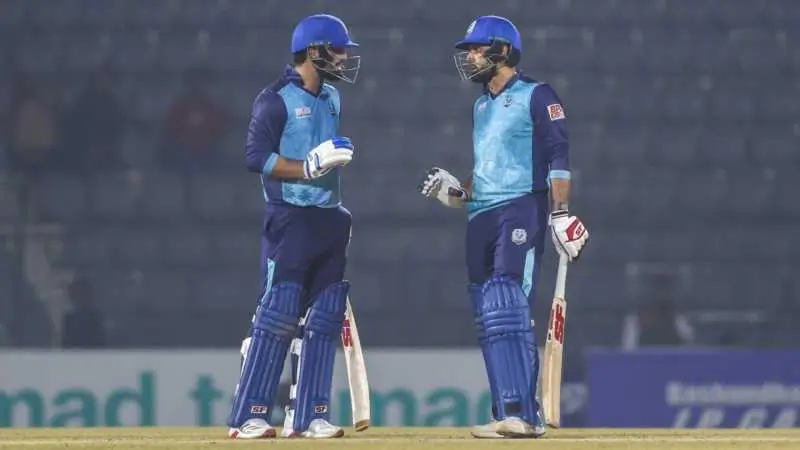
The Bangladesh Premier League has always been a stage for unexpected stories, but this moment stood apart because of its quiet depth. When Mohammad Nabi and his son Hassan Eisakhil walked out together, it was not framed as a spectacle. It was treated as a professional contest, shaped by preparation rather than sentiment. A father and son sharing the same team sheet is rare enough, but doing so with both contributing meaningfully elevated the occasion beyond novelty. The evening in Sylhet felt less like chasing history and more like cricket rewarding discipline.
For Nabi, the moment carried years of patience and restraint. He never pushed his son into selection or visibility. Eisakhil’s debut came only when the team management believed he was ready. That approach defined the tone of the night. There was pride, but there was also responsibility. Both understood that this was not about family bonds on display, but about earning respect in a professional league which helps Bangladesh to improve timeline.
Table of Contents
ToggleA Dream Delayed, Not Rushed
Nabi had spoken openly about waiting a long time for this opportunity. The wait was deliberate. He wanted Eisakhil to grow through domestic cricket, face failures, and understand pressure without the protection of a coach. When the call finally came, it felt deserved rather than gifted. That distinction mattered deeply to Nabi, who has spent his career earning respect through consistency rather than shortcuts.
For Eisakhil, the delay helped shape maturity. He walked into the XI knowing he belonged there on merit. The anticipation around the stadium was real, but it did not overwhelm him. That calmness came from years of being treated like any other young cricketer, not as the son of a senior international. The moment arrived naturally, and that made handling it easier.
Strict Training, Clear Boundaries
The relationship between Nabi and Eisakhil changes the moment training begins. Off the field, they are relaxed and familiar. On the ground, Nabi becomes uncompromising. He made it clear that discipline was non-negotiable. There were no allowances, no soft edges because of family. Training sessions were intense, demanding, and honest.
This separation of roles protected both of them. Eisakhil did not feel burdened by expectation at home, and Nabi did not dilute standards at practice. That balance created trust. Eisakhil knew feedback was genuine. Nabi knew the effort was sincere. It was not parenting on the field, but mentoring shaped by professional values.
The Preparation That Shaped the Debut
The most important work happened away from the crowd. On the eve of the match, Nabi spent around ninety focused minutes preparing his son. They spoke in detail about the bowlers he would face, the variations likely to be used at different stages, and how pressure might feel in his debut innings. Nothing was left abstract. Every scenario was discussed with clarity.
The session was not just about talking. Side-arm drills increased pace and simulated match conditions. Nabi deliberately pushed Eisakhil beyond his comfort zone, forcing him to react rather than think. By the end, nerves had already been confronted. When Eisakhil walked out to bat the next evening, the environment felt familiar. The debut stage had already been rehearsed.
Guidance in the Middle, Not From the Sidelines
Batting together added another layer to the story. During their partnership, Nabi communicated constantly. Before deliveries, he spoke about what might come next, whether it would be pace, a slower ball, or a change in length. This removed uncertainty for Eisakhil. Instead of guessing, he waited for the right options which players can learn from each other.
That guidance was subtle, not controlling. Eisakhil still made his own decisions. But the presence of experience beside him reduced panic. The innings flowed with control. Boundaries came without desperation. The 92-run knock reflected planning more than impulse, and the partnership helped Noakhali Express reach their highest total of the tournament.
An Innings That Showed Identity, Not Imitation
Despite inevitable comparisons, Eisakhil’s batting did not look like a copy of his father’s. His strokeplay felt natural, shaped by his own instincts. He later admitted he does not consciously try to emulate Nabi. That independence is something Nabi encourages strongly. He wants his son to grow into his own identity, not live in the shadow of another career.
Missing out on a hundred did not disappoint Eisakhil. His focus remained on the team total and match result. That mindset stood out as much as the runs themselves. It reflected grounding, not entitlement. The innings was not about headlines, but about belonging at this level.
A Father Who Waited for Readiness, Not Opportunity
Nabi’s patience defined this story long before the match began. He never pushed for his son’s inclusion or visibility. Eisakhil’s journey followed the same domestic grind faced by other young players. That mattered deeply to Nabi, who believes shortcuts weaken long-term growth. By waiting, he allowed his son to understand rejection, preparation, and self-improvement without safety nets.
When selection finally came, it felt natural rather than forced. Eisakhil entered the team knowing he belonged there on merit. This removed emotional weight from the moment. Instead of feeling like a gift, the debut felt like a progression. Nabi’s restraint protected Eisakhil from expectation overload. That patience became the foundation on which everything else stood.
Why Discipline Came Before Emotion in Preparation?
Despite the smiles in the press conference, Nabi made one thing clear: training standards never dropped. On the field, he was not a father, but a strict mentor. Sessions were demanding and detailed. Errors were corrected immediately. Effort was non-negotiable. Eisakhil understood this environment and accepted it fully.
This separation of roles created clarity. At home, comfort existed. At training, accountability ruled. That balance prevented emotional confusion. Eisakhil never felt pampered, and Nabi never felt conflicted. Discipline remained intact. This approach ensured that when match day arrived, Eisakhil relied on habit, not reassurance. Pressure became manageable because preparation had already absorbed it.
The Match-Eve Session That Defined the Debut
The most important preparation happened away from cameras. The night before the match, Nabi spent nearly ninety focused minutes with Eisakhil. They discussed bowlers in detail, breaking down pace, variations, and likely plans. Field settings were visualized. Pressure scenarios were spoken through calmly.
This was not a motivational talk. It was tactical education. Side-arm drills increased pace intentionally. Nabi pushed Eisakhil into uncomfortable situations, forcing quick decisions. The goal was familiarity with stress. By the end of the session, uncertainty had reduced. When Eisakhil walked out to bat the next day, the environment felt rehearsed. The debut stage no longer felt unknown.
Conclusion
This was more than a heartwarming BPL moment. It was a lesson in how preparation can steady emotion. Mohammad Nabi did not create a shortcut for his son; he built a pathway. Hassan Eisakhil did not rely on lineage; he relied on work. When they finally shared the same pitch, the performance felt earned, calm, and professional.
The Bangladesh Premier League witnessed a historic moment that night, but not the kind that was loud. It was history built quietly, through discipline, clarity, and trust. A father and son played together, not because the moment demanded it, but because they were both ready.