

The 2025–26 Ashes challenged everything associated with Test cricket rhythm. Matches ended quickly, sometimes shockingly so. Two Tests finished within two days, including Perth and Melbourne. That rarity had not occurred in the Ashes since the early twentieth century. Across five Tests, only 7,677 balls were bowled, the fewest in any completed five-match Test series. This reflected surfaces that demanded immediate results. Fast bowlers dictated terms. Batters had little time to settle. Even long totals did not guarantee longevity. One Test saw over 1,400 aggregate runs, yet still stretched to the final day.
This contrast underlined volatility. Test cricket here was not about endurance. It was about survival. Momentum shifted rapidly. Teams either adapted instantly or collapsed. The Ashes became a sprint disguised as a marathon. That made every session decisive. There was no room for passive cricket.
Table of Contents
ToggleWhen Two-Day Tests Became the New Shock Factor?
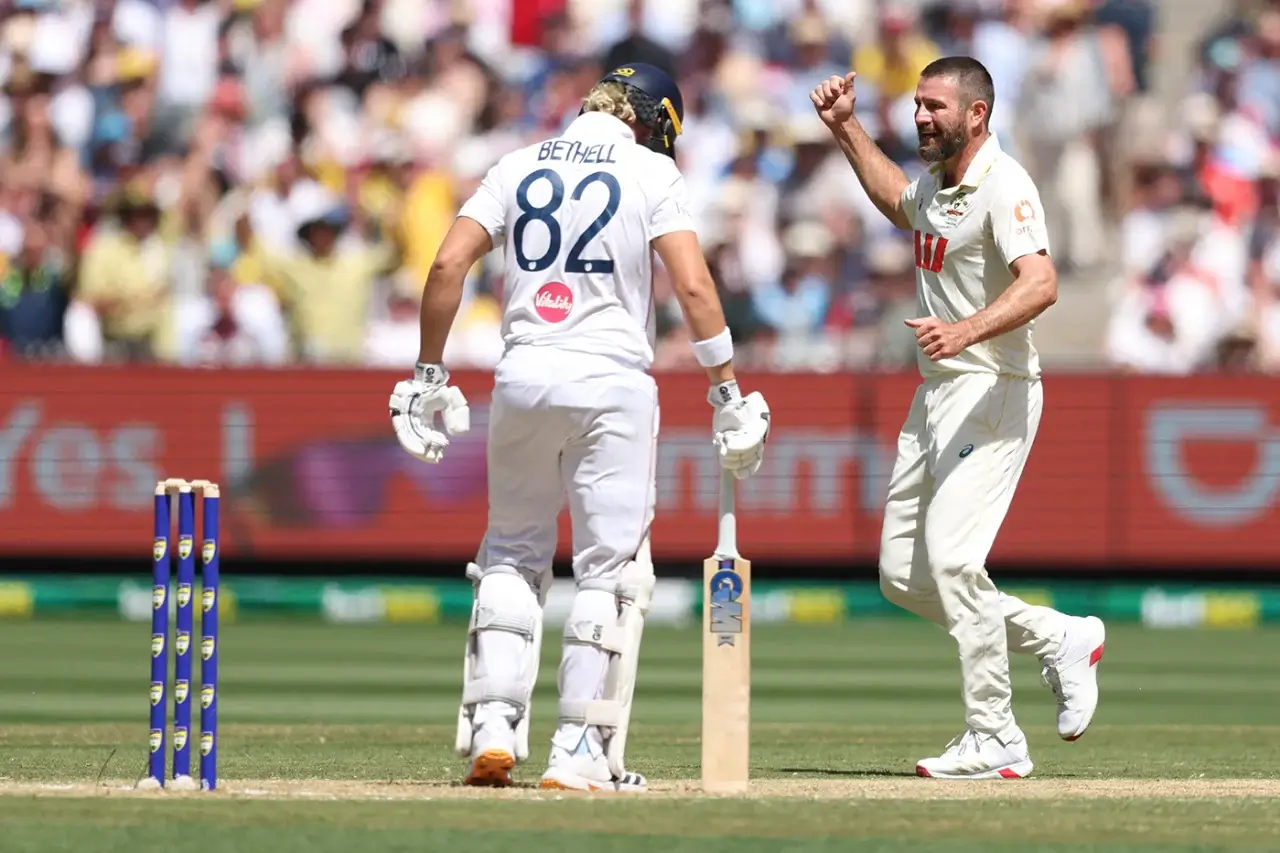
Perth and Melbourne delivered outcomes that felt unreal. Two-day Tests are almost extinct in modern cricket. Yet this series produced two. Perth became the first two-day Ashes Test since 1921. Melbourne followed quickly. Both matches still featured successful fourth-innings chases, adding to the anomaly. Australia chased 205 at Perth. England chased 175 at Melbourne. Such chases once required time and caution against dominant teams.
Here, they happened under a relentless pace. Historically, the highest fourth-innings score by day two was 105 for 7. Travis Head alone surpassed that within a session. These games highlighted extreme pitch behavior. Seam movement and bounce dominated early. Batting collapses followed.
This forced teams into aggressive chases rather than defensive survival. Test cricket’s usual narrative was flipped. Speed replaced attrition. The Ashes became a test of immediate adaptability.
England’s Dropped Chances That Shifted the Urn
England’s series unravelled through missed opportunities. Across five Tests, they dropped 17 catches. Several batters were dropped twice in the same innings. The cost was enormous. Australian batters added 547 runs after reprieves. England added only 298. The most damaging miss came at Sydney. Steven Smith was dropped on 12 and went on to score 138. That innings broke England’s resistance.
In contrast, England’s lone Test victory at Melbourne featured only one dropped catch. That correlation was stark. Fielding directly shaped results. England’s inability to seize moments turned competitive phases into defeats. In such fast-moving Tests, chances were rare. Dropping them proved fatal.
Why Australia Capitalised While England Could Not?
Australia dropped 11 catches too, but the aftermath differed. Only one reprieved batter crossed forty. That difference reflected mindset and positioning. Australia maintained pressure even after mistakes. England lost control. Australian fielders stayed aggressive. England retreated. This contrast defined the series. In short Tests, recovery time disappears. Australia adapted faster. England hesitated. That hesitation compounded losses.
Mitchell Starc’s Series of Absolute Authority
Mitchell Starc delivered one of the most complete Ashes performances ever. He struck in the opening over of the series. He claimed a career-best seven-for early and followed with an opening-day six-for at Brisbane. By the time Australia retained the Ashes, Starc already had 22 wickets. He finished with over 30.
His impact extended beyond bowling. He scored back-to-back Test fifties, a first in his career. Only legends like Kapil Dev and Tony Greig had combined such bowling and batting feats. Starc dismissed Ben Duckett and Ben Stokes five times each. He removed 14 of 15 England batters at least once. His presence dictated England’s approach. Fear replaced fluency. That psychological edge mattered.
Travis Head’s Transformation Changed the Series
Travis Head entered the series as a middle-order batter. Circumstances pushed him to open. The result was extraordinary. He smashed a 69-ball hundred at Perth. He followed with massive centuries at Adelaide and Sydney. Head topped match scores four times in the series.
Only Don Bradman had done that before. He finished with 629 runs, 608 as an opener. That accounted for nearly half of all opener runs in the series. When others failed, Head thrived. His counterattacking approach broke England’s plans. He turned chaos into control. In a series ruled by pace, Head’s intent redefined batting survival.
Smith and Carey Dominating the Catching Narrative
Steven Smith’s impact extended beyond batting. He took 14 catches, one short of the Ashes record. Twelve came in the slips. Despite missing a Test, his fielding set a high standard. Alongside him, Alex Carey enjoyed a landmark series. He recorded 28 dismissals, equalling Rod Marsh’s tally.
Carey also scored over 300 runs, including a century and two fifties. His Adelaide performance made history. A keeper scoring a hundred, fifty, and seven dismissals in one Test is exceptionally rare. Together, Smith and Carey turned edges into wickets relentlessly. England could not escape the cordon.
The Ashes Without Spin: A Tactical Anomaly
This series saw an unprecedented absence of spin. Across five Tests, only 191 overs of spin were bowled. That was the fewest in an Ashes since 1910. Australia played three Tests without a specialist spinner. England opened the series with an all-pace attack. Even the SCG, traditionally spin-friendly, saw no specialist spinner for Australia.
The MCG Test finished without a single spin over, a first in Australian Test history. This highlighted pitch extremes. Pace dominated. Control through spin vanished. The lack of slow bowling removed a natural braking mechanism. Matches accelerated uncontrollably.
Mixture Bowlers and the Evolution of Roles
With spinners absent, unconventional options emerged. Beau Webster bowled off-spin despite being a medium pacer. He took wickets using spin, adding variety to his bowling. Marnus Labuschagne claimed a Test wicket with medium pace, despite being known for leg-spin. These hybrid roles reflected necessity.
Since 1980, only a handful of players have taken wickets with both pace and spin. This Ashes revived that rarity. Flexibility replaced specialisation. Conditions forced adaptation. Traditional roles blurred. Test cricket evolved in real time.
Why This Ashes Will Be Remembered?
This Ashes series rewrote expectations. Short matches. Minimal spin. Relentless pace. Dropped chances punished brutally. Individual brilliance defined outcomes. Australia adapted faster. England hesitated longer. Starc dominated. Head transformed games. Smith and Carey closed doors relentlessly. Test cricket survived, but in a sharper, harsher form. This was not an Ashes of patience. It was an Ashes of precision. And it will be remembered as one of the most unusual, unforgiving series in modern history.