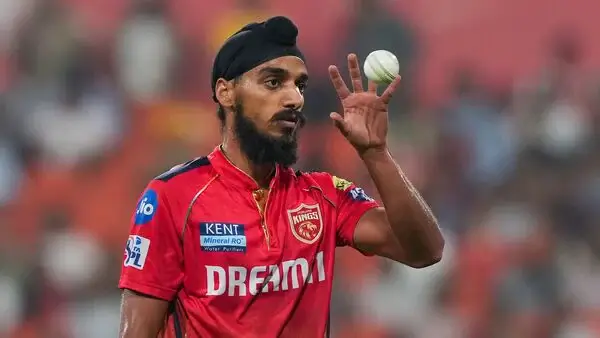
Few bowlers have disrupted Mumbai Indians’ finishing power like Arshdeep Singh. Against a franchise historically built on late-innings violence, Arshdeep has repeatedly imposed restraint. His death overs rarely unravel. Instead, they slow games down when Mumbai usually accelerates. Every delivery arrives with intent, backed by preparation rather than improvisation.
Mumbai Indians thrive when death overs descend into chaos. Big swings follow calculated platforms. Boundary bursts change scoreboards in minutes. Arshdeep removes that chaos deliberately. He replaces freedom with structure. Yorkers target toes. Slower balls grip surfaces. Angles close hitting zones before batters can react.
For the Punjab Kings, this skill has become strategic gold, and for the Mumbai Indians, it has turned into a recurring obstacle. Data from recent IPL seasons shows a suppressed strike rate against Arshdeep. Boundary percentages drop sharply in his final overs of PBKS vs Mumbai Indians matches.
This article breaks down how Arshdeep’s death bowling has limited MI’s biggest hitters. The methods are repeatable. The impact is measurable. The threat remains very real.
Why Mumbai Indians’ Death-Overs Dominance Matters?

Mumbai Indians have long defined how death overs should be played in the IPL. Their middle order builds tempo patiently. Their finishers then explode with precision. Games often swing decisively after the fifteenth over when MI sense vulnerability.
Historically, Mumbai’s run rate rises sharply between overs 16 and 20. Boundary frequency increases. Fielding plans fracture. Bowlers lose clarity under pressure. This late-innings surge has powered multiple title runs and countless comebacks.
Stopping this phase changes the entire match narrative. Teams that manage to contain Mumbai late often find themselves suddenly in control. Punjab Kings have identified this leverage point clearly and built their plans around it.
Arshdeep operates exactly where Mumbai want freedom. That overlap makes every contest personal. MI cannot simply wait him out or target weaker links. He bowls the toughest overs by design.
By attacking Mumbai’s strongest phase directly, Arshdeep alters risk calculations. Batters hesitate. Singles replace boundaries. That hesitation compounds pressure and often decides matches.
Arshdeep’s Death-Overs Numbers vs Mumbai Indians
The numbers behind Arshdeep’s spells against Mumbai Indians tell a consistent, repeatable story. In overs 16 to 20, his economy rate remains below league average. More importantly, strike rates against him dip sharply compared to MI’s overall death-overs output.
Mumbai batters face fewer slot balls against Arshdeep. His yorker percentage increases noticeably. Boundary deliveries reduce. This combination suppresses scoring without requiring extreme pace.
Across multiple IPL meetings, Arshdeep has conceded under nine runs per over at the death. In several matches, that figure drops even further despite bowling to set batters. These are not defensive spells. They are control spells.
Wickets add another layer. Arshdeep frequently removes batters already settled. Those dismissals reset momentum instantly and force Mumbai to restart late acceleration.
What stands out most is repeatability. These are not isolated performances. The pattern repeats across seasons. Data confirms what the eye already suggests. Arshdeep does not survive death overs. He controls them.
The Yorker That Denies MI’s Batting Arc
Mumbai Indians’ power hitters rely heavily on swing arcs. Full lengths allow batters to get under the ball. Width invites reach and leverage. Arshdeep removes both options methodically.
His yorker arrives late, often dipping sharply. It targets the base of the stumps rather than chasing corners. Batters struggle to generate elevation. Mishits replace clean contact.
Execution matters more than sheer speed here. Arshdeep consistently hits length. Even when the yorker misses slightly, it remains hard to access. That margin of safety keeps boundaries rare.
Against Mumbai, he pairs yorkers with packed leg-side fields. Singles are allowed. Boundaries are blocked. This forces batters into uncomfortable choices.
As a result, batters attempt scoops, premeditated ramps, or rushed slog shots. Errors follow quickly. Wickets arrive soon after.
The yorker may not look spectacular. But against Mumbai Indians, it has been surgical and consistently match-defining.
Slower Balls That Break Timing, Not Confidence
Arshdeep’s slower balls succeed because they remain subtle. The arm speed stays identical. There is no exaggerated action. The grip change happens late. Batters receive minimal visual cues.
Mumbai hitters often try to line him up early. They expect pace on the ball. The slower delivery arrives instead and disrupts rhythm completely. Shots are played too early. Balls lose power and fall safely near fielders.
Crucially, Arshdeep does not overuse this variation. He sprinkles it sparingly. That unpredictability keeps batters guessing. They cannot wait on it or pre-plan responses.
These slower balls remain effective even on flat pitches. Minimal grip is sufficient because timing, not bounce, is the target.
By alternating pace intelligently, Arshdeep controls the tempo of the over. Mumbai’s hitters never fully settle.
At the death, timing matters more than intent. Arshdeep attacks timing relentlessly, and Mumbai’s late momentum suffers as a result.
Angles and Left-Arm Advantage Against MI Line-Up
Left-arm pace remains one of the most underutilised advantages in T20 cricket. Arshdeep maximises it brilliantly against Mumbai Indians. He bowls across right-handers and cramps their hitting zones.
Mumbai’s middle order often features clusters of right-handed batters. That alignment plays directly into Arshdeep’s strengths. He can shape deliveries away or straighten them sharply.
Wide yorkers from over the wicket deny leg-side access. Straighter balls target pads and stumps. Hitting options disappear quickly.
Batters are forced to manufacture shots rather than play natural swings. That increases risk dramatically. Fielders wait in protected zones. Mistakes follow inevitably.
The left-arm angle also enables flexible field placements. Captains can protect boundaries without sacrificing inner-circle control.
This angle is not mere variation. It is structural strategy. Against Mumbai, Arshdeep’s angle quietly removes comfort before batters realise what has changed.
Why MI’s Big Hitters Struggle to Line Him Up?
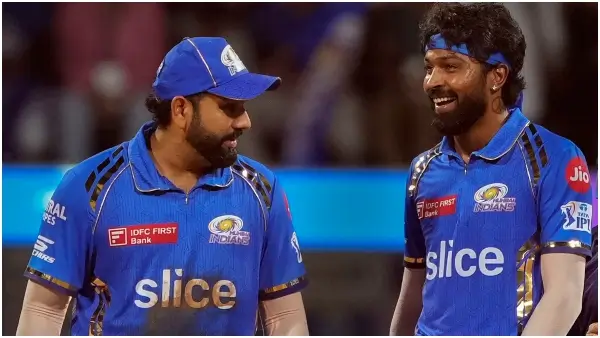
Power hitters thrive on predictability. They want consistent lengths. Clear pace. Familiar angles. Arshdeep denies all three elements simultaneously.
He changes pace without warning. He shifts length within the same over. He adjusts angles mid-spell based on batter movement. That adaptability prevents alignment.
Mumbai batters often begin cautiously against him. That early restraint delays acceleration. As overs tick away, pressure builds quietly.
When acceleration is postponed, required run rates spike suddenly. Panic replaces planning. Shot selection deteriorates rapidly.
Arshdeep thrives in this environment. He remains calm. He sticks to plans. He does not chase magic deliveries.
Big hitters fear bowlers who remove control rather than challenge strength. Arshdeep does exactly that, and Mumbai’s finishing rhythm suffers repeatedly.
Captaincy Trust and Over Allocation at the Death
Punjab Kings repeatedly entrust Arshdeep with the final overs. That trust is neither sentimental nor experimental. It is earned.
He regularly bowls the 18th and 20th overs. These are the most demanding moments in T20 cricket. Mistakes here define matches. Captains value bowlers who execute under pressure. Arshdeep delivers consistency rather than theatrics. That reliability strengthens planning.
Against Mumbai Indians, this trust tightens further. Batters know escape routes are limited. There is no easy over to target late. Confidence flows both ways. The bowler believes in his method. The captain commits fully. That alignment matters greatly at the death.
Clear roles remove hesitation. Hesitation costs runs. Arshdeep’s clarity strengthens Punjab’s death-over structure against Mumbai.
Field Placements That Complement His Skillset
Arshdeep’s success is not achieved in isolation. Field placements are aligned precisely with his execution.
Deep square leg stays back. Long-off guards the straight boundary. Third man is fine. Singles remain available. Boundaries are aggressively denied.
Mumbai batters find gaps closed consistently. As options vanish, risk increases sharply.
Because Arshdeep hits length reliably, captains can trust boundary riders. There is no need to protect every angle.
Execution enables strategy. Strategy enhances execution. One feeds the other.
This synergy suffocates Mumbai late in innings. What should be free-scoring overs turn into controlled accumulation phases instead.
Psychological Pressure Built Over Repeated Match-Ups
Repeated success creates lasting psychological edges. Mumbai batters remember past struggles against Arshdeep. That memory shapes decision-making. Even before the ball is bowled, doubt enters shot selection. Hesitation creeps in subtly.
Arshdeep benefits from this reputation. Even good deliveries feel heavier under pressure. Psychological strain multiplies physical difficulty. Batters feel rushed without being hurried.
In T20 cricket, confidence often decides outcomes faster than skill. Arshdeep controls that confidence battle effectively. Over time, this mental advantage becomes as powerful as any variation.
Comparing Arshdeep to Other Death Bowlers vs MI
Many bowlers attack Mumbai with raw pace. Few succeed consistently. Arshdeep separates himself by prioritising accuracy. He trades speed for execution and discipline.
Compared to express bowlers, his margin for error appears smaller. Yet his control compensates repeatedly. Mumbai struggle more against precision than pace. Arshdeep exploits that weakness expertly.
Data shows his economy outperforms peers performing similar roles against Mumbai. That separation defines elite death bowling. Control beats chaos.
What This Means for Future MI vs PBKS Battles?
As long as Arshdeep remains fit, Mumbai’s finishing plans will face resistance. Other teams will continue studying this blueprint. Yorker-heavy plans. Pace variation. Controlled angles.Mumbai may adapt. New shots will emerge. New match-ups will be tested. But Arshdeep evolves too.
This duel will remain decisive in close contests. In tight IPL games, one over often decides everything. More often than not, Arshdeep owns that over.
Arshdeep Singh’s death bowling has become a structural challenge for Mumbai Indians. Through precision, planning, and composure, he has turned one of the IPL’s most feared finishing units into cautious accumulators.
This dominance is not accidental. It is engineered through preparation and execution. And until Mumbai solve this puzzle, Arshdeep will continue controlling the most important overs of their biggest battles.