

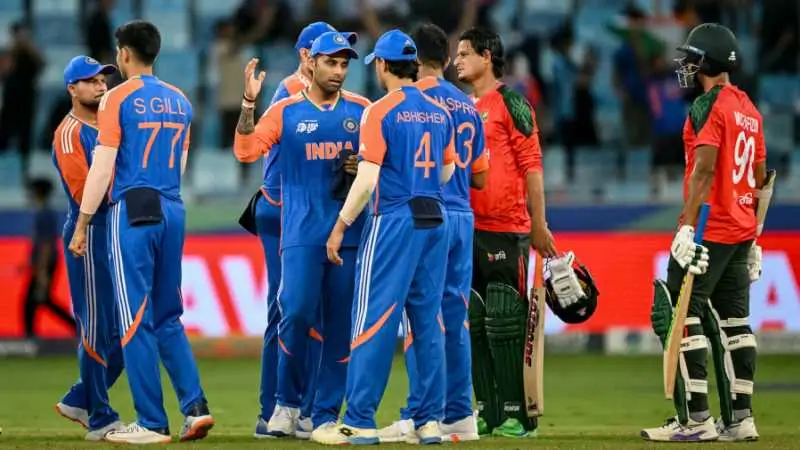
Bangladesh’s refusal to travel to India for the 2026 Men’s T20 World Cup has injected uncertainty into a tournament that was nearing its final logistical phase. The decision, taken by the Bangladesh Cricket Board, was framed around concerns for player safety and overall well-being amid deteriorating political relations between the two countries. With only weeks remaining before the opening fixture, the timing magnified the impact. Bangladesh were scheduled to play key group matches in Kolkata and Mumbai, including a high-profile opener against West Indies.
Their absence or relocation does not simply alter a schedule. It disrupts competitive planning, broadcasting flow, and group-stage balance. The World Cup suddenly faces questions that go beyond cricketing form, forcing administrators to manage uncertainty at the highest level.
Table of Contents
ToggleWhy Bangladesh’s World Cup Matches Matter More Than They Appear?
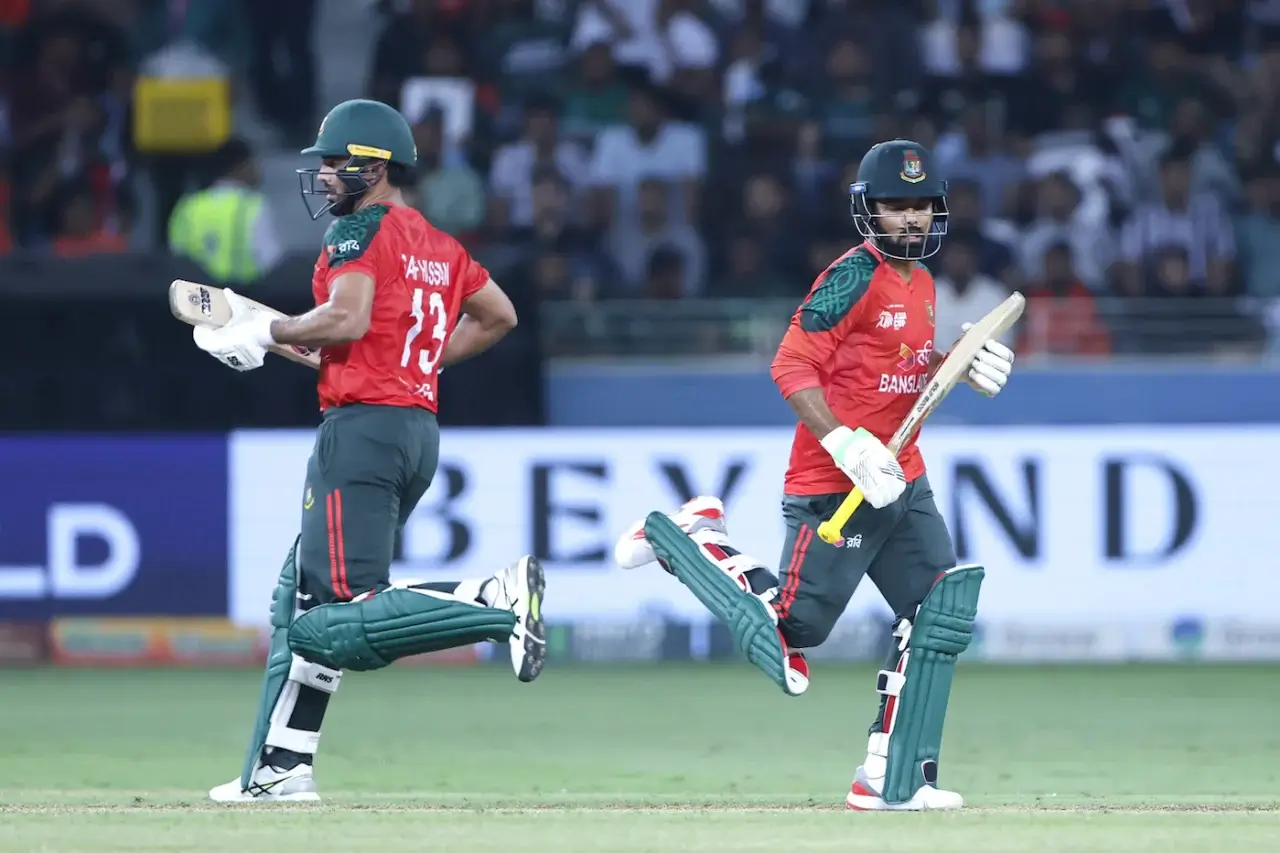
Bangladesh is no longer a fringe participant in global tournaments as the timeline gets closer. Over the past decade, they have evolved into a side capable of unsettling stronger teams, particularly in T20 formats. In World Cups, Bangladesh often functions as a momentum disruptor. A single upset can alter qualification equations across an entire group. Their matches draw strong regional viewership, engaged crowds, and consistent broadcast interest.
Removing or relocating these fixtures reshapes competitive integrity. Teams preparing for Bangladesh must adjust to different venues, conditions, and travel schedules. The early rounds lose an element of volatility that keeps tournaments alive. Bangladesh’s presence ensures uncertainty, and uncertainty fuels relevance. That is why their matches carry weight far beyond rankings or seedings.
Safety Concerns and the Official Position of the BCB
The Bangladesh Cricket Board stated that the refusal followed detailed internal assessments and advice from the government of Bangladesh. The board cited concerns not only for players but also for support staff, media personnel, and travelling supporters. According to officials, the inability to guarantee comprehensive security became a central factor in the decision.
The BCB framed the issue as a duty-of-care obligation rather than a political statement. Once doubts emerged, proceeding with travel was viewed as irresponsible. The board emphasised that its concerns were formally shared with the International Cricket Council, requesting intervention rather than unilateral action. This framing positions the decision as one of institutional caution, rather than confrontation.
The Mustafizur Rahman Episode and Loss of Institutional Trust
The situation surrounding Mustafizur Rahman became a critical trigger. His release from an IPL squad following instructions linked to the Board of Control for Cricket in India raised alarms within the BCB. While security was not publicly cited as the reason, the optics mattered.
For Bangladesh officials, the episode symbolised uncertainty in administrative assurances. The question became broader: if security complexities affected one player, how could assurances extend to an entire national contingent? This shift moved the issue from routine player availability into institutional trust. Once that trust weakened, the decision crossed from cricketing administration into governance and accountability.
What Bangladesh’s Absence Means for the 2026 T20 World Cup?
The 2026 T20 World Cup, co-hosted by India and Sri Lanka, was not structured around a hybrid hosting model. Relocating Bangladesh’s matches would necessitate significant adjustments across various aspects, including venues, ticketing systems, broadcast schedules, and team logistics. More importantly, it risks fragmenting the tournament’s narrative cohesion. Group-stage balance would change.
Travel patterns for other teams could be affected. Bangladesh’s matches often attract neutral interest due to their unpredictability. Without them in India-hosted fixtures, the competitive texture of early rounds shifts. The tournament risks losing an element that keeps fans invested beyond traditional power rivalries.
ICC’s Dilemma and the Limits of Tournament Flexibility
The International Cricket Council now faces a delicate decision. Approving relocation may set a precedent for future geopolitical disputes, potentially influencing the hosting of events. Refusing it could escalate tensions and risk partial participation. Any compromise must strike a balance between player safety, tournament credibility, and contractual obligations to hosts and broadcasters.
With no hybrid framework officially planned, flexibility is limited. The ICC’s response will likely shape how future global tournaments address non-cricketing risks. Bangladesh’s request tests whether the governing body prioritises adaptability or structural rigidity under pressure.
How This Decision Reshapes the Tournament’s Legacy
This episode is not merely a scheduling complication. It will reshape how the 2026 T20 World Cup is remembered. Bangladesh’s refusal highlights how modern cricket operates under pressures far beyond the boundary rope. Their matches matter because they represent competitive balance, regional inclusion, and unpredictability.
Whether their fixtures are relocated or reinstated in India, the controversy will linger in the tournament’s narrative. A World Cup impacted by absence or compromise risks feeling incomplete, both competitively and symbolically. How this situation is resolved will define not just this event, but future intersections between cricket, governance, and geopolitics.