

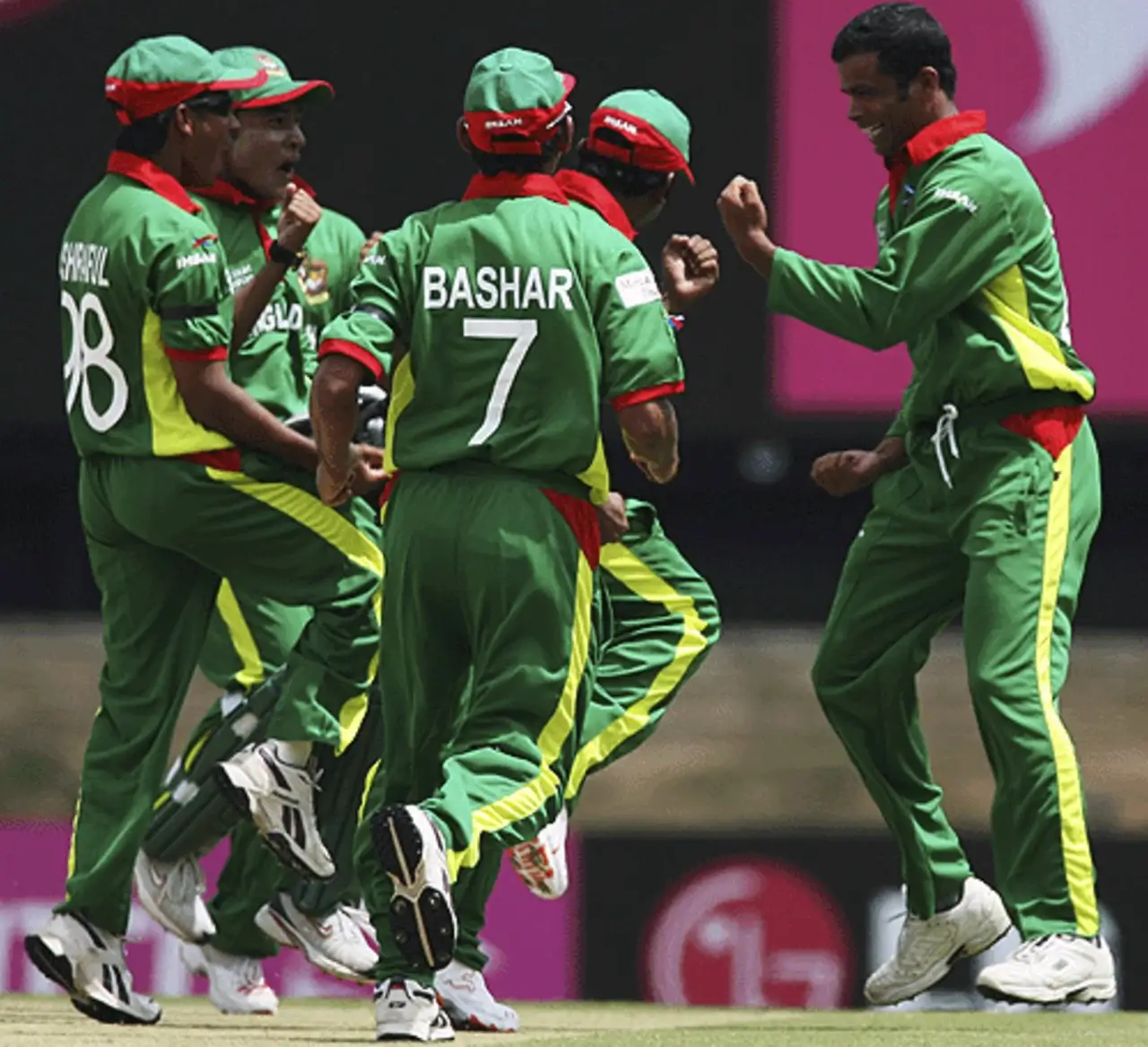
March 17, 2007, was meant to be routine for India. The group-stage match against Bangladesh looked manageable on paper. Instead, it turned into one of the most consequential upsets in World Cup history. Bangladesh arrived fearless, while India carried expectation and pressure.
The result was not chaotic or accidental. Bangladesh chased 192 with calm assurance and clarity. They finished the job with nine balls remaining. That composure changed how the cricket world viewed them forever.
The Port of Spain pitch looked good for batting early. India chose to bat first expecting scoreboard control. What followed was hesitation and uncertainty. Bangladesh’s discipline removed any early comfort.
Wickets fell at regular intervals. Partnerships never settled. Strike rotation dried up for long phases. Pressure mounted without any release valve.
Sourav Ganguly’s Anchor Could Not Lift the Innings
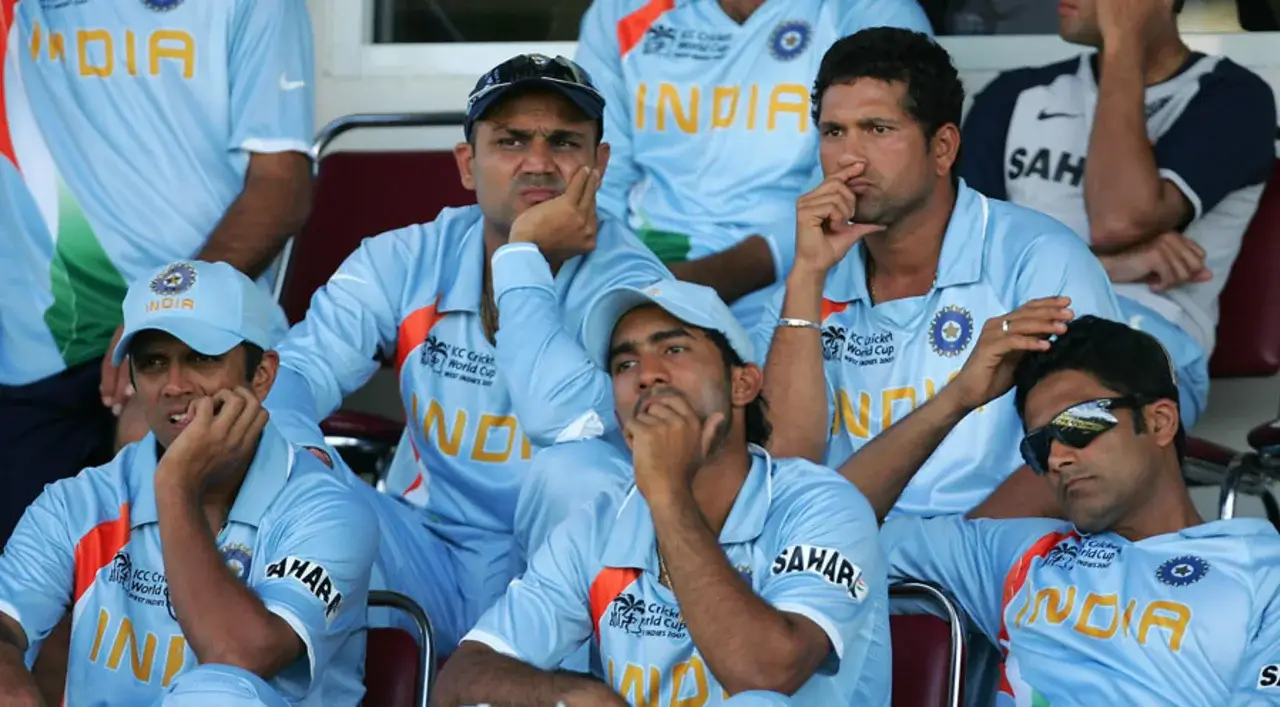
Sourav Ganguly played the only innings of resistance to maintain the India vs Bangladesh domination. His 66 off 129 balls prevented a complete collapse. The knock required patience rather than fluency. Boundaries were rare, and momentum never shifted.
Around him, wickets kept falling. The middle order failed to build acceleration. Late runs arrived too slowly to matter. India’s final total of 191 felt underwhelming from the outset.
Mashrafe Mortaza changed the match in the first spell. He bowled with pace, seam, and relentless intent. Virender Sehwag fell early. Robin Uthappa followed soon after.
Mortaza returned later to finish the job. His figures of four for thirty-eight reflected authority. More importantly, he gave Bangladesh belief. This was leadership delivered through action.
India vs Bangladesh – 8th Match, Group B
ICC Cricket World Cup 2007
Venue: Queen’s Park Oval, Port of Spain, Trinidad
Date: 17 March 2007
Toss: India elected to bat
Result: Bangladesh won by 5 wickets (with 9 balls remaining)
Player of the Match: Mashrafe Mortaza (Bangladesh)
India Innings – 191 all out (49.3 overs)
| Batter | Dismissal | R | B | 4s | 6s | SR |
|---|---|---|---|---|---|---|
| Sourav Ganguly | c Abdur Razzak b Rafique | 66 | 129 | 4 | 0 | 51.16 |
| Virender Sehwag | b Mortaza | 2 | 6 | 0 | 0 | 33.33 |
| Robin Uthappa | c Aftab Ahmed b Mortaza | 9 | 17 | 1 | 0 | 52.94 |
| Sachin Tendulkar | c †Mushfiqur Rahim b Razzak | 7 | 26 | 1 | 0 | 26.92 |
| Rahul Dravid (c) | lbw b Rafique | 14 | 28 | 0 | 0 | 50.00 |
| Yuvraj Singh | c Habibul Bashar b Razzak | 47 | 58 | 3 | 1 | 81.03 |
| MS Dhoni (†) | c Aftab Ahmed b Rafique | 0 | 3 | 0 | 0 | 0.00 |
| Harbhajan Singh | b Razzak | 0 | 3 | 0 | 0 | 0.00 |
| Ajit Agarkar | c †Mushfiqur Rahim b Mortaza | 0 | 2 | 0 | 0 | 0.00 |
| Zaheer Khan | not out | 15 | 17 | 2 | 0 | 88.23 |
| Munaf Patel | c Abdur Razzak b Mortaza | 15 | 15 | 2 | 0 | 100.00 |
Extras: 16 (lb 5, nb 8, w 3)
Total: 191 all out (49.3 overs)
Run Rate: 3.85
Fall of Wickets
1–6 (Sehwag, 2.1 ov)
2–21 (Uthappa, 6.4 ov)
3–40 (Tendulkar, 14.6 ov)
4–72 (Dravid, 24.1 ov)
5–157 (Yuvraj Singh, 42.4 ov)
6–158 (Ganguly, 43.2 ov)
7–159 (Dhoni, 43.5 ov)
8–159 (Harbhajan Singh, 44.2 ov)
9–159 (Agarkar, 45.1 ov)
10–191 (Munaf Patel, 49.3 ov)
Bangladesh Bowling
| Bowler | O | M | R | W | Econ |
|---|---|---|---|---|---|
| Mashrafe Mortaza | 9.3 | 2 | 38 | 4 | 4.00 |
| Syed Rasel | 10 | 2 | 31 | 0 | 3.10 |
| Abdur Razzak | 10 | 2 | 38 | 3 | 3.80 |
| Shakib Al Hasan | 10 | 0 | 44 | 0 | 4.40 |
| Mohammad Rafique | 10 | 2 | 35 | 3 | 3.50 |
Bangladesh Innings – 192/5 (48.3 overs)
Target: 192
| Batter | Dismissal | R | B | 4s | 6s | SR |
|---|---|---|---|---|---|---|
| Tamim Iqbal | c †Dhoni b Munaf Patel | 51 | 53 | 7 | 2 | 96.22 |
| Shahriar Nafees | lbw b Zaheer Khan | 2 | 8 | 0 | 0 | 25.00 |
| Mushfiqur Rahim (†) | not out | 56 | 107 | 3 | 2 | 52.33 |
| Aftab Ahmed | lbw b Munaf Patel | 8 | 10 | 1 | 0 | 80.00 |
| Shakib Al Hasan | st †Dhoni b Sehwag | 53 | 86 | 5 | 1 | 61.62 |
| Habibul Bashar (c) | st †Dhoni b Sehwag | 1 | 8 | 0 | 0 | 12.50 |
| Mohammad Ashraful | not out | 8 | 23 | 1 | 0 | 34.78 |
Extras: 13 (lb 1, nb 8, w 4)
Total: 192/5 (48.3 overs)
Run Rate: 3.95
Did Not Bat
Mohammad Rafique, Mashrafe Mortaza, Abdur Razzak, Syed Rasel
Fall of Wickets
1–24 (Nafees, 4.2 ov)
2–69 (Tamim Iqbal, 13.2 ov)
3–79 (Aftab Ahmed, 15.6 ov)
4–163 (Shakib Al Hasan, 38.4 ov)
5–175 (Habibul Bashar, 42.2 ov)
India Bowling
| Bowler | O | M | R | W | Econ |
|---|---|---|---|---|---|
| Zaheer Khan | 9 | 2 | 41 | 1 | 4.55 |
| Ajit Agarkar | 10 | 0 | 41 | 0 | 4.10 |
| Munaf Patel | 8.3 | 1 | 39 | 2 | 4.58 |
| Harbhajan Singh | 10 | 1 | 30 | 0 | 3.00 |
| Sachin Tendulkar | 3 | 0 | 8 | 0 | 2.66 |
| Yuvraj Singh | 3 | 0 | 15 | 0 | 5.00 |
| Virender Sehwag | 5 | 0 | 17 | 2 | 3.40 |
Match Officials
-
Umpires: Aleem Dar (Pakistan), Steve Davis (Australia)
-
TV Umpire: Ian Howell (South Africa)
-
Reserve Umpire: Daryl Harper (Australia)
-
Match Referee: Alan Hurst (Australia)
-
Attendance: 9,500
Bangladesh’s Spin Control Squeezed India Quietly
After the new-ball burst, spin took control. Bangladesh’s left-arm spinners slowed the game deliberately. Singles became difficult. Boundaries disappeared. Dot balls built pressure ball by ball.
Abdur Razzak and Mohammad Rafique bowled with patience and accuracy. They attacked the pads and forced mistakes. India never found a counter-plan. Momentum was gone for good.
The chase began without fear. Tamim Iqbal attacked from the outset. His 51 off 53 balls stunned India’s bowlers. Pulls, drives, and confident footwork signaled intent.
This was not reckless hitting. It was calculated confidence. India lost early control of the chase. Bangladesh immediately sensed freedom. The psychological balance flipped decisively.
Match Flow Table – India vs Bangladesh (World Cup 2007)
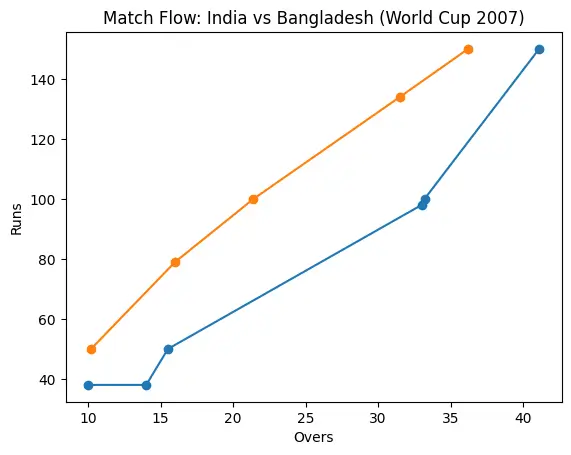
India Innings – Key Match Flow Moments
| Phase | Over | Score | Key Detail |
|---|---|---|---|
| Powerplay Build | 14.0 | 38/2 | Ganguly 11, Tendulkar 7 |
| First 50 | 15.5 | 50 | Extras 11 |
| Mid-Innings Drift | 33.0 | 98/4 | Ganguly 41, Yuvraj 13 |
| 100 Runs | 33.2 | 100 | Extras 12 |
| Ganguly Fifty | 33.5 | 104 | 50 off 104 balls |
| Late Push | 41.1 | 150 | Slow acceleration |
Bangladesh Innings – Key Match Flow Moments
| Phase | Over | Score | Key Detail |
|---|---|---|---|
| Fast Start | 10.2 | 50 | Tamim 50 off 51 |
| Early Control | 16.0 | 79/3 | Mushfiqur 9 |
| 100 Runs | 21.4 | 100 | Extras 9 |
| Match Control | 31.5 | 134/3 | Mushfiqur 23, Shakib 39 |
| 150 Runs | 36.2 | 150 | Chase firmly controlled |
| Finish | 48.3 | 192/5 | Won with 9 balls left |
Composed Middle-Order Partnerships Finished the Job
After early aggression, calm took over. Bangladesh did not rush the chase. Mushfiqur Rahim and Shakib Al Hasan anchored the innings smartly. Singles rotated pressure away consistently.
Both batters reached half-centuries without drama. Boundaries arrived only when needed. India’s bowlers looked increasingly flat. The chase felt inevitable well before the end.
India needed precision defending a modest total. Instead, errors crept in quickly. Catches went down. Half-chances were missed. Energy levels dipped visibly.
Bowling plans lacked cohesion. Fields failed to apply pressure. Bangladesh sensed comfort and played freely. India never regained control of the contest.
The Immediate Impact on India’s World Cup Campaign
This defeat had instant consequences. India’s confidence collapsed sharply. Pressure intensified inside the dressing room. Every remaining match became do-or-die.
The campaign ended within days. One loss triggered a domino effect. The World Cup exit became one of India’s darkest chapters. Recovery took years, not months.
For Bangladesh, this victory changed self-perception. India were no longer untouchable. Big stages no longer felt intimidating. Fear was replaced by belief.
This match empowered a generation. Future encounters carried confidence instead of hope. Bangladesh learned they belonged. That lesson lasted far beyond the tournament.
Why This Match Still Anchors the Bangladesh vs India Timeline?
Upsets fade if they lack consequence. This one reshaped narratives permanently. Every close India–Bangladesh match traces its roots here. This game became the rivalry’s emotional reference point.
It sits at the heart of the Bangladesh vs India timeline. From this day onward, matches gained edge and tension. Respect replaced assumption. The rivalry truly began.
March 17, 2007, was not luck or chaos. It was preparation meeting courage. Bangladesh earned the moment through discipline and belief. India paid for complacency.
This match still echoes in every encounter. It changed careers, confidence, and context. Bangladesh found their voice that day. The rivalry found its soul.