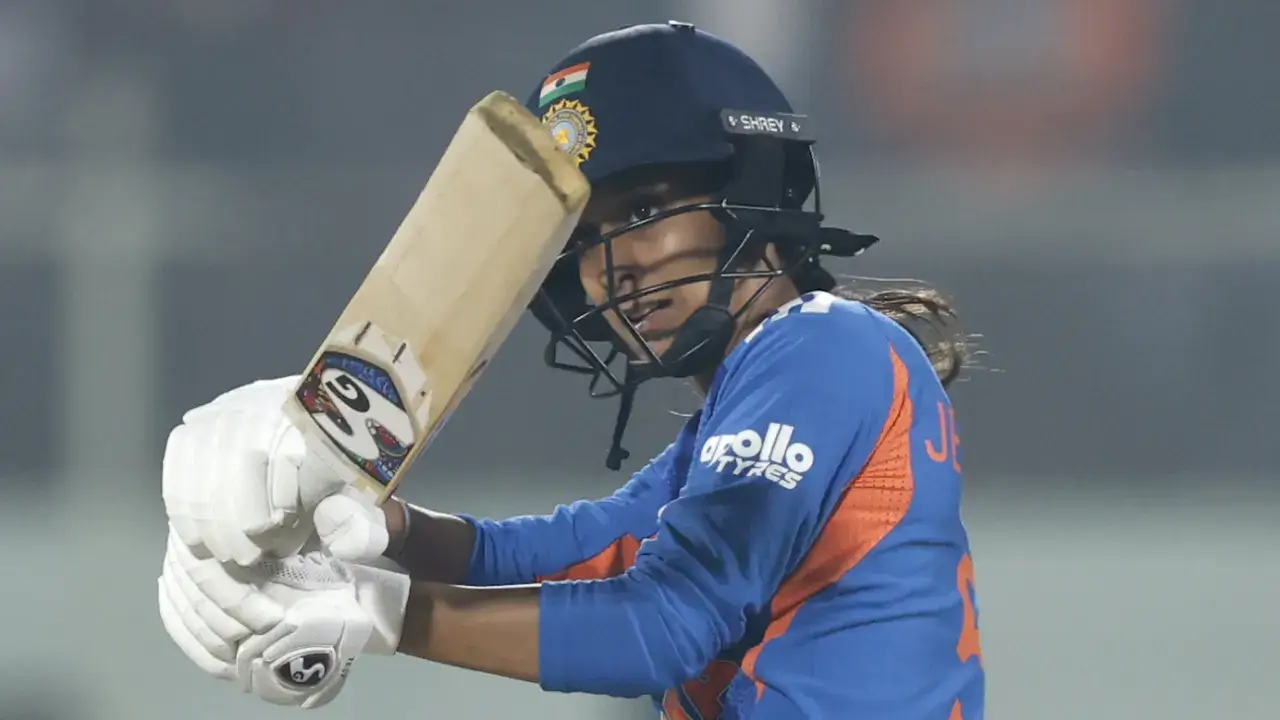
India began their T20 World Cup 2026 build-up with a composed and convincing win over Sri Lanka in Visakhapatnam. A controlled bowling effort laid the foundation before Jemimah Rodrigues anchored the chase with a fluent unbeaten half-century. The eight-wicket victory, achieved with 32 balls to spare, reflected India’s growing depth and clarity in T20 cricket.
Returning to action after a long break following their ODI World Cup triumph, India showed only minor rust. Dew was expected to increase as the night progressed, making India Women’s decision to chase an obvious one. Sri Lanka’s total never threatened to challenge a settled Indian batting unit.
Bowlers Control the Tempo Despite Dew
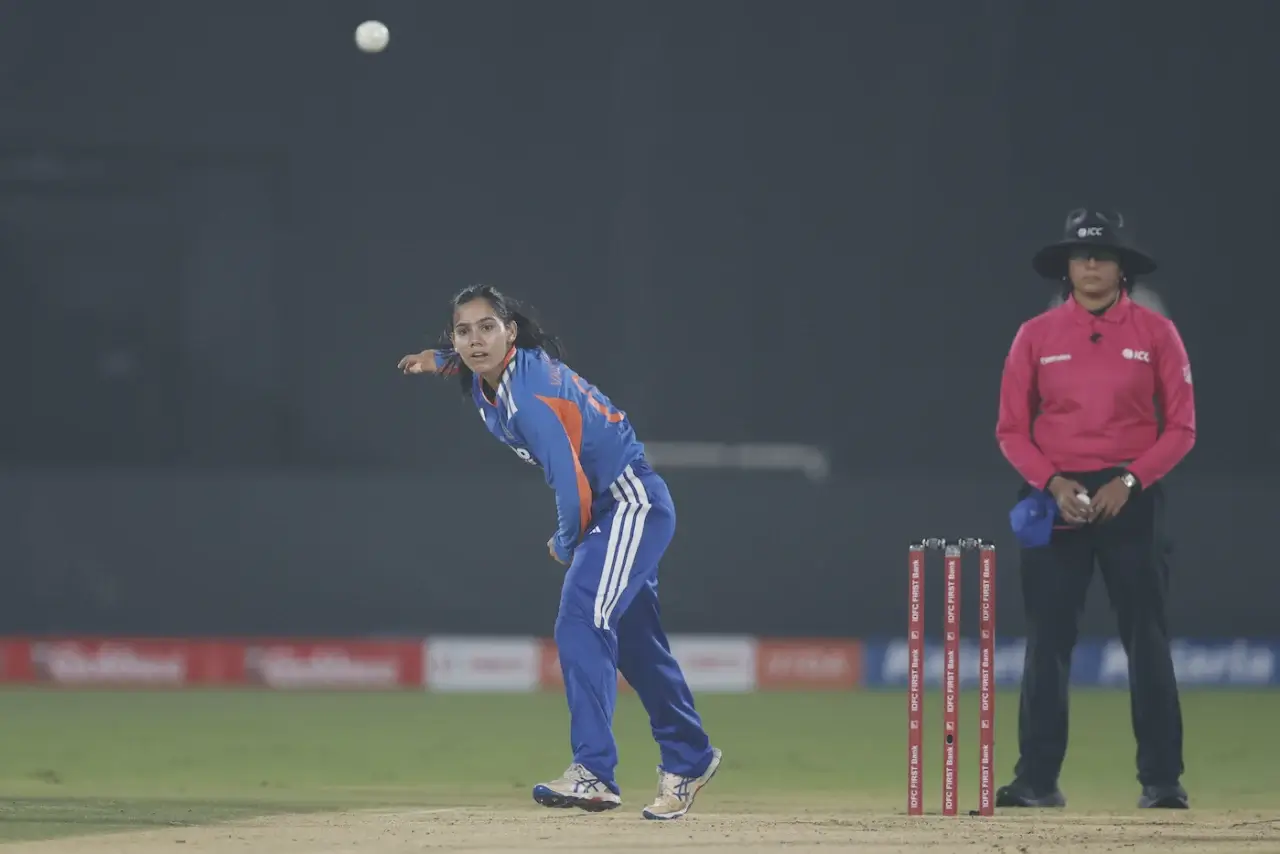
Sri Lanka’s innings never truly escaped India’s grip. Opting for a spin-heavy attack despite the conditions, India relied on control rather than aggression. The plan worked. Sri Lanka managed just 121 for 6, a total that always looked below par on a surface easing under lights.
A key moment arrived early when Kranti Gaud removed Chamari Athapaththu with a sharp in-seamer. It was Gaud’s maiden T20I wicket and a crucial breakthrough that stalled Sri Lanka’s momentum. From there, India’s spinners tightened the screws, conceding few boundaries and forcing batters to take risks.
Sri Lanka’s middle order struggled to rotate strike. Partnerships consumed balls without producing acceleration. Even dropped chances did not significantly hurt India, as the bowlers maintained discipline through the middle and death overs. Only 30 runs came from the final four overs, underlining the control India exerted throughout the innings.
Vishmi Gunaratne’s Resistance Falls Short
The lone resistance came from Vishmi Gunaratne, who top-scored with 39 off 43 balls. Her innings was more about survival than dominance. While she found occasional sweeps and nudges, the lack of support at the other end meant Sri Lanka never threatened a late surge.
India’s fielding was not flawless, with a few chances spilled in the deep. However, those lapses were offset by sharp ground fielding and intelligent bowling changes. Sri Lanka’s batters found the gaps blocked and the boundary options limited, a sign of India’s growing tactical maturity in T20s.
Rodrigues Takes Charge of the Chase
The chase began briskly before Shafali Verma fell early. From there, Smriti Mandhana and Rodrigues assumed control. Mandhana played a measured hand, working through some early discomfort to cross the 4000-run mark in T20Is, a significant milestone.
Rodrigues, batting in her 100th T20I, looked assured from the outset. She used the depth of the crease smartly, mixing sweeps, dabs, and clean drives to keep the scoreboard ticking. A productive powerplay, aided by a 16-run over, ensured India stayed well ahead of the required rate.
Her fifty came off just 34 balls and effectively sealed the contest. Even after Mandhana’s dismissal, Rodrigues remained unfazed, guiding the chase alongside Harmanpreet Kaur. The pair finished the game without fuss, reflecting India’s calm approach in low-pressure chases.
Selection Clarity and Momentum Gained
Beyond the result, the match offered valuable clarity for India. Rodrigues’ performance at No. 3 strengthened her claim for the role, easing recent selection debates. The bowling combinations, especially the trust shown in younger players like Gaud, also paid dividends.
For Sri Lanka, the defeat highlighted familiar issues. A lack of intent during the middle overs and limited finishing power left them with too much to do. With a quick turnaround before the second T20I at the same venue, they will need to find solutions fast.
India, meanwhile, could not have asked for a more reassuring start. A professional bowling display followed by a mature chase set the tone for the series and underlined why they remain one of the strongest sides heading into the next T20 World Cup cycle after the men’s matches in February 2026.