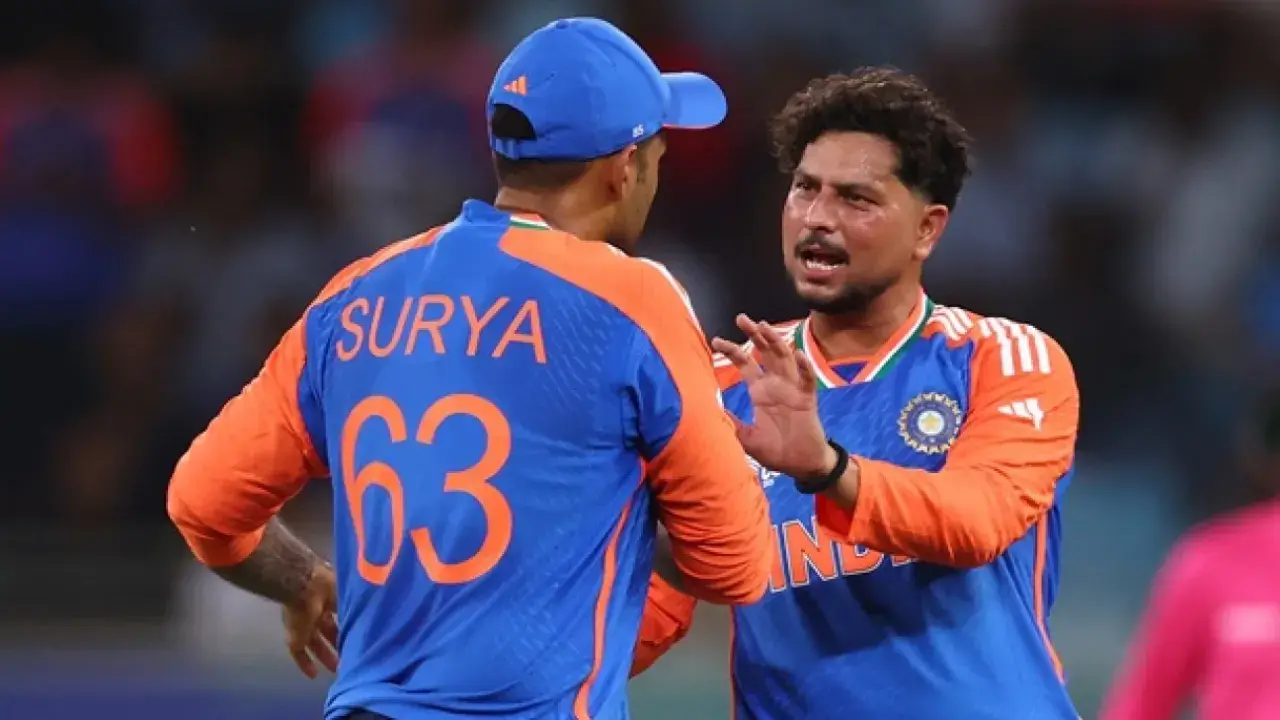
For the first time since his runs began to dry up, Suryakumar Yadav has openly acknowledged the scale of his struggle. India’s T20 captain has been short of runs for more than a year, and the numbers now look impossible to ignore. Yet, with the T20 World Cup fast approaching, confidence remains intact.
India has only five T20Is left before they begin their title defence on February 7. In that narrow window, Suryakumar must rediscover form while also leading a side under transition. It is a rare situation for a player who once defined inevitability in this format.
Still, Suryakumar insists clarity has replaced doubt. He believes he knows exactly where things are going wrong, and more importantly, how to fix them. For India, that belief may matter as much as the runs themselves.
A Lean Patch That Refuses to End

The numbers paint a stark picture. Over the last year, Suryakumar has averaged just 12.84 in T20Is, striking at 117.87 across 22 innings. There has not been a single half-century in that period, an extraordinary statistic for a player once considered untouchable in the format.
The recent home series against South Africa only deepened the concern. Scores of 12, 5, 12, and 5 left India’s captain searching for rhythm and impact. With each low score, the conversation grew louder, even if the team management stayed calm.
Suryakumar himself admitted the patch had stretched longer than expected. The honesty marked a shift. Until now, he had repeatedly insisted he was “out of runs, not out of form.” This time, the admission carried acceptance, not anxiety.
Captaincy and the Timing of the Slump
Suryakumar’s dip began soon after he took over as T20I captain following India’s World Cup triumph under Rohit Sharma in mid-2024. Leadership brought responsibility, scrutiny, and constant comparison with his own past standards.
Tours offered fleeting relief but no sustained return. In South Africa late last year, he crossed five only once. At home against England, two ducks and a highest score of 14 followed. Even a fluent unbeaten 47 against Pakistan in the Asia Cup proved temporary.
Brief sparks returned in Australia, where he struck at over 160 in three of four innings. But once back home, the runs disappeared again. The cycle has been frustratingly repetitive, especially for a player built on flow and instinct.
Why is India still backing Suryakumar?
Despite the numbers, India has shown unwavering faith. When the selection committee met in Mumbai, they faced a clear contrast. Both the captain and vice-captain were struggling for runs, but only one was expendable.
While Shubman Gill was left out, Suryakumar remained non-negotiable. The reasoning was simple. Over the last few years, he has been India’s most influential T20 batter, capable of altering matches in ways few others can.
As chairman of selectors, Ajit Agarkar put it, Suryakumar’s ceiling and track record demand patience. Players who redefine formats are given longer ropes, especially when a World Cup is involved.
Remembering What Peak Suryakumar Looks Like
It is easy to forget how dominant Suryakumar has been. In 2022, he scored 1164 T20I runs at an average of 46.56, striking at an astonishing 187.43. His 360-degree strokeplay turned established bowling plans into chaos.
He rose to the top of the ICC T20I rankings and collected Player-of-the-Series awards with regularity. Only legends like Virat Kohli have more such awards in the format. He also stands one century away from equalling Rohit Sharma and Glenn Maxwell for the most T20I hundreds. This history is why India remains calm. They are betting on muscle memory, not momentum.
Inside the Search for Solutions
Suryakumar has not shied away from self-analysis. He has spent months watching old footage, revisiting innings where everything clicked. In the nets, he insists the ball is coming on well, and timing feels right.
Yet, he describes the issue as an “invisible hurdle.” Something subtle, hard to define, but persistent. That honesty matters. It suggests awareness rather than denial, and awareness is often the first step back.
Crucially, he believes time is still on his side. The upcoming New Zealand series offers a final rehearsal before the World Cup, and Suryakumar is convinced those games will tell a different story.
What Happens If the Runs Don’t Come Back?
This is the question India is quietly avoiding. If Suryakumar’s lean run continues into the World Cup, the pressure will multiply quickly. As captain and No. 3, he sets the tone for the innings and the team.
India’s middle order is built around his freedom. If that freedom disappears, others will feel constrained. The gamble, then, is not just about one player’s form but about the entire batting structure.
However, India has decided the risk is worth taking. In tournaments, teams often trust proven match-winners over safer alternatives. History suggests such faith is usually rewarded, though not always immediately.
Lessons From Bangladesh’s Faith in Senior T20 Leaders
India is not the only side grappling with form versus trust. Bangladesh’s national cricket team has faced similar dilemmas in recent years, especially in T20 cricket. Their approach offers a useful comparison.
Bangladesh has repeatedly backed senior batters through extended lean patches, often valuing leadership and stability over immediate returns. Players like experienced captains were given long runs even when numbers dipped sharply. The logic was simple: T20 tournaments reward calm heads under pressure as much as explosive form.
That faith has not always paid instant dividends, but it has created clarity. Players know where they stand, and teams avoid last-minute churn. India’s decision to persist with Suryakumar follows a similar philosophy. The belief is that confidence, once protected, can resurface quickly in short formats.
This comparison matters because it underlines intent. India is not ignoring form. They are prioritising psychological readiness and tournament temperament, something Bangladesh have consciously tried to build, with mixed but instructive results.
How Mumbai Indians Shaped Suryakumar’s T20 Mindset?
Much of India’s confidence in Suryakumar is rooted beyond international cricket. His rise as a T20 phenomenon was shaped at the Mumbai Indians, where freedom was not just encouraged but demanded.
At the Mumbai Indians, Suryakumar was trusted even when risks failed. He was rarely benched for intent-driven dismissals. That backing allowed him to refine his unconventional strokeplay without fear. The franchise valued impact over averages, a mindset that later translated seamlessly into international cricket.
This context explains India’s patience now. Decision-makers have seen how Suryakumar responds when trusted through uncertainty. They believe his muscle memory, forged over seasons of fearless batting in high-pressure IPL environments, will resurface when the stakes peak.
In many ways, India is leaning on the Mumbai Indians blueprint. Back the process. Ignore the noise. Let elite players solve their own problems.
Why T20 World Cups Often Reward Belief Over Form?
History suggests that T20 World Cups rarely follow linear logic. Teams stacked with in-form players often falter, while sides that trust proven match-winners tend to survive chaos better. Momentum shifts fast, and reputations can flip games in single overs.
India’s decision to stand by Suryakumar reflects this understanding. They are betting that form can change in one innings, while confidence cannot be manufactured overnight. This is especially true in knockout games, where hesitation is fatal.
Bangladesh’s struggles, Mumbai Indians’ successes, and India’s own past campaigns point to the same conclusion. T20 cricket rewards conviction. Teams that hesitate, reshuffle, or second-guess often lose clarity when it matters most.
By backing their captain, India have drawn a line. They have chosen belief over anxiety, experience over experimentation. Whether it succeeds will only be known later, but the philosophy behind it is unmistakable.
Conclusion
Suryakumar Yadav’s form slump is real, prolonged, and uncomfortable. For the first time, even he admits that much. Yet, belief remains unshaken, both internally and within the Indian setup.
India are backing pedigree over panic. They are trusting that a player who once bent T20 cricket to his will can still find his way back. With only five games left, the clock is ticking, but so is opportunity.
If Suryakumar does return to form, India’s faith will look visionary. If he does not, the questions will grow louder. For now, though, the captain’s message is clear. He knows what to do, and he believes the best version of himself is still close.