

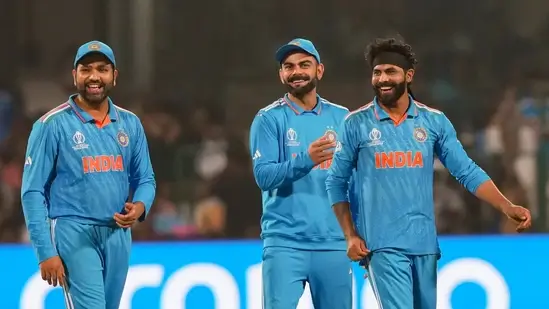
Virat Kohli’s stunning Player-of-the-Series effort against South Africa has pushed him to No. 2 in the ICC ODI batting rankings, now sitting just behind Rohit Sharma. India’s senior duo remains the world’s top two ODI batters, strengthening their claim as the key pillars of India’s next major white-ball cycle.
Kohli’s leap came after a monumental series where he hammered 302 runs at an average of 151, including back-to-back hundreds and an unbeaten 65 in the decider. Rohit, meanwhile, held his No. 1 ranking with two composed half-centuries and 781 rating points, giving him a narrow lead over Kohli’s 773.
Other Indian performers also rose:
-
KL Rahul climbed to No. 12 among ODI batters.
-
Kuldeep Yadav moved to No. 3 among bowlers after taking nine wickets, the most in the series.
Across formats, Mitchell Starc’s dominance in the Ashes lifted him to a career-best No. 3 in Test bowling, while Joe Root maintained his position at the top of Test batting.
Kohli Closes In on Rohit as ODI Rankings Heat Up Ahead of 2027 World Cup
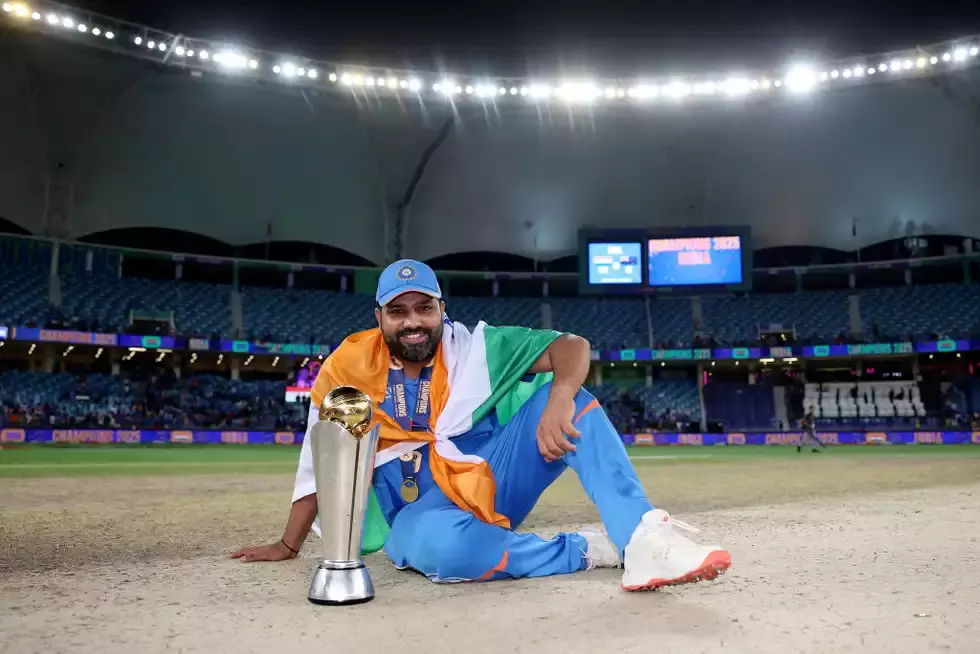
Virat Kohli’s stunning Player-of-the-Series effort against South Africa has pushed him to No. 2 in the ICC ODI batting rankings, now sitting just behind Rohit Sharma. India’s senior duo remains the world’s top two ODI batters, even though they have not played much in the timeline, strengthening their claim as the key pillars of India’s next major white-ball cycle.
Kohli’s leap came after a monumental series where he hammered 302 runs at an average of 151, including back-to-back hundreds and an unbeaten 65 in the decider. Rohit, meanwhile, held his No. 1 ranking with two composed half-centuries and 781 rating points, giving him a narrow lead over Kohli’s 773.
Other Indian performers also rose:
-
KL Rahul climbed to No. 12 among ODI batters.
-
Kuldeep Yadav moved to No. 3 among bowlers after taking nine wickets, the most in the series.
Across formats, Mitchell Starc’s dominance in the Ashes lifted him to a career-best No. 3 in Test bowling, while Joe Root maintained his position at the top of Test batting.
Why Virat Kohli and Rohit Sharma Are Essential for India’s 2027 World Cup Vision?
India’s build-up to the 2027 ODI World Cup already appears to be centered around the unmatched stability that Kohli and Rohit bring. No other batting pair in the modern era provides the mix of experience, adaptability, pressure resistance, and consistency that these two offer.
Kohli remains India’s most reliable middle-overs engine, converting starts into hundreds and dictating tempo against spin and pace alike. Rohit, meanwhile, shapes India’s entire ODI template. His ability to start cautiously and explode later creates the perfect foundation for the batting lineup.
Most importantly, India’s younger core — Shubman Gill, Ruturaj Gaikwad, KL Rahul, and others — perform significantly better when one of Kohli or Rohit is anchoring from the other end. Their presence allows India to take calculated risks, plan strong finishes, and chase totals with clarity.
If India aims to end its ICC trophy drought in 2027, the roadmap still runs through the two most experienced ODI campaigners of the generation.
Why Rohit Sharma Deserves the No. 1 ODI Ranking?
Rohit Sharma’s hold on the No. 1 spot is not accidental — it is built on years of elite ODI production combined with a recent wave of consistent performances. His 2025 numbers reflect control, maturity, and an unmatched ability to build an innings in high-stakes bilateral and tournament settings.
He remains the world’s most dangerous opener against both swing and spin. When Rohit survives the first 20 balls, he converts more than any contemporary opener. His 146 runs against South Africa came during tough phases where wickets fell at the other end, yet he stayed composed and ensured India always had a platform.
The ICC ranking system rewards impact, consistency, and strength of opposition — metrics that Rohit continues to excel in. With a strike rate suited for modern ODI cricket and an unmatched record in ICC tournaments, his position at the top feels fully deserved.
How is India ready to make an Impact in the Upcoming Series?
India’s ODI side now has structure, clarity, and depth — three qualities that were missing during earlier transitions. With Rohit and Kohli anchoring the batting, India’s middle order finally shows reliability through KL Rahul, Shreyas Iyer, and the improving finishers.
On the bowling front, Kuldeep Yadav’s resurgence, combined with Mohammed Siraj’s power-play swing and Jasprit Bumrah’s return to rhythm, gives India arguably the most balanced attack in the format.
This stability is reflected in India’s recent series performances. Even when rotating players, the team is winning matches through tactical control rather than individual brilliance alone. Young talents like Tilak Varma and Abhishek Sharma are being integrated gradually, not rushed — a sign of strong planning.
India’s next few ODI series will likely be used to sharpen these combinations, but the backbone is already in place.
India’s Strong ODI Form Suggests Clear Planning for the 2027 World Cup
The Indian team’s ODI record over the past two years has been one of the best in world cricket. The team has shown the ability to chase under pressure, defend under lights, and win matches on slow, spinning pitches or fast, bouncy tracks.
This adaptability suggests deliberate preparation for the 2027 South Africa event. The selectors and team management appear committed to a template-based approach:
-
Experienced core with Rohit, Kohli, Rahul
-
Kuldeep-Bumrah-Siraj as the main bowling strategy
-
Flexible middle order
-
Dynamic all-rounders rotating for conditions
This is not experimentation — it is structured World Cup planning. India is moving away from last-minute changes and instead using every series to strengthen a long-term blueprint.
If this pattern continues, India will enter the 2027 tournament as one of the most complete ODI units.
Final Enhanced News-Style Article Summary
-
Kohli rises to No. 2 in ODI rankings after a stunning 302-run series.
-
Rohit retains the No. 1 spot with 781 points.
-
KL Rahul and Kuldeep Yadav also gain.
-
Starc rises to No. 3 in Test bowling; Root stays No. 1 in Test batting.
-
India’s ODI roadmap increasingly revolves around Rohit and Kohli.
-
India’s form and structure indicate strong early planning for the 2027 World Cup
India’s transition phase is smoother because Rohit Sharma, Virat Kohli, and KL Rahul are shaping the mindset of younger players. Their experience in pressure moments, advice during chase phases, and ability to control tough conditions help Gill, Iyer, Tilak, and Rinku grow faster. This senior-junior blend is turning India into a more complete ODI unit.
Why India’s ODI Bowling Attack Is Becoming a World Cup Threat?
With Bumrah returning to top rhythm, Siraj swinging the new ball, and Kuldeep delivering match-winning spells, India now has a balanced attack across phases. The combination of early breakthroughs, middle-overs control, and specialist death-overs execution makes India extremely dangerous heading into the next global tournament.
India now boasts top-ranked batters, a top-three bowling attack, and consistent results across all formats. The new rankings reinforce India’s position as a dominant force in white-ball cricket. With multiple players moving up across formats, the latest tables signal that India’s squad depth and performance levels are aligning at the right time ahead of the 2027 cycle.