


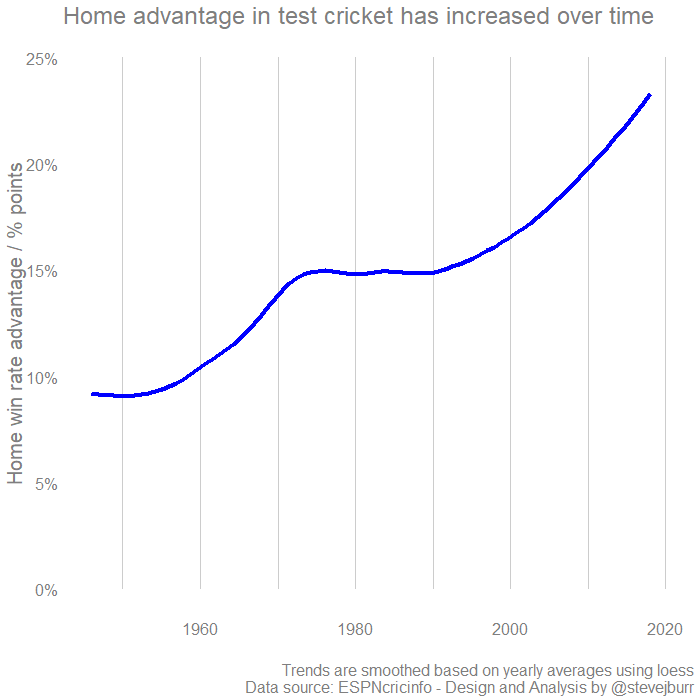
The current WTC points system rewards quick results with twelve points for a win and only four for a draw. That creates simple pressure on home teams to prepare bowler-friendly conditions. This makes Tests shorter and reduces the chance of late-day drama. Short Tests help home teams more, and most sides know this pattern. Fans want thrill, but the format needs more balance.
Runs come quicker now, and wickets fall fast because of aggressive scoring and DRS. These factors speed up matches and take away the long battles many fans love. Modern grounds produce lively pitches because home teams want results. This makes success uneven when visiting bowlers struggle with local conditions. Longer matches need pitches that offer fair contests across all five days.
A new system can reduce this imbalance. It should reward teams for staying competitive longer. It should also penalise very short victories on extreme pitches. A model that values match duration and resource control will keep Tests alive longer. It also gives a clearer picture of why longer Tests improve quality. This new model can help Test cricket survive in today’s fast world.
WHY THE CURRENT WTC SYSTEM FAVOURS SHORT MATCHES?

The WTC format gives importance to outright wins. Quick wins become more rewarding than drawn matches. That makes home teams chase early results through harder pitches. These pitches reduce match length and remove slow, tactical phases. The team with stronger bowlers wins most of these short matches. This makes away wins difficult, especially in three-match series. The current system also treats all draws the same. A thrilling draw gives the same points as a dull one.
Matches in the WTC era last fewer balls now compared to earlier years. Short games raise the chance of home wins because visiting teams cannot adapt fast enough. They also reduce the window for strategic depth. A dropped catch or early wicket swings short matches sharply. This is not ideal for long-form cricket. The system also assigns fixed points to wins. It does not consider match length, pitch behaviour or score patterns. In the long run, this rewards risky pitch preparation.
A point system must support good cricket. It must encourage fair surfaces and longer contests. It must also keep the value of wins high. A win in a long match against tough bowling should feel special. A win in two days on an extreme pitch should not give the same value. This model pushes home teams to think beyond quick victories and seek balance.
HOW A LENGTH-SCALED WTC POINTS MODEL WORKS
This section explains the new model that rewards long Tests. It builds on the idea of giving points based on every ball bowled. Each delivery changes the final scores in this system. It values batting efficiency and bowling control. It also adds a match-length factor. Longer Tests give a higher win bonus. Short Tests reduce the bonus and make extreme pitch preparation less useful. This forces teams to choose safer surfaces that allow long battles.
The system uses three values: batting points, bowling points and match duration. Batting points depend on runs per ball. Bowling points depend on wickets taken per ball with an adjustment to total runs. Splitting these points across both innings makes the system fair. A team with strong discipline gains more in a long contest. A team winning in extreme conditions gains less because fewer balls reduce its bonus.
Below is a simple version of the model:
POINTS FORMULA
Team Points = (Batting Points + Bowling Points) + (Win Bonus × Match-Length Factor)
Match-Length Factor = Total Balls / 1800
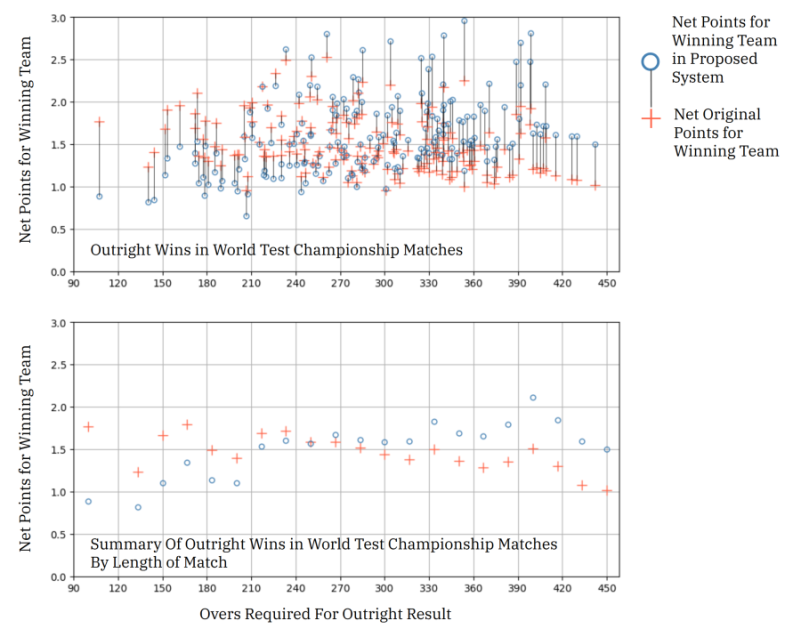
A five-day game earns full win value. A two-day game earns much less. Draws do not earn bonus points. This avoids rewarding slow batting on flat tracks. The model engages bowlers and batters for all five days.
COMPARISON TABLE: OLD WTC VS NEW LENGTH-SCALED SYSTEM
| Scenario | Match Length | Old WTC Points | New System Points |
|---|---|---|---|
| Fast win on green pitch | 1400 balls | 12 | 8.4 |
| Standard 3.5-day win | 1800 balls | 12 | 12.0 |
| Five-day grinding win | 2200 balls | 12 | 14.6 |
| High-quality draw | 2050 balls | 4 | 3.9 (no bonus) |
| Dead draw (flat pitch) | 2400 balls | 4 | 3.2 (lower resources score) |
This shows how long Tests become more valuable. This also shows why dead draws are not rewarded.
TWO SAMPLE MATCHES UNDER THE NEW SYSTEM
1. India vs South Africa, Eden Gardens 2025
-
SA won by 30 runs
-
Match lasted 1238 balls
-
Old WTC: 12 points
-
New System: 1.919 net points for SA
-
Why? Close contest + short match reduces the bonus.
2. India vs England, Edgbaston 2025
-
India won by 336 runs
-
Match lasted 2350 balls
-
Old WTC: 12 points
-
New System: 3.200 batting + 1.200 bowling + 1.950 bonus ≈ 6.3 points
-
Why? Long Test + heavy win = higher value.
These examples reflect deeper evaluation.
GRAPH: SHOWING HOW POINTS CHANGE WITH MATCH LENGTH
HOW THIS SYSTEM IMPROVES TEST CRICKET?

A length-scaled model helps create better matches. Teams begin to prepare pitches that support all skills. Batters get more time to build big scores. Bowlers plan long spells instead of short bursts. Captains use their resources across full days. The game feels more balanced. Fans enjoy longer contests that show more skill. Series become richer with deeper storylines.
This also changes team strategies. A team at 400 for 4 gains by declaring early. This avoids giving away cheap wickets that reduce resource points. A team bowling second might tighten spells to restrict runs. A chasing side may try scoring with smart targets. Each ball adds meaning to the contest. This makes Tests more intense and thoughtful. The entire format benefits.
CONCLUSION
Test cricket needs a points system that rewards long, fair, skill-rich contests. The current WTC format is too simple. It values wins equally, regardless of match length or pitch quality. A length-scaled model creates better incentives. It encourages teams to create good surfaces and rewards resource use, rather than focusing on extreme conditions. It gives captains more tactical depth. Fans gain deeper matches with long arcs and real tension.
This model keeps Test cricket healthy in modern times. It balances speed and skill, and it inspires good strategies. It supports fair surfaces. And it makes every ball matter. The system can evolve and adapt as the game progresses. But for now, it offers the clearest way to make Tests longer without promoting dull draws. This approach builds the future of the longest format.