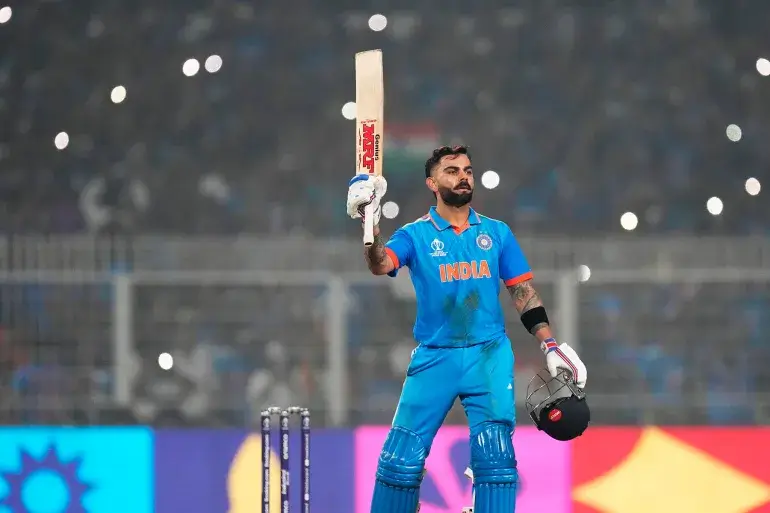
Virat Kohli walked into Ranchi with a calm that South Africa tried to disturb. They had a detailed plan. They squeezed the singles, pulled the field in, and tried to deny him the rhythm that usually shapes his ODI innings. But the moment Kohli slipped into his bubble, the game became a one-sided conversation. South Africa spoke. Kohli answered. And his answers carried the force of a 52nd ODI century.
The bubble is his sanctuary. He has built it for years, brick by brick, moment by moment. Inside it, the noise outside is irrelevant. Inside it, he decides the tempo. South Africa attempted to break into it, but the moment he read the pitch and the bowlers, their strategy dissolved. The first 10 overs were supposed to be a trap. Instead, they became an invitation.
Kohli understood the pace in the surface. He understood the scattered lengths. And he used that information to do something rare for his early-phase batting — he hit two sixes in his first 10 scoring shots. Only twice before had he hit two sixes inside 25 balls. Never when setting a total. It was clear: Kohli was operating in his own cricketing universe.
How South Africa’s Plan Collapsed Against Kohli’s Reading of the Game?
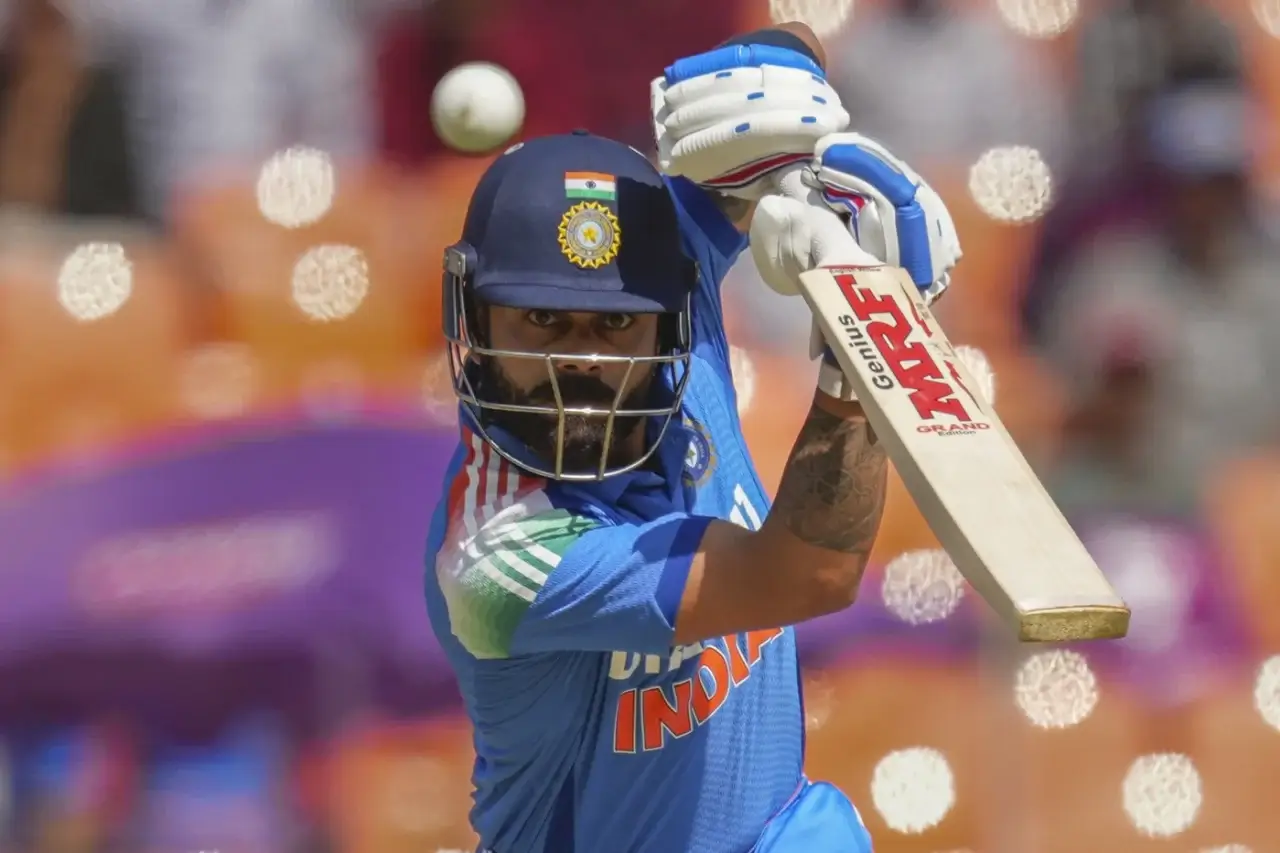
Marco Jansen, Nandre Burger, Corbin Bosch and Ottneil Baartman had one job — bowl tight, bowl disciplined, attack that first 30 balls. And when they did hit a good length, they gave away only 29 runs at a strike rate of 66. But the moment they missed? Kohli shredded them for 51 runs at a strike rate of 243.
This is the danger of bowling to Kohli when he’s fully present in the moment. His reading of conditions is world-class. From the bubble, he saw every small detail: pace off the pitch, angles from release, field placements shifting for singles. He simply pivoted to powerplay assault mode — something he rarely uses without a deep chase in sight.
The control he exerted over the innings wasn’t just about shots. It was about momentum like they did against Bangladesh. It was about pulling the match narrative towards him. India were ahead of the game within overs, not hours, and South Africa suddenly found themselves reacting to Kohli’s tempo rather than dictating their own.
The Rohit-Kohli Hundred Stand That Changed India’s Start
Kohli and Rohit Sharma came together with a clarity that only old partners possess. This was their 20th century stand in ODIs — second only to the legendary Tendulkar-Ganguly partnership. Their understanding is so deep that even their running between the wickets feels like a conversation spoken through instincts.
In the 14th over, Kohli tapped one softly toward midwicket and immediately called three. Rohit already knew he would. Even before completing the second run, Rohit had his hand raised. This is the chemistry that elevates India’s starts into match-defining platforms.
Their 136-run stand was built on timing, awareness, and complete trust. South Africa tried to pull things back through the middle overs, especially by restricting Kohli’s strike. Yet while Kohli faced only 22 balls out of a 55-ball phase, he never drifted. He kept the fielders guessing, kept his footwork sharp, and kept his internal engine running. It wasn’t flamboyance. It was professional dominance.
Kohli’s Middle-Overs Discipline: The Unsung Art of His Century
The crowd became restless. For seven long overs, Kohli barely got strike. The middle order managed only one six. One four from Kohli. It felt like a slowdown. But internally, Kohli was gearing up.
This phase was filled with small, invisible corrections. He practiced a downward chop to counter a short ball. He scanned field gaps and re-adjusted his angles. He ran harder between the wickets than anyone else on the ground. He conserved energy with single-minded precision.
This is the version of Kohli that opposition bowlers fear — not the boundary-machine, but the situation-reader. He shifted gears from acceleration to accumulation without losing control. By the time he reached 94, he had rebalanced the innings perfectly.
Moving from 94 to 98 was textbook Kohli — pick the leg-side field, read the shorter boundary, swivel on the back foot, and let timing do the rest.
The Sacred 100 – Kohli Steps Outside the Bubble for a Moment
On 99, for a brief instant, Kohli stepped outside his tunnel vision. The crowd was deafening. This was his first ODI in India blue at home since February. Every fan had waited months for this moment. Every ball of the 99th delivery felt like a shared breath.
When the glide took him to three figures, everything erupted — the jump, the fist pump, the scream, the ring kiss, the bat raise. These are the moments that feed his legacy. No. 52. Another century etched into white-ball history.
Kohli knows what it means. He is 37. He openly wants to play the 2027 World Cup. The selectors say age is irrelevant, but reality says every innings now carries scrutiny. His answer? Keep scoring. Keep leading. Keep proving that even in the twilight of his career, he remains twice the player most younger batters dream of becoming. In Ranchi, he ticked that box in bold ink.
Why Kohli’s 2027 World Cup Dream Still Feels Possible?
This innings was more than a century. It was a statement. Kohli may be 37, but his cricketing engine hasn’t slowed. His reading of the game is sharper than ever. His fitness is unmatched. His hunger remains volcanic.
Every major player who extended their career deep into their 30s relied on two things: adaptability and mental clarity. Kohli has both in abundance. His bubble is more than a mindset — it is his competitive armour. Against South Africa, he showed that the bubble still holds perfectly. The instincts remain razor-sharp. The body still responds with speed. The technique still outlives pressure.
If this version of Kohli stays intact, the 2027 World Cup is not just a dream — it is a realistic storyline waiting to unfold.
Conclusion: The Bubble Lives On
Kohli’s innings in Ranchi weren’t simply another addition to a legendary tally. It was a window into the mind of a player who refuses to let age, pressure, scrutiny, or opposition dictate his cricketing life. South Africa came prepared. Their tactics had logic. Their field placements had intention. Their plans had structure. But nothing survives when Kohli enters the bubble.
Inside that bubble, he sees the game before anyone else does. He feels the momentum before the crowd senses it. He predicts lengths before bowlers commit to them. And he moulds the match into a shape that suits him — not the opposition.
No. 52 was special for many reasons. But most importantly, it proved the bubble remains unbroken. As long as Kohli stays inside it, he will continue rewriting realities on the cricket field.