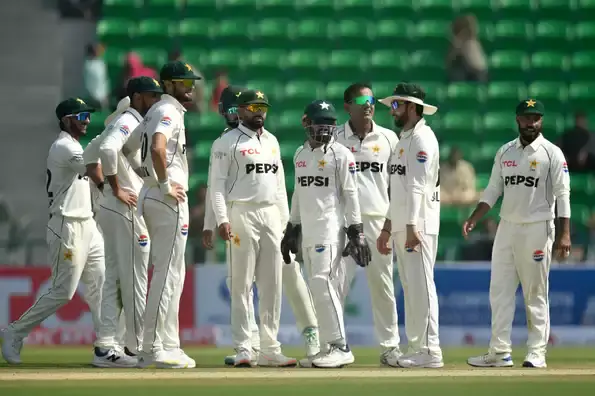
The first Test in Lahore turned into a gripping red-ball contest. Pakistan set 378 after strong batting from Imam and Salman. South Africa responded well but lost control late in the day. By stumps, Pakistan held the upper hand at 216 for six.
Spin shaped the match as the pitch offered increasing turn and bounce. Senuran Muthusamy ripped through Pakistan’s lineup with six wickets. Tony de Zorzi and Ryan Rickelton steadied the South African chase impressively. Noman Ali’s four wickets kept Pakistan firmly in contention and pressure.
De Zorzi’s unbeaten 81 showed survival and selective aggression under duress. Rickelton carved a mature fifty before a stunning slip catch ended his stay. Pakistan’s Imam and Salman added big scores to set a strong platform earlier. The contest now promises a tactical battle over the coming days at Gaddafi Stadium.
Match flow — Pakistan’s platform and South Africa’s response

Pakistan posted 378 after solid top-order contributions and late runs. Imam-ul-Haq and Salman Agha led the charge with 93 each. Their partnership and approach gave Pakistan a firm first-innings platform. Senuran Muthusamy later dismantled the tail with his six-wicket burst.
South Africa began their reply positively in the early session after lunch. The openers negotiated the initial overs with care and intent. Spin dominated as Noman Ali and Sajid Khan probed for wickets repeatedly. The surface kept offering varying pace and turns through the afternoon.
Tony de Zorzi and Ryan Rickelton built a mature partnership after tea. They combined caution with selective hitting to keep the scoreboard healthy. Rickelton reached fifty and drove pressure back onto Pakistan briefly. De Zorzi anchored the innings with a composed unbeaten eighty-one at stumps.
Late wickets tilted the momentum back to Pakistan by the close of play. Pakistan struck at regular intervals to keep the pressure constant. They forced South Africa to lose three quick wickets in the session. Still, the visitors showed fight with key partnerships and resistance, in the timeline between teams.
Scoreboard snapshot and key numbers
Brief Scores: Pakistan 378 (Imam 93, Salman 93; Muthusamy 6-117) lead South Africa 216/6. Tony de Zorzi remained unbeaten on 81 while Rickelton made 71. Noman Ali took the crucial four wickets to keep Pakistan ahead. The lead at stumps stood at 162 runs with South Africa six down.
The numbers reflect a match shaped by spin and patient batting displays. Muthusamy’s six-for stands out as the innings pivot. De Zorzi’s long vigil stabilised the chase at a critical time. Rickelton’s fifty highlighted the visitors’ intent to fight back.
These figures tell a story of fluctuating control and late-session drama. Pakistan’s top-order platform and spin success gave them leverage. South Africa’s middle-order resistance kept the contest alive. The match promises a tense continuation.
De Zorzi and Rickelton — survival and assertive batting under pressure

Tony de Zorzi survived repeated tests and adapted his approach smartly. He faced 140 balls for his unbeaten 81 with calm and purpose. Multiple lbw appeals were reviewed by Pakistan, all proving unsuccessful. He edged and nudged runs while protecting his wicket under attack.
De Zorzi’s innings mixed defence with timely aggression on loose balls. He chose moments to sweep, pull, and slog-sweep effectively when required. His six over midwicket showed growing confidence against turning deliveries. De Zorzi’s calm recovery built the backbone of South Africa’s partial reply.
Ryan Rickelton combined caution and intent to reach a crucial fifty. He used sweeps and reverse-sweeps to disturb the spinners’ lengths. His measured strokeplay and timing kept the scoreboard moving steadily. A sensational one-handed slip catch by Babar Azam ended his notable innings prematurely.
Both batters demonstrated technique to handle spin on a wearing surface. Their partnership forced Pakistan to bowl longer and search for solutions. The pair frustrated fielders and exploited scoring gaps cleverly. Their stand ensured South Africa did not crumble under mounting pressure.
De Zorzi’s survival moments and technique
De Zorzi lived through several tight calls and review scares during his innings. Two lbw shouts were overturned as the impact fell outside off stump. He also avoided a big wicket when an edge sat on his pad, but remained not out. Those margins highlight both misfortune and composure in his batting.
His technique relied on soft hands, late judgment, and selective footwork against spin. He seldom looked for perfection, instead seeking deliveries to score and protect. The pull for four off Salman late in the day was a statement shot of intent. Those choices kept him at the crease and frustrated the bowlers.
De Zorzi’s innings offers a blueprint for survival on a turning track. Patience, reading turning points, and choosing the right risk define such knocks. His calm handling of pressure will boost South Africa’s belief heading into tomorrow’s play. Coaches will applaud his temperament and learnings from those moments.
Senuran Muthusamy’s spin masterclass and its impact
Senuran Muthusamy produced the day’s standout bowling performance with six wickets. He used turn and bounce to trouble Pakistan’s batters consistently. His 6 for 117 included crucial dismissals in the middle and late stages. Muthusamy’s control of length and variation changed the match’s rhythm decisively.
The pitch dried out and began to assist spinners significantly by the second session. That shift allowed Muthusamy to extract vicious movement and mischief. Pakistan’s tail stumbled as he finished the innings strongly for South Africa. His spells tested the hosts and set the tone for the visitors’ fight back.
Muthusamy’s effort illustrates how one bowler can swing a Test session decisively. He combined patience with attacking lines to produce breakthroughs. The wicket-taking bursts helped reduce Pakistan’s lead and energise South Africa. Coaches will study those spells for their planning against turning surfaces.
His performance also highlights spin’s strategic value in subcontinental conditions. When spinners thrive, batting patience becomes crucial for both teams. Muthusamy’s nightwatch partnership with De Zorzi proved vital to extending the chase. Their collaboration kept South Africa competitive at the close.
Why spinners dominated and what this means?
Spinners bowled the bulk of overs due to the pitch’s behaviour on both days. Seventy-five of ninety overs on day one were spin-dominated at Lahore. The surface offered turned early and grew more unpredictable later in the match. That pitch profile rewarded bowlers who could vary pace and probe patiently.
Spin dominance forced batsmen to adjust their technique and footwork continuously. Sweep shots, reverse sweeps, and carefully timed pulls became essential scoring tools. Fielding positions and slip catch vigilance mattered more than raw pace. Teams must now plan for long sessions against turning conditions effectively.
For future matches, teams will prioritise specialist spinners and spinning depth in the squad. India and Pakistan both know how critical spinner options are in Asia. South Africa’s adaptation with Muthusamy highlights the need for legacity in spin resources.
Pakistan’s first-innings platform — Imam, Salman and collective depth
Pakistan’s 378 came from measured batting and a late flourish in the tail. Imam-ul-Haq and Salman Agha each scored 93, anchoring the innings effectively. Their partnership and intent built a defendable total under subcontinental conditions. The pair rotated strike and punished loose deliveries with clarity and timing.
Salman fell seven short of his century to Prenelan Subrayen, showing how close the hosts came to bigger totals. Pakistan’s batters displayed both patience in the middle overs and intent in the death. The team’s depth allowed them to add 65 runs to the overnight total early. That cushion proved useful when Muthusamy later struck back strongly.
Noman Ali’s four wickets in South Africa’s reply kept the visitors under continuous pressure. His spin probe and variations unsettled several top-order batters. Pakistan’s bowlers attacked with discipline, varying length and angle to force errors. The collective bowling plan and field placements were instrumental in regaining momentum.
Overall, Pakistan’s innings and early bowling spells created a platform for control. The team showed balance between patient accumulation and attacking intent. Their ability to bowl long, probing spells paid off late in the day. This collective discipline sets a tactical template for the series ahead.
Key Pakistan moments that mattered
Imam and Salman’s contributions provided the match’s vital foundation and tempo control. Their measured approach limited chances and increased scoreboard pressure on the visitors. Babar Azam’s one-handed slip catch to remove Rickelton altered South Africa’s chase momentum. Noman Ali’s bowling and the fielding at key moments kept Pakistan ahead at stumps.
These moments combined to shape a match tilted slightly in Pakistan’s favour. The team converted pressure into wickets via tight bowling and sharp catching. Their choice to backspin and bowl long spells suited the pitch perfectly. Such tactical clarity will remain crucial in subsequent sessions and matches.
The hosts now hold both statistical advantage and psychological momentum. South Africa will need to plan carefully to reverse this position in the days ahead.
Tactical takeaways and what both teams must improve

Spin planning and wicket targeting dominated the tactical battle in Lahore. Teams must prepare for rapid pitch deterioration and variable bounce. Bowlers who executed consistent length and subtle variations took the honours. Batsmen need to prepare to counter spin with softer hands and footwork adjustments.
South Africa must back its middle-order resilience while seeking earlier breakthroughs. De Zorzi and Rickelton showed how partnerships blunt pressure in testing conditions. Pakistan should continue to back experienced spinners and rotate overs wisely. Use of reviews and field placements will be critical in marginal decisions.
Fielding under duress proved decisive with Babar’s slip catch and other near misses. Both sides must sharpen catching under fatigue and heat-related stress. Missed opportunities and tight margins turned the match’s momentum repeatedly. Pressure-catching drills and end-of-day scenarios should be practised intensely.
Finally, selection strategies must consider bowlers who can exploit turn and variable bounce. South Africa’s spinners offered real solutions when conditions assisted them. Pakistan’s balance between top-order runs and spin accuracy created winning angles. These lessons will influence team plans across the Asia leg.
Coaches will emphasise footwork, soft hands, and sweep selection facing turning balls. Bowlers will work on subtle variations, pace control, and exploiting the rough. Fielding coaches will rehearse clutch catching and recovery under fatigue routinely. Tactical sessions will cover review usage and field placements for turning tracks.
Conclusion
Lahore’s first Test shifted to a compelling tactical battle by Day Two. Pakistan led on the scoreboard after big top-order contributions and late wickets. Senuran Muthusamy’s six-for and Noman Ali’s wickets kept the hosts ahead. Tony de Zorzi and Ryan Rickelton ensured South Africa fought back with grit and skill.
The match showcased spin’s decisive influence and the value of patient batting on wearing tracks. Fielding moments and review calls swung crucial sessions both ways repeatedly. Coaches must now refine tactics, strengthen catching, and plan for longer spells. The contest remains finely poised, promising gripping play in the days ahead at Gaddafi Stadium.